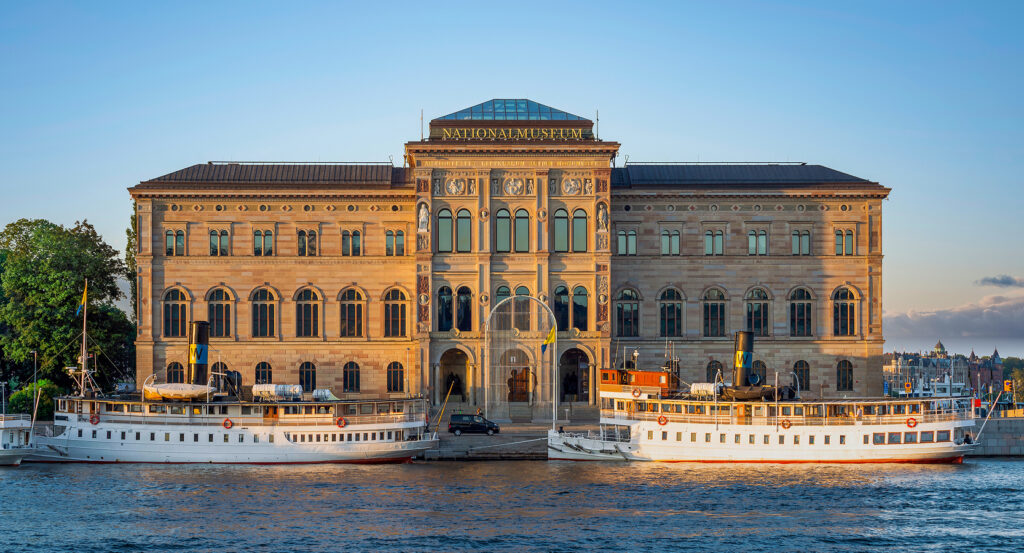
Why Nationalmuseum matters.
In the heart of Stockholm, Sweden, overlooking the shimmering waters of Strömmen, Nationalmuseum, or National Museum, stands as a monument to beauty, creativity, and the unbroken thread of artistic heritage that weaves through centuries of Nordic and European culture.
This isn't merely a gallery, it's Sweden's artistic soul made visible. Housed in a stately Renaissance Revival palace built in 1866, the museum commands attention with its red-brick façade and elegant stonework, but its true magic unfolds within. Step through its grand archways, and you enter a world where light and art dance together in perfect harmony. Sunlight filters through restored skylights onto marble staircases and gilded ceilings, illuminating a collection that spans six centuries of human imagination. From Rembrandt and Rubens to Carl Larsson and Anders Zorn, every corridor tells a story of mastery, emotion, and transformation. The museum's Nordic galleries celebrate the beauty of the everyday, the domestic intimacy of 19th-century interiors, the icy luminosity of Swedish landscapes, the craftsmanship of porcelain, glass, and furniture that shaped Scandinavian design. Yet what defines Nationalmuseum most deeply is its reverence for the connection between art and life, the idea that beauty should not be confined to galleries but lived, felt, and shared. This character pulses through every brushstroke, sculpture, and design piece, creating a space where history and modernity coexist in effortless balance.
What defines Nationalmuseum.
Nationalmuseum of Stockholm carries a history as layered and energetic as the works it protects, a story of vision, resilience, and renewal.
Founded in 1792 as the Royal Museum, it was one of Europe's earliest national art institutions, born from the royal collections of Sweden's enlightened monarchs. The building, designed by German architect Friedrich August Stüler, opened in 1866 and was inspired by the Italian Renaissance, its expansive staircases, ornate frescoes, and vaulted halls reflecting a belief that art was a civic necessity, not a luxury. Over time, the collection expanded dramatically, encompassing over 700,000 objects, including paintings, sculptures, drawings, and applied arts. However, by the early 2000s, the museum had aged, its infrastructure straining under the demands of modern conservation. What followed was among the most ambitious restorations in Swedish cultural history. Closed for five years, the museum underwent a meticulous renovation that balanced preservation with innovation, reopening triumphantly in 2018. Today, the result is nothing short of breathtaking: restored 19th-century frescoes, sustainable lighting that mimics natural daylight, and redesigned galleries that flow with rhythm and clarity. Few realize that Nationalmuseum is also a pioneer in integrating design and fine arts, showcasing everything from centuries-old tapestries to cutting-edge Scandinavian furniture. Its archives preserve thousands of sketches, letters, and blueprints from artists and architects who defined Swedish identity. The museum's mission is more than curatorial, it's educational, democratic, and deeply human. Through exhibitions on gender, environment, and cultural exchange, it invites reflection on how art both shapes and mirrors our collective consciousness.
How Nationalmuseum fits.
A visit to Nationalmuseum is one of Stockholm's most rewarding cultural experiences, a fusion of art, history, and architecture that unfolds like a journey through time.
Plan to spend two to three hours exploring its vast galleries and thoughtfully curated exhibits. Begin in the Old Masters Hall, where European giants like Rembrandt, Goya, and Velázquez share space with the Nordic painters who defined Sweden's Golden Age. Move into the Sculpture Gallery, where marble and bronze figures seem to breathe in the filtered Scandinavian light, then wander through the Applied Arts and Design collections, where handcrafted glassware and minimalist furniture reveal the evolution of Sweden's design legacy. Don't miss the 19th-Century Salon, restored to its original splendor, where artists like Carl Larsson and Bruno Liljefors captured the intimacy of everyday life in luminous color and brushwork. For a glimpse of modern brilliance, explore the Contemporary Art Wing, where current Swedish and international artists tackle themes of identity, ecology, and digital culture with bold experimentation. Between exhibits, pause at the museum café, among Stockholm's most scenic dining spots, where floor-to-ceiling windows frame views of the Royal Palace across the water. For a perfect cultural day, pair your visit with a stroll along the Skeppsholmsbron Bridge or a short ferry ride to Djurgården, home to the Vasa Museum and ABBA The Museum. As you leave Nationalmuseum, the grandeur of its halls stays with you, not just as a memory of beauty, but as a quiet reminder that art, in all its forms, is what binds past and present, people and place, into something timeless and true.
Where your story begins.
Foresyte Travel reveals places that feel extraordinary long before you arrive.
Enjoy editorial crafted for luxury travelers.
Foresyte may earn a commission when you book.