
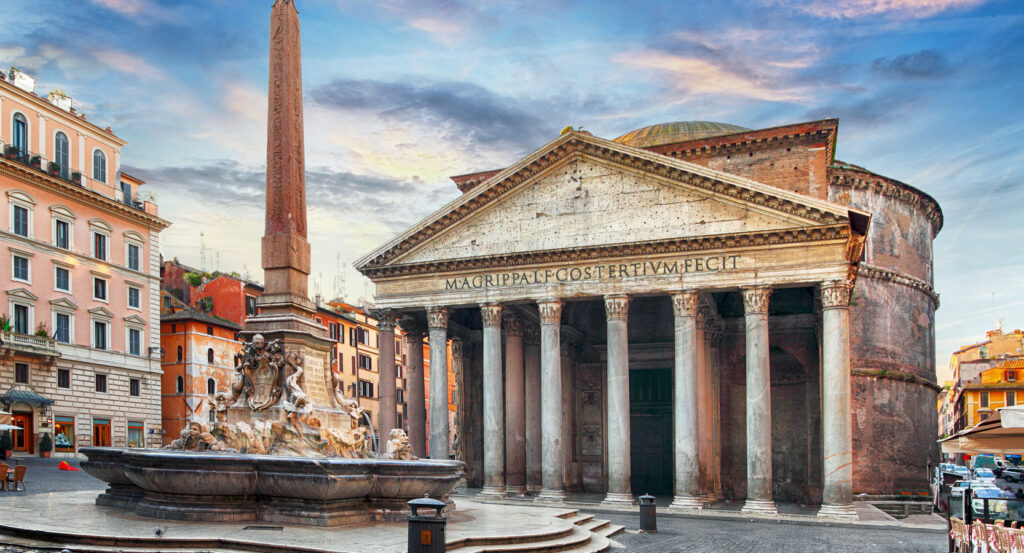
Why you should experience Orient Express La Minerva in Rome, Italy.
Orient Express La Minerva is where Belle Époque glamour, cinematic Italian elegance, and the timeless mystique of the Orient Express legacy converge into a stay that feels rare, architectural, poetic, and deeply attuned to Rome's most refined rhythms.
Set beside the grand Piazza della Minerva, just steps from the Pantheon, hidden behind ancient basilicas, and wrapped in the quiet dignity of Rome's learned quarter, the hotel occupies the historic Palazzo Fonseca, a 17th-century architectural jewel reborn under the renowned aesthetic codes of the Orient Express brand. From the outside, the façade radiates aristocratic calm: symmetrical windows framed by soft Roman stone, sculpted cornices, wrought-iron balconies, and an elegant presence shaped by centuries of noble life. Step inside, and the atmosphere becomes a high-art composition of European elegance and opulent railway nostalgia. Interiors are crafted with extraordinary precision, lacquered woods, polished marbles, deep jewel-toned velvets, brass accents, sculptural lighting, curated antiques, archival travel posters, bespoke textiles, and architectural lines inspired by the golden age of luxury train travel. It feels like a palace, a museum, and a dream sequence aboard a vintage Orient Express carriage all at once. Rooms at La Minerva reflect a world where refinement is not a gesture, but a philosophy. Expect custom-crafted Italian furnishings, rich fabrics in sapphire, emerald, and cream, soft lighting, handcrafted details, and windows framing views of quiet Roman rooftops, inner courtyards, or the stately Piazza della Minerva. Suites elevate the experience with generous parlors, custom cabinetry, marble fireplaces, expansive dressing areas, and décor that evokes the romance of historic voyages, curved lines, lacquered surfaces, brass fittings, and textures that feel both opulent and serene. Bathrooms are indulgent sanctuaries: marble floors, deep soaking tubs, rainfall showers, warm golden lighting, polished fixtures, and luxurious amenities that echo the spa-like indulgence of vintage first-class train cabins. Breakfast feels like an elegant ritual, served in a refined salon with freshly baked pastries, artisanal breads, fruit, cheeses, yogurt, eggs cooked to order, cured meats, juices, and flawless Italian coffee. The atmosphere is light, serene, and quietly theatrical, capturing the sensuality and ritual of luxury travel. Hospitality at Orient Express La Minerva is impeccable, polished yet warm, attentive yet never intrusive. Staff members embody the grace of classic European hotels: anticipatory service, knowledgeable recommendations, seamless arrangements, and a reverence for the guest experience that feels increasingly rare. And then there is the crown jewel: the rooftop. Terrace Minerva is a cinematic viewing deck of Rome, domes, terracotta rooftops, Renaissance towers, and glowing sunset hues stretching across the horizon. Aperitivo here feels like stepping into a painting, champagne flutes, crafted cocktails, refined small plates, and panoramic beauty that shifts with every minute of the golden hour. The location is exceptional. Hidden behind the Pantheon yet tucked away from the crowds, the hotel sits in one of Rome's most elegant pockets: a quiet world of scholars, artists, aristocrats, and ancient marvels. From here, you can walk to the Trevi Fountain, Piazza Navona, Campo de' Fiori, Via del Corso, the Roman Forum, and countless churches and museums.
What you did not know about Orient Express La Minerva.
La Minerva stands on land whose character spans more than two thousand years, in a palazzo shaped by Renaissance noble life and reborn through the view of one of the most iconic travel brands in history.
The building's origins trace back to the 1600s, when Cardinal Michele Bonelli, nephew of Pope Pius V, initiated an urban renewal of the area surrounding the Basilica of Santa Maria sopra Minerva. This district had been a site of sacred, scholarly, and civic life since antiquity, home to priests, philosophers, and early Roman institutions. The palazzo later became known as Palazzo Fonseca, a residence tied to aristocratic Roman families. Noble visitors, clergy, diplomats, and intellectuals passed through its stone halls as the city evolved into a center of Baroque brilliance. During the 18th and 19th centuries, the surrounding streets were frequented by scholars, artists, and early travelers making their way through Rome on the Grand Tour. The building stood at the midpoint between ancient temples, papal power, and the Renaissance university quarter, an intersection that shaped its noble identity. When Orient Express began searching for a Roman flagship property, they sought a location that embodied the spirit of grand travel: historic architecture, intellectual heritage, atmospheric presence, and intimate proximity to Rome's monuments. Palazzo Fonseca was the perfect fit. During restoration, craftsmen uncovered original structural beams, historic stonework, and interior lines that revealed centuries of architectural evolution. These elements were preserved and woven into a contemporary aesthetic shaped by Orient Express's renowned design codes, curved Art Deco lines, lacquered finishes, brass accents, deep colors, and materials reminiscent of historic train carriages. The interiors were crafted alongside master artisans, using techniques that reflect haute couture, luxury yachting, and fine Italian cabinetmaking. The result is a property that blends palatial Roman history with the romantic nostalgia of rail travel, creating an unparalleled architectural narrative in the heart of Rome.
How to fold Orient Express La Minerva into your trip.
Orient Express La Minerva becomes the refined, atmospheric anchor of your Roman escape, where mornings begin in quiet piazzas, days unfold into elegant wanderings, and evenings settle into rooftop enchantment above the ancient city.
Start the morning with an indulgent breakfast in the hotel's elegant salon, then wander to the Pantheon before the crowds arrive, experiencing the oculus light in peaceful stillness. From there, walk toward Piazza Navona through narrow Renaissance lanes, or explore the boutiques and artisan shops hidden around Via della Scrofa. Spend your afternoon discovering small museums, churches filled with baroque masterpieces, or quiet cafés ideal for people-watching and journaling. Pause for lunch in a refined trattoria nearby, or cross the Tiber to explore Trastevere's artistic energy. Return to the hotel for a mid-afternoon rest, soaking in the serenity of your room or enjoying tea in one of the intimate lounges. As golden hour approaches, ascend to the rooftop for aperitivo, cocktails crafted with precision, panoramic views unfolding in every direction, and the soft glow of Rome settling into evening. Afterward, choose between dining on the terrace or exploring the restaurants that shape the historic center: candlelit courtyards, elegant enotecas, and trattorias tucked into centuries-old alleys. End your night with a slow walk through quiet piazzas, stopping to admire the illuminated Pantheon and the soft glow of ancient stone under the Roman moonlight. Winter brings contemplative elegance. Spring fills the piazzas with gentle color. Summer turns the rooftop into a glowing sanctuary. Autumn paints the city in amber and gold. Orient Express La Minerva becomes not just where you stay, but the refined, romantic, beautifully designed heart of your entire Roman experience.
Where your story begins.
Foresyte Travel reveals places that feel extraordinary long before you arrive.
Experience premium editorial crafted for luxury travelers.




















































































































