
Why Ōtoyo Shrine matters.
Ōtoyo Shrine is Kyoto's whisper of gratitude, a small, sacred corner where foxes, mice, and gods coexist in quiet devotion.
Hidden along the Philosopher's Path beneath a canopy of maple and moss, the shrine appears suddenly, a splash of vermilion amid the forest green. Stone steps rise gently to the entrance, flanked by two un guardians: a pair of mice carved in stone, one holding a sake cup, the other a scroll. They stand watch not as symbols of fear, but of renewal, messengers of the deity Ōkuninushi, who governs love, healing, and good fortune. Inside, the air feels intimate, protective, and deeply personal. The scent of cedar mingles with the earthy sweetness of fallen leaves; the soft hum of cicadas fades into birdsong. Unlike Kyoto's grand temples and famous gates, Ōtoyo Shrine feels like it belongs to the neighborhood, a place where prayers are spoken softly and offerings left in the rhythm of daily life. It's not a destination for performance but for sincerity, a refuge for those who come to thank.
What defines Ōtoyo Shrine.
Ōtoyo Shrine traces its origins to the 9th century, when it was founded to honor Ōkuninushi and Sukunahikona, deities of medicine and creation from Japan's ancient myths.
Originally known as Matsugasaki Shrine, it stood as a protective guardian for Kyoto's northern approach, safeguarding the city from misfortune and illness. Its role as a “north protector” remains encoded in its layout, simple, symmetrical, open to the breeze that carries prayers southward into the heart of the city. The shrine's most distinctive feature, however, lies in its guardians. During the Edo period, mice replaced the traditional lion-dogs as symbols of the deity's compassion, creatures that, in myth, once guided Ōkuninushi to safety and restored his life. Each carving tells a story: one mouse offers a sake cup to heal the heart, the other holds a scroll to guide wisdom. These emblems turned Ōtoyo into a shrine of affection, couples visit to bless their bonds, students to seek clarity, and travelers to offer thanks for safe passage. Despite its modest scale, the shrine has survived centuries of floods and fires, restored again and again by local hands. Few realize that it remains one of Kyoto's oldest continuously active community shrines, tended not by large temple organizations but by neighborhood caretakers, a living thread between ancient faith and everyday grace.
How Ōtoyo Shrine fits.
Ōtoyo Shrine is best discovered in passing, a quiet punctuation along Philosopher's Walk that rewards those who slow down.
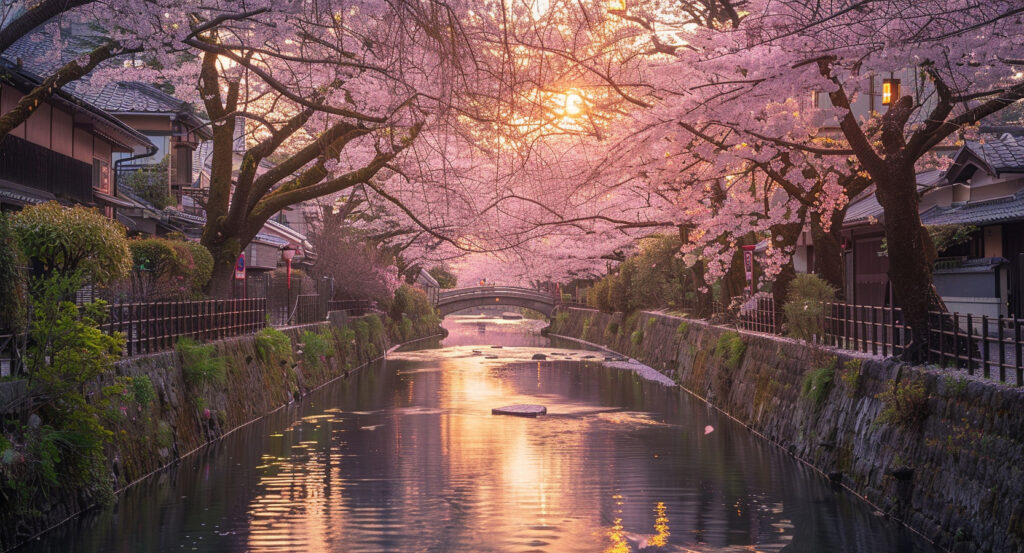
Begin your walk near Ginkaku-ji and follow the streamside trail south; the shrine appears about halfway along, its torii gate half-shaded by maple leaves. Climb the brief stone staircase and take in the scene, the modest courtyard, the offering bell, the wooden plaques swaying gently in the breeze. You'll find locals stopping by with small gifts, flowers, rice, or miniature sake bottles, each one a whisper of gratitude. Ring the bell once, bow twice, and let the stillness settle. Pay attention to the sound of the stream below and the rustle of the trees overhead; together they form the shrine's quiet heartbeat. Visit in autumn if you can, when the maples ignite in red and gold and the air carries a crisp sweetness, or in spring when the cherry blossoms drift across the steps like soft snow. There's no grand hall or sweeping vista here, only sincerity, simplicity, and peace. As you descend the path again, you may feel lighter, as though something unseen has gently realigned. That is Ōtoyo Shrine's quiet gift, a reminder that Kyoto's greatest temples may dazzle, but its smallest sanctuaries heal.
Where your story begins.
Foresyte Travel reveals places that feel extraordinary long before you arrive.
Enjoy editorial crafted for luxury travelers.
Foresyte may earn a commission when you book.

















































































































