
Why you should experience Luxor Obelisks in Paris, France.
Luxor Obelisks are ancient grand sculptures where Place de la Concorde's imperial grandeur, Egyptian civilization, archaeological heritage, and nineteenth-century engineering commemorate one of the world's most extraordinary diplomatic gifts.
Set within Place de la Concorde near Rue Royale and just steps from Fontaine des Mers, these soaring granite monuments frame one of Paris' grandest public squares through hieroglyph-covered stone, gilded pyramidions, grand proportions, and carefully planned axial views extending toward the Champs-Élysées and the Jardin des Tuileries. Ancient craftsmanship, historic symbolism, and elegant urban planning unite within a setting that connects Pharaonic Egypt with modern Paris. The result is a destination defined by archaeological significance, engineering achievement, and enduring cultural prestige.
What you should know about Luxor Obelisks.
Luxor Obelisks are best known for representing the pair of 3,300-year-old red granite obelisks commissioned during the reign of Pharaoh Ramesses II around the thirteenth century BC for the entrance of Luxor Temple, with the western obelisk presented to France in 1830 by Muhammad Ali Pasha, Ottoman Viceroy of Egypt, before being transported more than 7,000 kilometers to Paris in an engineering expedition directed by naval engineer Apollinaire Lebas and ceremonially erected in Place de la Concorde on October 25, 1836 before King Louis-Philippe. Carved from a single block of Aswan granite and standing 23 meters tall while weighing about 227 metric tons, the monument is covered with finely preserved hieroglyphs celebrating the military victories, divine authority, and royal achievements of Ramesses II, providing one of Europe's most important examples of grand ancient Egyptian sculpture displayed in its original form. The transport required the specially constructed flat-bottomed vessel Le Luxor, extensive hydraulic lifting systems, innovative rope and capstan mechanisms, and years of logistical planning that became one of the nineteenth century's greatest engineering accomplishments. In 1998 the monument received a gold-leaf pyramidion replacing the original cap believed lost in antiquity, while France formally relinquished ownership of the second Luxor obelisk in 1981, leaving the eastern monument at Luxor Temple and preserving the historical relationship between the two surviving monuments.
Exquisitely carved hieroglyphic inscriptions, precisely proportioned granite surfaces, refined ancient stoneworking techniques, and commanding placement within Jacques-Ignace Hittorff's redesign of Place de la Concorde continually reinforce the monument's extraordinary historical presence. The obelisk anchors one of Paris' most celebrated urban compositions while illustrating the intersection of archaeology, diplomacy, engineering, and grand city planning across three millennia of history. Luxor Obelisks continue demonstrating how ancient craftsmanship and nineteenth-century ambition combined to create one of Europe's most significant public monuments.
How to fold Luxor Obelisks into your trip.
Luxor Obelisks are best experienced as part of a curated exploration through Place de la Concorde's celebrated monuments and surrounding cultural institutions.
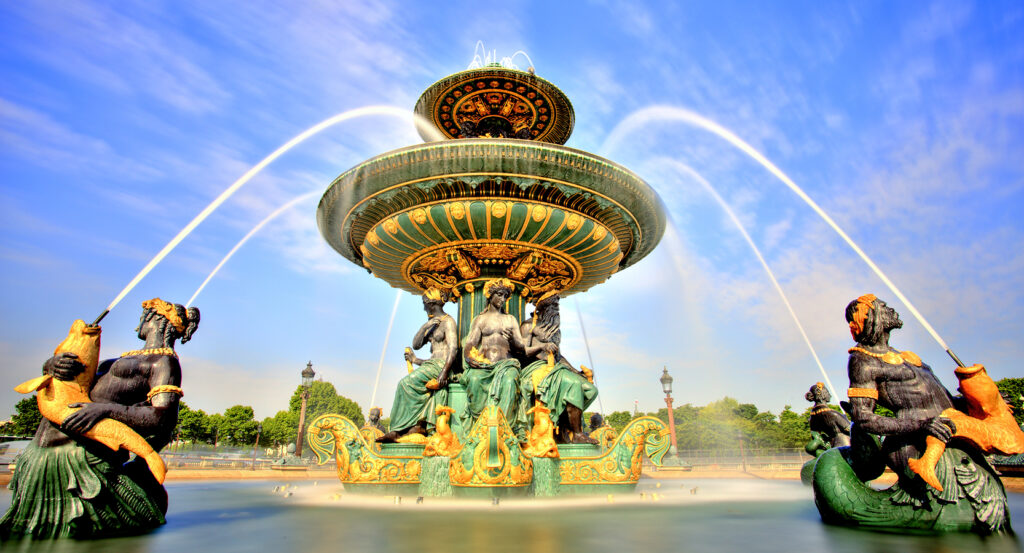
Begin at Fontaine des Mers, whose grand sculptural program introduces the artistic vision of Place de la Concorde before continuing to the Luxor Obelisks. Continue to Jardin des Tuileries, where André Le Nôtre's formal landscape extends the grand historical axis westward through one of Paris' most celebrated gardens. Conclude at Musée de l'Orangerie, whose internationally renowned Impressionist and Post-Impressionist collections provide a fitting cultural finale overlooking the same historic square. The progression moves naturally from grand fountain to ancient Egyptian masterpiece before concluding through one of Paris' finest art museums, revealing why the Luxor Obelisks remain among the capital's most significant historical monuments.
Where your story begins.
Foresyte Travel reveals places that feel extraordinary long before you arrive.
Experience premium editorial crafted for luxury travelers.














































































































