Why QT Queenstown matters.
QT Queenstown is a design-led lakeside hotel where Lake Esplanade's alpine waterfront character meets Nic Graham's interiors and the dramatic setting of Lake Wakatipu.
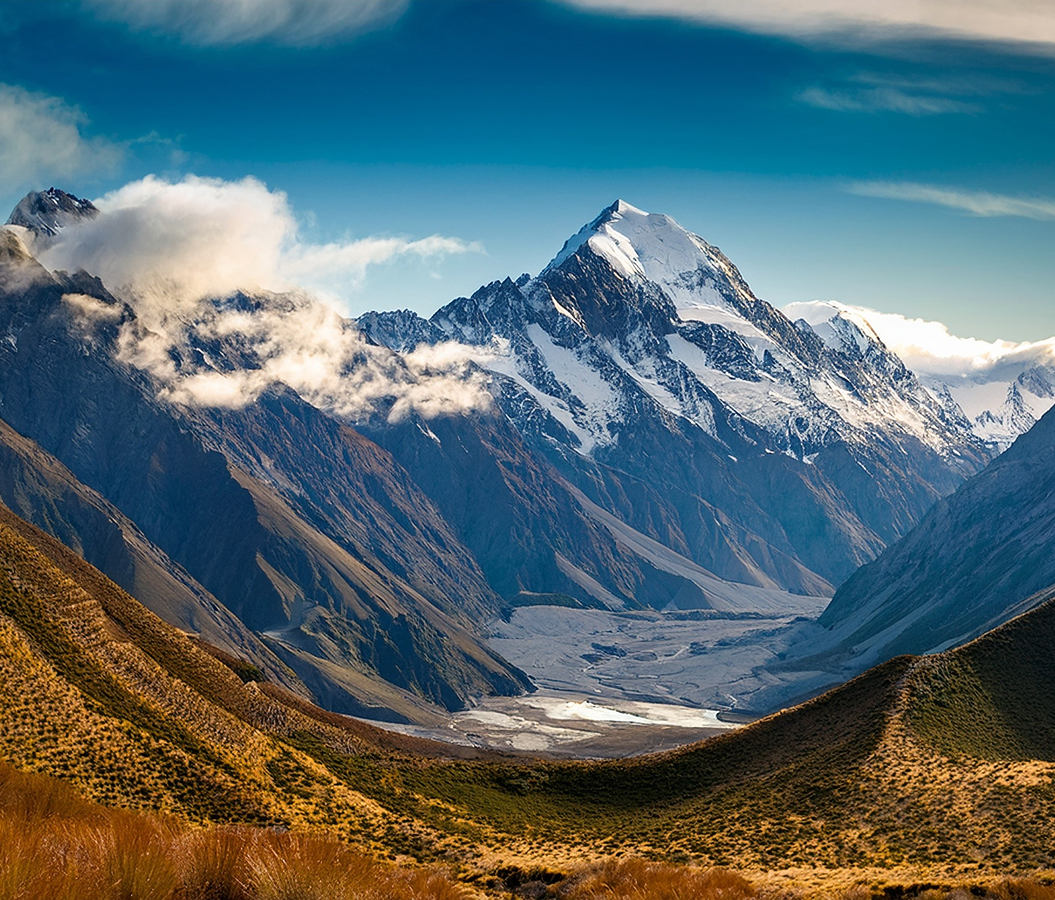
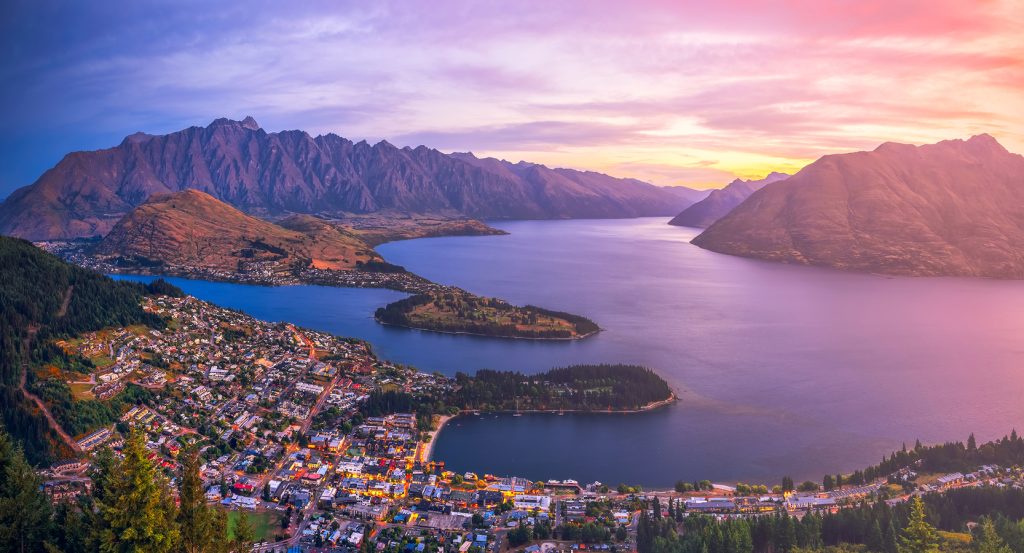
Along Lake Esplanade near Brunswick Street, QT Queenstown occupies a steep lakeside site between Steamer Wharf and the central grid, with Lake Wakatipu, Cecil Peak, Walter Peak and The Remarkables spread across its open southern outlook. Its position on the rise places the lake and mountain ranges in view from the hotel's public elevations. The building's glass frontage draws light into its angular lakeside profile. Paths connect the waterfront with the nearby commercial streets and the hotel entrance. The result is a hillside hotel whose architecture brings the lakefront landscape into the experience of staying at Queenstown's edge.
What defines QT Queenstown.
QT Queenstown is best known for its 2017 debut as a design-led hotel shaped by Queenstown's alpine setting and the creative direction of interior designer Nic Graham. It was the first large new hotel built in Queenstown in a decade, developed on a site behind the existing Rydges lakeside property. Construction began after two older blocks of the Rydges complex were demolished. Naylor Love built a four-storey structure with a concrete frame on the hillside, where ground conditions required the project team to integrate existing foundations and retaining structures. The new property opened in late November 2017, bringing a distinct design project to the lakeshore. Graham led the interior concept, with environmental graphics by Fabio Ongarato and decorative styling by Anna Roberts. Their work connected local landscape references with the QT brand's art-led visual approach. Exposed finishes, patterned surfaces, brass and bronze details, and bespoke furniture set the interiors apart from a standardized hotel scheme. Bazaar, the hotel's marketplace restaurant, occupies an upper level with expansive lake and mountain views. Its design draws on outdoor equipment and alpine transport through details such as leather straps and herringbone flooring. Artworks by local artists and commissioned objects give the public areas a connection to Queenstown's creative community. In 2026, EVT began a staged conversion of the adjacent Rydges Lakeside Queenstown into QT, extending the brand across the connected lakeside property. The upgrade is scheduled to finish in mid-2027, with QT Queenstown remaining open throughout the work. This expansion marks a new phase for the hotel: its original design-led building grows into a larger lakeside complex while retaining the distinctive concept established by Graham and his collaborators.
How QT Queenstown fits.
QT Queenstown works as a starting point for an outing linking Queenstown's early public gardens, the engineering of its mountain access and the Māori history carried in the surrounding peaks.
Begin at Queenstown Gardens, the lakeside peninsula reserved for public use in 1867 after Queenstown's first borough council sought a lasting recreation ground. Surveyor Wright laid out the main avenue and circular walk that September, giving the reserve its first planned paths. Mayor J. W. Robertson and nurseryman McConochie planted two English oaks that year, commemorating the borough's incorporation; one survives as a mature tree. Later plantings added European species, blue gums and black wattles, while Douglas firs developed into a shelter belt around the shore. Continue to Skyline Queenstown, where an early road journey to Bob's Peak became an aerial route. Ian Hamilton began taking passengers up a steep gravel road in Volkswagen vans in 1961, and Skyline Tours formed in 1963. A chalet opened in 1964; construction of the gondola followed in 1966, and the first cars reached the summit in 1967. The cableway carried 56,000 passengers in its first year. A 1994 redevelopment added a curved wall made from 30 tonnes of plate glass, widening the panorama across the surrounding ranges and valleys. Conclude at Ben Lomond Track, whose mountain carries the Māori name Te-Taumata-o-Hakitekura, the seat of Hakitekura. The daughter of rangatira Tuwiriroa, Hakitekura watched swimming contests from the mountain before swimming across Lake Wakatipu. She used the reflected dawn light on the distant peaks as a guide; those peaks became known as Kā Kamu-a-Hakitekura, the shimmerings seen by Hakitekura. The track climbs through forest and alpine tussock to a saddle at 1,326 metres, then continues to the 1,748-metre summit. The progression moves from a community's planted public reserve through the cableway's engineered access to a mountain whose name preserves an ancestral account of skill and determination.
Where your story begins.
Foresyte Travel reveals places that feel extraordinary long before you arrive.
Enjoy editorial crafted for luxury travelers.