Why you should experience The Spiral Ramp at The Round Tower in Copenhagen, Denmark.
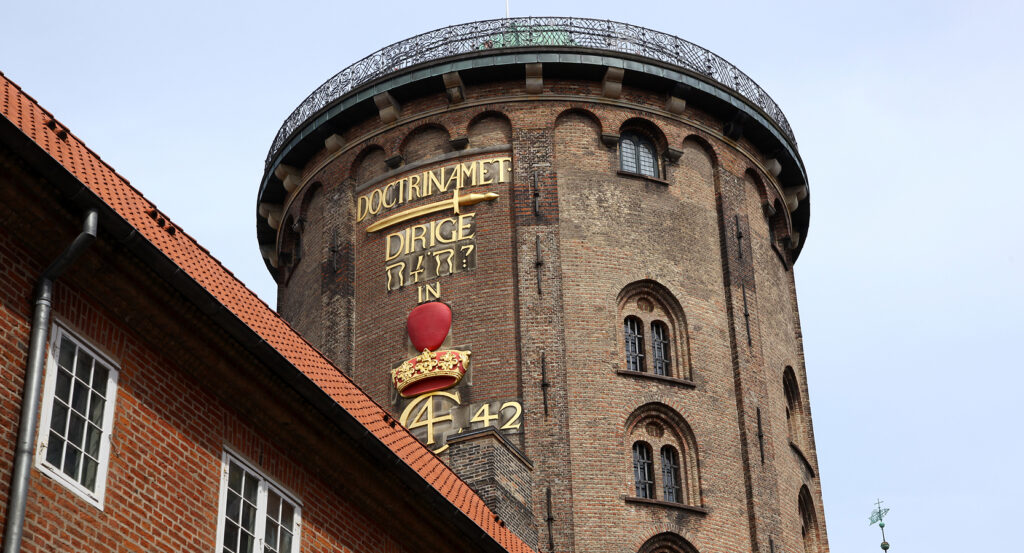
The Spiral Ramp at the Round Tower in Copenhagen is one of the most quietly extraordinary architectural wonders in Europe, a journey where ascent becomes art.
Instead of stairs, the tower unfolds as a continuous white-brick spiral, gently rising in seven and a half graceful turns to the heavens. The air cools as you move upward, footsteps echoing softly across worn cobblestones polished by centuries of visitors, scholars, and even horses. This spiraling corridor feels alive, light pours through arched windows, shifting across curved walls like a sundial marking the rhythm of time. The ramp's incline is so gradual that King Christian IV himself could ride his horse to the top, and legend says that Tsar Peter the Great once did exactly that during a royal visit. Each rotation tightens your focus, transforming the simple act of walking into a meditation, a spiral that mirrors the movement of thought, faith, and discovery. Halfway up, you begin to sense the geometry's quiet genius: an architectural embrace between earth and sky, motion and stillness, body and mind.
What you didn't know about The Spiral Ramp at The Round Tower.
The Spiral Ramp wasn't built for beauty alone, it was engineered for brilliance.
Completed in 1642, it was designed by architect Hans van Steenwinckel the Younger under King Christian IV's vision for a building that united science, art, and religion. The Round Tower was meant to house an observatory, a church, and a university library, and the ramp was the artery connecting all three. Its continuous slope allowed astronomical instruments, including fragile telescopes and globes, to be transported to the observatory by horse and cart without ever being disassembled. The inner wall of the spiral measures only 85 meters in length, but the outer wall extends nearly 210 meters, a perfect logarithmic design that balances gravitational load and aesthetic flow. Few know that the ramp's surface has never been resurfaced since the 17th century, every indentation is a footprint in history. Above it lies a hollow cylindrical core, 25 meters deep, engineered to absorb pressure from the surrounding structure. Even the acoustics are intentional, the circular symmetry creates a soft echo that amplifies footsteps and whispers alike, turning sound into presence. What seems effortless in form is, in truth, one of Europe's most mathematically precise architectural compositions.
How to fold The Spiral Ramp at The Round Tower into your trip.
To experience the Spiral Ramp properly, slow your pace and surrender to its rhythm.
Begin your ascent from the entry arch beneath the Round Tower's bell, the first turn feels simple, almost unremarkable, but soon the world begins to twist around you. The incline never strains, yet the climb feels eternal, like walking through a living timepiece. Stop at the arched windows along the way; each frame reveals a new facet of Copenhagen, a patchwork of copper spires, red roofs, and cobbled courtyards unfolding below. Visit midday if you want to see light streaming diagonally across the walls, or early morning for solitude when the ramp is empty except for the echo of your own breath. Pause at the Library Hall halfway up to glimpse rotating art exhibitions, or peer down through the glass floor revealing the hollow core beneath your feet, a dizzying view into the tower's soul. When you finally reach the top, step onto the Observatory Deck, and the spiral's purpose becomes clear: it was never about the destination, but the movement itself. The Spiral Ramp at the Round Tower in Copenhagen isn't just an architectural path, it's a physical metaphor for human aspiration, a centuries-old reminder that knowledge and wonder are both found in the climb.
Where your story begins.
Start your planning journey with Foresyte Travel.
Experience immersive stories crafted for luxury travelers.