
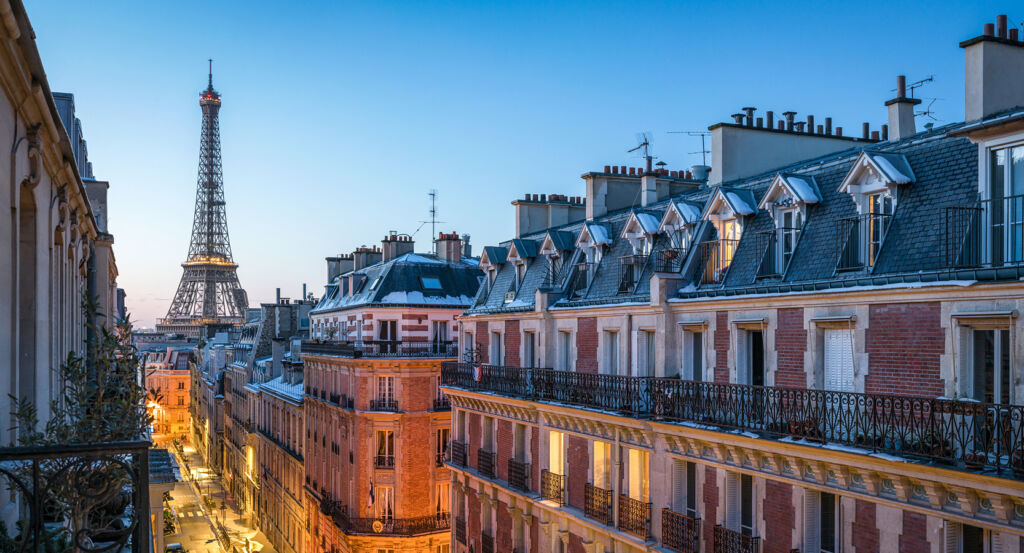
Why Rue de Grenelle matters.
Rue de Grenelle is a distinguished Gros-Caillou corridor where diplomatic prestige, aristocratic heritage, scientific innovation, and Left Bank elegance converge along one of Paris' most historically influential streets.
Running through Gros-Caillou between Hôtel des Invalides and Rue du Bac, this graceful corridor unfolds through grand hôtels particuliers, foreign embassies, renowned museums, prestigious ministries, elegant Haussmann architecture, and beautifully preserved eighteenth century residences that embody centuries of political and cultural importance. Monumental gateways, secluded courtyards, refined boutiques, and tree-lined perspectives create a streetscape where statecraft, scholarship, and Parisian sophistication continue shaping everyday life. Every section of the corridor reveals another chapter in the remarkable evolution of the Left Bank. The result is a corridor defined by architectural grandeur, institutional significance, and one of Paris' most distinguished historic avenues.
What defines Rue de Grenelle.
Rue de Grenelle is best known for preserving one of the capital's greatest concentrations of aristocratic mansions while serving as the setting for pivotal moments in modern French history, most notably the Grenelle Agreements signed at the Ministry of Labour in May 1968, whose negotiations between Prime Minister Georges Pompidou, trade unions, and employers ended the largest general strike in French history involving nearly ten million workers and permanently transformed French labor law through substantial wage increases and expanded trade union rights. Originally laid out in the early eighteenth century as part of the expansion of the Faubourg Saint-Germain, the corridor soon attracted some of France's most influential noble families, resulting in exceptional residences including Hôtel de Matignon, completed in 1725 by architect Jean Courtonne and serving as the official residence of the French Prime Minister since 1935, and Hôtel de Biron, where sculptor Auguste Rodin lived and worked before the estate became the Musée Rodin in 1919. The avenue also became home to UNESCO's Paris headquarters, inaugurated in 1958 and designed through an international collaboration led by Marcel Breuer, Bernard Zehrfuss, and Pier Luigi Nervi with contributions from Le Corbusier, Walter Gropius, and Lucio Costa, creating one of the twentieth century's most significant diplomatic buildings while housing artworks by Pablo Picasso, Joan Miró, Alexander Calder, and Henry Moore. Together, these institutions establish Rue de Grenelle as a corridor where political leadership, architectural excellence, international diplomacy, and artistic achievement intersect on a remarkable scale.
Few Parisian streets encompass such an extraordinary concentration of national government, international diplomacy, artistic heritage, and architectural innovation. Eighteenth century hôtels particuliers continue serving ministries, embassies, and cultural institutions, while UNESCO's modernist headquarters introduced a landmark of postwar international architecture into a district defined by classical elegance. The coexistence of the Prime Minister's residence, the Musée Rodin, globally influential diplomatic institutions, and the legacy of the Grenelle Agreements demonstrates how Rue de Grenelle has repeatedly shaped French political, cultural, and international history across more than three centuries.
How Rue de Grenelle fits.
Rue de Grenelle works as an exploration through Gros-Caillou's celebrated museums, diplomatic landmarks, and architectural masterpieces.
Begin at Musée Rodin, where Auguste Rodin's former residence and sculpture garden introduce the extraordinary artistic heritage of the corridor before following Rue de Grenelle through one of the Left Bank's most distinguished streets. Continue to UNESCO Headquarters, whose remarkable modernist architecture and internationally significant art collection reflect the avenue's enduring global influence. Conclude at Hôtel des Invalides, where Napoleon Bonaparte's tomb and one of France's greatest military monuments provide a memorable finale celebrating the political, artistic, and historical achievements that define this remarkable district. The progression moves naturally from artistic genius to international diplomacy before culminating in one of France's most iconic national landmarks, revealing why Rue de Grenelle remains one of Paris' most consequential historic corridors.
Where your story begins.
Foresyte Travel reveals places that feel extraordinary long before you arrive.
Experience premium editorial crafted for luxury travelers.
Foresyte Travel may earn a commission when you book through the link on this page.














































































































