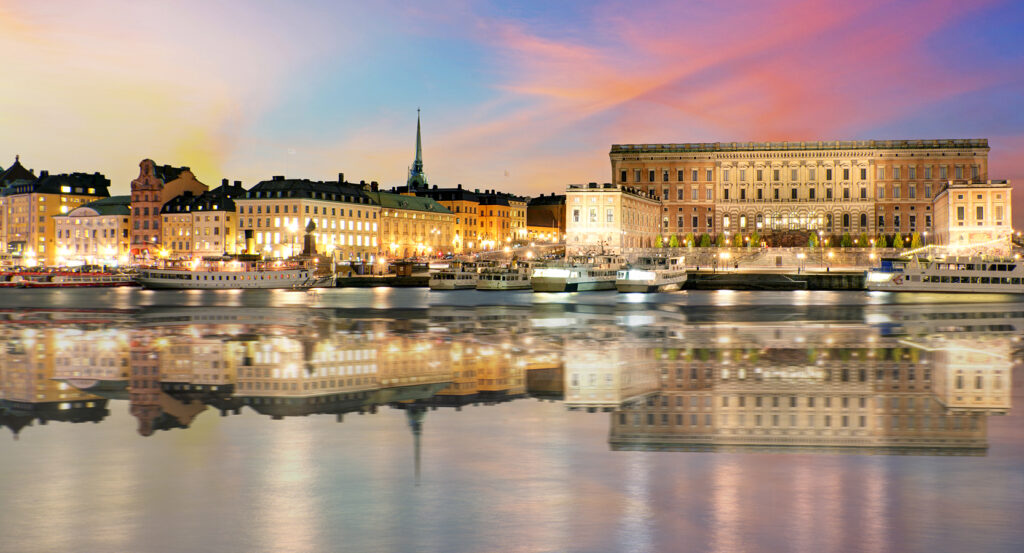
Why you should experience The Royal Guards at The Royal Palace in Stockholm, Sweden.
Few spectacles capture Sweden's living tradition quite like The Royal Guards at The Royal Palace, a ritual of precision, pride, and pageantry that bridges royal history and modern identity.
As the palace courtyard fills with the rhythmic beat of drums and the gleam of blue-and-white uniforms, you feel the city's pulse slow into reverence. Every movement is choreographed, every salute deliberate, a dance of discipline performed against the grandeur of baroque façades and the backdrop of Stockholm's waterfront skyline. The ceremony, accompanied by the Royal Guards' military band on select days, isn't just a show; it's a living emblem of loyalty and continuity. Watching the formation march across the cobblestones, bayonets glinting under the northern sun, you sense centuries of heritage compressed into one timeless performance, an unbroken thread connecting Sweden's monarchy, its people, and its enduring spirit of ceremony.
What you should know about The Royal Guards at The Royal Palace.
The roots of this daily ritual reach back over 500 years, when palace guards protected Sweden's monarchs around the clock.
Today's guards belong to the Swedish Armed Forces, rotating units from across the country to maintain a seamless balance between ceremony and service. The procession begins at the Army Museum or Cavalry Barracks and winds through Stockholm's old town, accompanied by music that echoes off centuries-old stone. The soldiers' immaculate blue uniforms, modeled after 19th-century designs, and polished silver helmets are not costumes but symbols of national discipline and pride. On summer days, mounted troops lead the parade, their horses' hooves striking the cobbles in near-musical rhythm. The ceremony also honors fallen soldiers and represents the Swedish monarchy's relationship with its citizens, not one of hierarchy, but of heritage and stewardship. It's said that every detail, from the trumpet fanfares to the placement of the flag, follows a sequence codified generations ago, a living manuscript of Swedish ceremonial law still performed with unerring grace.
How to fold The Royal Guards at The Royal Palace into your trip.
Plan to arrive early, 30 minutes before the procession begins, to secure a clear vantage point in the palace courtyard or near the gates of Slottsbacken Street.
The full ceremony takes 40 minutes and typically starts at 12:15 p.m. on weekdays and 1:15 p.m. on Sundays and holidays, though the schedule varies by season. If visiting in summer, time your arrival to coincide with the mounted parade, when the Royal Cavalry Corps adds a layer of grandeur. The music alone, brass, percussion, and the occasional bugle call, is worth the experience. As the guards exchange duties with seamless precision, notice how the atmosphere shifts: tourists quiet, flags ripple, and for a few suspended minutes, the palace becomes a stage where history moves in formation. After the ceremony, wander the surrounding Gamla Stan streets, where echoes of the drums still linger between colorful facades. The Royal Guards at The Royal Palace isn't merely a tradition, it's the heartbeat of Sweden rendered in motion, an act of respect repeated daily beneath the northern sky.
Where your story begins.
Foresyte Travel reveals places that feel extraordinary long before you arrive.
Experience premium editorial crafted for luxury travelers.