Why Strøget matters.
Strøget in Copenhagen is where the pulse of the city finds its rhythm, a graceful promenade of cobblestone and color that feels equal parts fairy tale and cosmopolitan playground.
Stretching for over a kilometer from Rådhuspladsen (City Hall Square) to Kongens Nytorv, Strøget is one of Europe's longest pedestrian shopping streets, but to call it merely a shopping district undersells its soul. It's a living theatre of Danish design, street performance, and café culture, where locals sip espresso beside 17th-century façades while bicycles glide silently through side alleys lined with ivy. Walking here feels cinematic: the faint sound of jazz from an open window, the scent of fresh pastries drifting from Lagkagehuset, and the shimmer of sunlight reflecting off polished brass signs of heritage shops. What makes Strøget so magnetic is its blend of old-world charm and sleek Nordic modernity. It captures Copenhagen's understated confidence, a place where luxury brands share space with family-run boutiques, and where centuries-old architecture cradles contemporary style. Every few blocks, the mood shifts: near Amagertorv, fountains bubble beside baroque buildings, while closer to Gammeltorv, you might find a busker playing violin as children chase pigeons under pastel balconies. There's an elegance here that never tries too hard, just the natural rhythm of a city at ease with itself.
What defines Strøget.
Strøget's story mirrors Copenhagen's evolution from medieval port to model of modern urban life, a transformation rooted in resilience and human-centered design.
In the early 1960s, Strøget was just another congested street filled with cars and chaos. When city planners proposed closing it to traffic in 1962, locals protested, fearing the death of commerce. Yet what followed was a revolution in urban thinking: pedestrianizing Strøget sparked a cultural renaissance that rippled across Europe. Architect Jan Gehl, later celebrated for his work on human-scale urbanism, helped shape Copenhagen into one of the world's most livable cities, and Strøget became its beating heart. But its history runs deeper. The route itself dates back to the Middle Ages, following the path merchants once used to transport goods between the old harbor and the western city gates. Many of its landmarks, like Church of Our Lady (Vor Frue Kirke) and Helligåndskirken (Church of the Holy Ghost), have stood since the 15th century, bearing witness to centuries of transformation, from royal processions to wartime occupation to modern-day festivals. Even its name, “Strøget,” is pure Danish charm, translating to “the stroll” or “the stretch,” capturing its leisurely essence. Few realize that beneath the polished storefronts lies an intricate network of courtyards and side alleys, where artists' studios, hidden wine bars, and design workshops thrive quietly away from the crowds. Strøget's legacy isn't just architectural; it's philosophical, proof that cities built for people, not cars, pulse with life.
How Strøget fits.
Exploring Strøget isn't about rushing from shop to shop, it's about surrendering to Copenhagen's rhythm, where the everyday feels extraordinary.
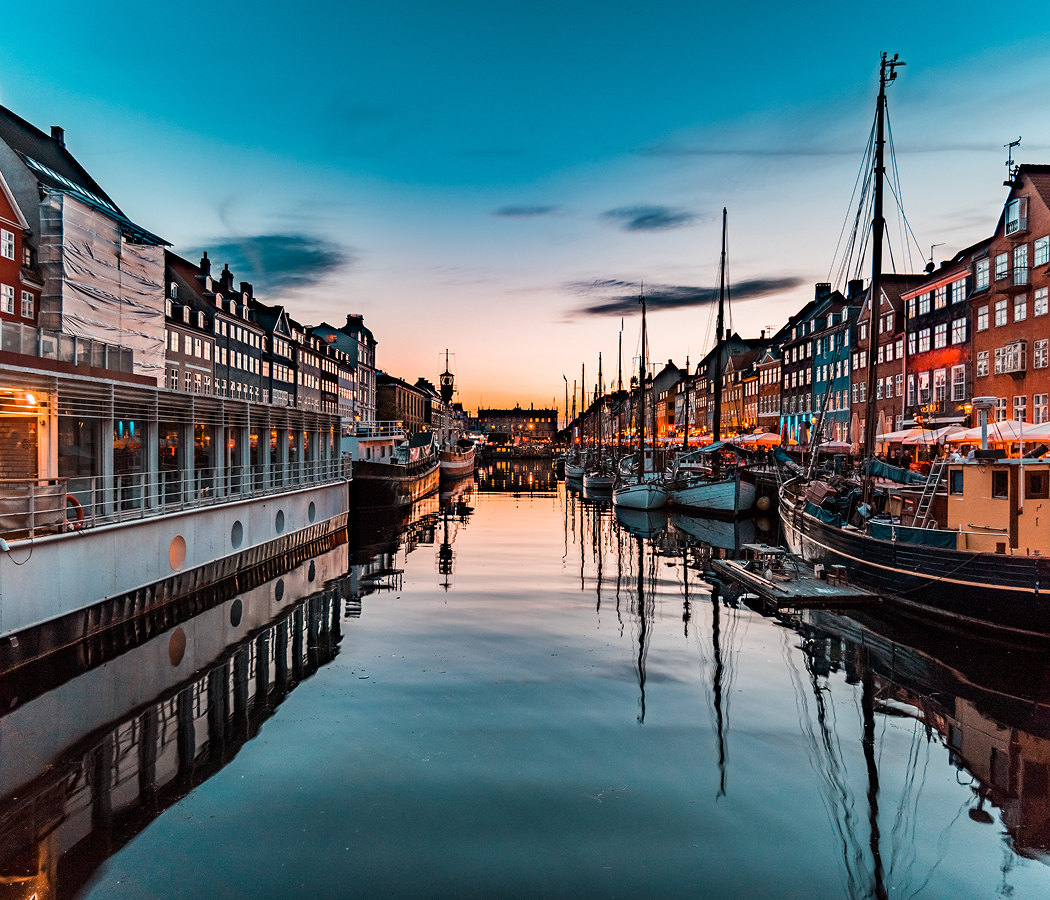
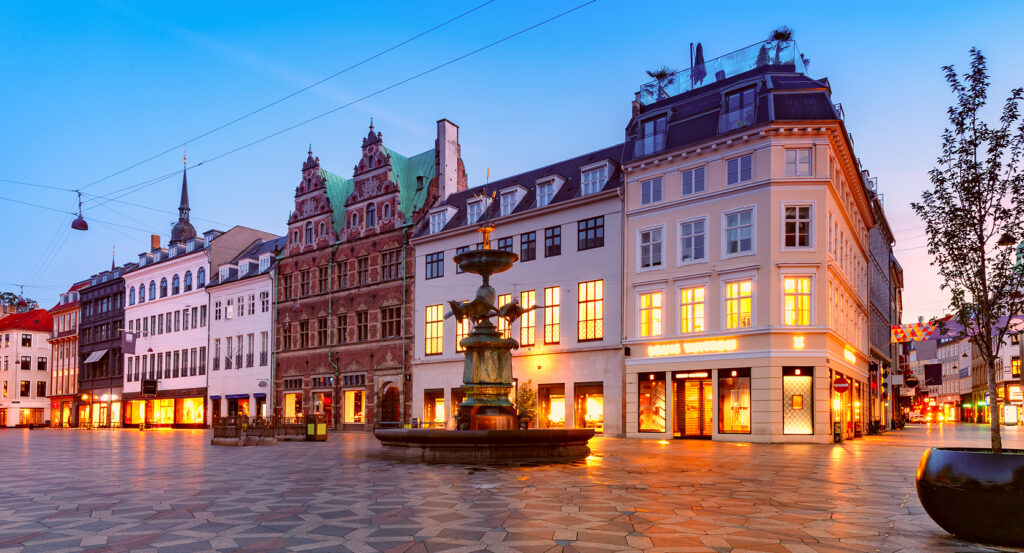
Start the walk at Rådhuspladsen, where the grand red-brick City Hall and the iconic Hans Christian Andersen statue set a whimsical tone. As you move east, let yourself wander, pause to admire the Stork Fountain at Amagertorv, framed by Renaissance façades, or step inside Illums Bolighus, a cathedral of Danish design where form and function meet in perfect harmony. Grab an open-faced sandwich (smørrebrød) and a coffee from a nearby café, and find a seat along the pedestrian strip to people-watch, a national pastime here. Street performers, jazz trios, and balloon artists fill the air with spontaneous joy, while the flow of cyclists and strollers creates a kind of quiet choreography. Continue toward Kongens Nytorv, where the street opens into a grand square anchored by the Royal Danish Theatre and the elegant Hotel d'Angleterre. From here, you're steps away from Nyhavn, Copenhagen's postcard harbor of colorful row houses and bobbing sailboats. Come back at twilight when Strøget glows in amber light, store windows flickering like lanterns and violin music echoing between stone walls. Strøget isn't just the soul of Copenhagen's shopping scene, it's a love letter to the art of urban living. Every step down its cobbled path reminds you that beauty thrives where people linger, where cities breathe, and where simplicity meets joy in motion.
Where your story begins.
Foresyte Travel reveals places that feel extraordinary long before you arrive.
Enjoy editorial crafted for luxury travelers.
Foresyte may earn a commission when you book.