Why you should experience Talisman Hotel & Restaurant in Cairo, Egypt.
Talisman Hotel & Restaurant is a lived-in, soul-forward Cairo hideaway where bohemian intimacy, intellectual curiosity, and human-scale hospitality replace polish with personality and depth.
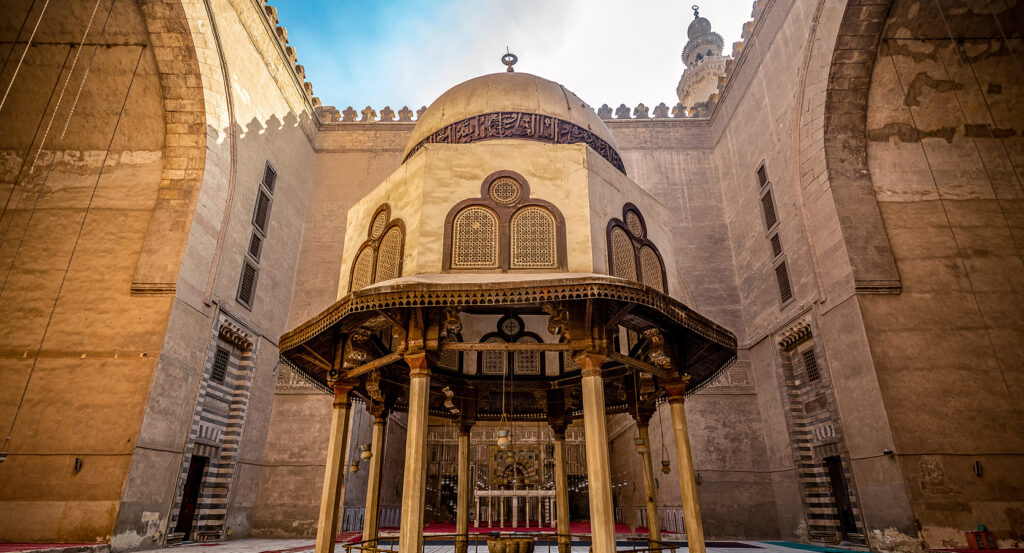
Set within a historic downtown building near Tahrir Square, Talisman does not present itself as a hotel in the conventional sense, it reveals itself gradually, like a well-kept secret passed between travelers who value meaning over markers. The arrival is intentionally understated. There is no grand entrance, no choreography, no separation from the city below. You ascend into it, leaving behind the noise, heat, and density of Downtown Cairo and stepping into a space that feels instantly personal, expressive, and unmanufactured. The interior reads more like a cultured private residence than a commercial property. Every surface carries intention: handpicked antiques, layered textiles, shelves of books, framed maps, art collected over time. The design is eclectic but coherent, shaped by curiosity. Nothing here feels rushed or optimized. The lobby and shared spaces invite conversation, reflection, and stillness in equal measure. You might find guests reading quietly, debating history, or lingering over tea. This is a hotel that encourages presence. Guest rooms at Talisman are deeply individual, no two feel identical, and that is the point. Each room carries its own character, defined by furniture choices, artwork, and spatial rhythm. Beds are comfortable and inviting, layered with textiles that feel chosen. Lighting is warm and domestic, designed for evenings spent writing, thinking, or simply sitting with the day. Windows look out over Downtown Cairo, offering glimpses of the city's layered life. Bathrooms are clean, functional, and thoughtfully maintained, emphasizing ease and routine over indulgence. What distinguishes the rooms is not size or luxury, but identity. They feel inhabited rather than staged, spaces that welcome your presence instead of demanding admiration. The restaurant is integral to the experience, not an add-on. Meals at Talisman feel communal and intentional, shaped by conversation as much as cuisine. The menu leans regional and Mediterranean, prepared with care. Breakfasts are slow and grounding, often unfolding into discussions between travelers who arrived strangers and leave with shared context. Evenings carry a soft, intellectual energy, dinners that stretch, wine poured. Service throughout the hotel is deeply human. Staff operate as hosts rather than employees, offering recommendations rooted in lived experience rather than scripts. They remember faces, preferences, and rhythms. There is a sense that the hotel exists as a living organism, staff, guests, and space interacting fluidly. The surrounding neighborhood reinforces this character. Downtown Cairo is chaotic, historic, expressive, and raw. From Talisman, you can walk to Tahrir Square, the Egyptian Museum, bookstores, cafés, and streets where Cairo reveals itself unfiltered. Yet the hotel acts as a psychological buffer, a place where the city's intensity can be processed, discussed, and metabolized.
What you should know about Talisman Hotel & Restaurant.
Talisman Hotel & Restaurant was conceived not as a hospitality product, but as a meeting point, a space where ideas, cultures, and personal narratives intersect.
The hotel's founders envisioned it as a refuge for independent travelers, scholars, writers, and culturally curious visitors who wanted Cairo with context. From its earliest days, Talisman positioned itself deliberately outside the luxury arms race that defined much of Cairo's hotel landscape. Instead of chasing views, scale, or brand affiliation, it invested in atmosphere, dialogue, and continuity. The result is a property that feels less like a business and more like an evolving archive of the people who pass through it. Over the years, Talisman has hosted archaeologists between field seasons, journalists covering political transitions, artists in residence, professors, diplomats off-duty, and travelers who arrive for days and stay for weeks. Its walls hold the residue of these lives, books left behind, art exchanged, conversations that stretch late into the night. Unlike properties designed for anonymity, Talisman thrives on recognition and memory. Guests are often remembered long after they leave, and many return years later to find the spirit intact. Architecturally, the hotel occupies a classic Downtown Cairo building, part of a broader early-20th-century urban fabric that reflects the city's cosmopolitan past. Rather than stripping this context away, Talisman leans into it, allowing creaking floors, high ceilings, and layered rooms to contribute to the experience rather than detract from it. This acceptance of imperfection is central to the hotel's identity. Culturally, Talisman has functioned as an informal salon. Conversations here often move fluidly between history, politics, literature, and travel, shaped by the diversity of its guests and the intimacy of the space. The restaurant, in particular, has served as a social anchor, among the few places in Downtown Cairo where locals and visitors naturally converge. A lesser-known aspect of Talisman is its quiet role during moments of national transition. During periods of political change or uncertainty, the hotel has remained open, hosting discussions, offering shelter, and maintaining a sense of calm continuity when the city outside felt unstable. This resilience has deepened its bond with returning guests, who view it not just as accommodation but as a constant. In a city where hospitality is often defined by scale, security, or performance, Talisman Hotel & Restaurant stands apart by embracing vulnerability, intimacy, and intellectual openness. It is not timeless because it avoids change, it is timeless because it absorbs it.
How to fold Talisman Hotel & Restaurant into your trip.
Talisman Hotel & Restaurant works as your thinking base, the place where Cairo's complexity becomes legible through conversation, rest, and reflection.
Begin your mornings slowly, allowing breakfast to unfold. Talk with other guests, read the papers, or simply watch the city wake through downtown windows. Use the hotel's location to explore on foot: walk to the Egyptian Museum, wander Tahrir Square, drift through side streets where bookstores, cafés, and workshops reveal Cairo's layered identity. Return mid-day to rest, write, or sit quietly, Talisman rewards unstructured time. Afternoons are ideal for deeper exploration: visits to Garden City, Zamalek, or cultural institutions reached easily from downtown. Evenings naturally gravitate back to the hotel's restaurant, where dinner becomes an extension of the day's discoveries. Pair your stay here with excursions to Giza, Saqqara, or the Grand Egyptian Museum, using Talisman as the place where those experiences are digested. For longer journeys through Egypt, Talisman works as either an opening chapter, orienting you intellectually and emotionally, or a closing chapter that allows everything you've seen to settle into meaning.
Where your story begins.
Foresyte Travel reveals places that feel extraordinary long before you arrive.
Experience premium editorial crafted for luxury travelers.