
Why you should experience Villa Cora in Florence, Italy.
Villa Cora is where aristocratic grandeur meets fairytale garden serenity, where 19th-century opulence blends seamlessly with modern luxury, and where stepping inside feels like entering a rose-scented world of marble halls, frescoed ceilings, and regal calm high above Florence's Renaissance skyline.
Set within a vast private park overlooking the Boboli Gardens, the villa rises like a dream, an ornate, pale-pink mansion crowned with terraces, balustrades, sculpted stonework, and architectural flourishes that reflect the extravagant taste of the noble families who once lived here. The approach alone feels cinematic: winding paths, towering trees, manicured lawns, and a grand façade whose symmetry and detailing evoke the most romantic chapters of Florentine history. Step inside, and Villa Cora becomes even more extraordinary. The interiors unfold like a palace: gleaming marble floors, fresco-covered ceilings, gilded mirrors, antique chandeliers, carved columns, sweeping staircases, velvet drapery, and an unmistakable sense of aristocratic elegance. Each salon has its own personality, some richly dramatic, some serene and sunlit, all meticulously restored to preserve the lavish spirit of the villa's 19th-century rulers while integrating contemporary comfort in the most discreet, thoughtful ways. Rooms and suites are distinctive and exquisitely styled. Expect plush king beds wrapped in fine Italian linens, elegant furnishings, curated artwork, soaring ceilings, and tall windows framing the villa's gardens, the rolling Tuscan hills, or glimpses of Florence's domes and rooftops. Each room category feels like a private chapter of history: lavish canopy beds, opulent wallpaper, rich fabrics, and decorative elements inspired by imperial, neoclassical, Moorish, or romantic European styles. Bathrooms are luxurious and beautifully appointed, marble surfaces, deep soaking tubs or walk-in rain showers, refined fixtures, ample lighting, and premium amenities designed to elevate every moment of your stay. Suites take the experience to another level entirely: expansive living areas, private terraces, salon-style lounges, intricate architectural details, and views that feel painted. The “Imperial Suite,” once the residence of Empress Eugénie, captures the pinnacle of historical romance with its frescoes, gilded ornamentation, and museum-level artistry. One of Villa Cora's most captivating features is its gardens, a vast, beautifully landscaped oasis of rose bushes, towering oaks, citrus trees, gravel paths, shaded corners, fountains, and outdoor seating that invite slow, tranquil afternoons. The swimming pool, Florence's most beautiful hotel pool, is tucked within this serene landscape: a turquoise, sun-soaked space lined with elegant loungers and shaded pergolas. In summer, the garden becomes a peaceful haven for reading, sipping wine, or enjoying a quiet escape from the city's lively streets. Dining at Villa Cora is a refined experience centered around Ristorante Le Bistrot, where Tuscan flavors, seasonal ingredients, and elegant presentation come together in a setting that feels timeless and exquisitely intimate. Breakfast is served in luminous salons or on the terrace overlooking the gardens, offering pastries, breads, fruit, eggs, vegetables, cheeses, charcuterie, yogurt, cereals, cakes, and exceptional Italian coffee, all delivered with grace and beauty. The spa is another highlight: an indulgent sanctuary offering thermal experiences, a hammam inspired by Turkish traditions, treatment rooms for massages and rituals, and serene relaxation areas wrapped in soft lighting and aromatic warmth.
What you should know about Villa Cora.
Villa Cora stands on land shaped by aristocratic ambition, artistic patronage, and the political drama of 19th-century Florence, reflecting a period when the city transitioned from Renaissance jewel to modern capital.
The villa was built in the late 1860s for Baron Oppenheim, a wealthy German financier with a passion for grandeur. Designed as a lavish private residence, it reflected the era's obsession with eclectic architectural style, combining Renaissance revival, neoclassical lines, and ornamental flair drawn from French imperial influence. The surrounding hills had long been sought after by Florence's nobility, thanks to their sweeping views and proximity to the Boboli Gardens. Historical records show that the land beneath the villa was once part of an agricultural estate that supplied produce to noble Florentine households, as well as a vantage point used for surveying the Oltrarno's rural outskirts. The villa soon gained notoriety when it became the residence of Empress Eugénie, widow of Napoleon III, after the fall of the French Empire. Under her influence, Villa Cora became one of Europe's most fashionable social salons, hosting aristocrats, diplomats, artists, and socialites for extravagant gatherings that blended French elegance with Italian sophistication. During this period, the villa's interiors were enriched with frescoes, gilding, imported materials, and decorative arts that showcased the cultural crosscurrents of late-19th-century Europe. A little-known detail: the villa's Moorish Room, among its most distinctive spaces, was inspired by the Empress's fascination with Ottoman and North African design, incorporating exotic motifs and handcrafted details unlike anything else in Florence. In the 20th century, Villa Cora played various roles, including a luxury residence, a club for aristocratic families, and a glamorous gathering place for diplomats and high society. During World War II, it was requisitioned by Allied forces and later by the Italian government, serving as a political meeting space before eventually returning to private hands. When the villa was restored as a luxury hotel in the 21st century, conservation experts discovered original frescoes, hidden decorative motifs, architectural alterations from multiple eras, and fragments of painted ceilings that had been concealed under layers of modernization. Every effort was made to preserve these elements, allowing the villa to maintain its layered artistic identity. Today, Villa Cora remains a museum-level monument to Florence's 19th-century aristocratic past, among the few villas in the city that still reflects the grandeur, architectural ambition, and decorative extravagance of its era.
How to fold Villa Cora into your trip.
Villa Cora becomes your palatial Florentine retreat, where mornings begin with golden light in the gardens, afternoons unfold into art-filled explorations, and evenings settle into regal calm surrounded by the villa's timeless elegance.
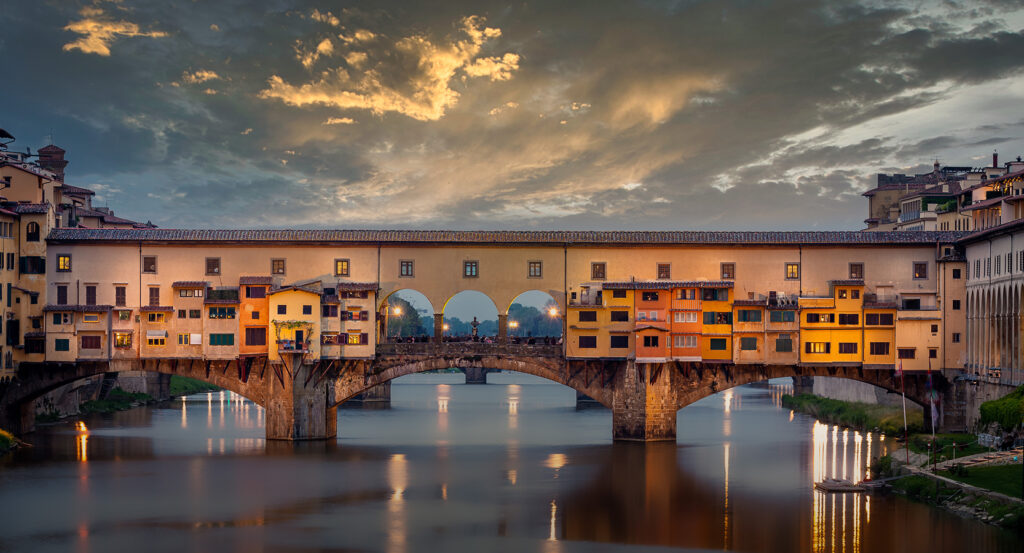
Start the morning with breakfast on the terrace overlooking the gardens, then take a peaceful walk toward the Boboli Gardens, entering one of Florence's most important Renaissance landscapes from its quieter Oltrarno side. Continue toward Palazzo Pitti or wander into Santo Spirito and San Frediano to explore artisan workshops, cafés, boutiques, and the authentic rhythms of daily Florentine life. Midday, return to Villa Cora for a restorative break, relax by the pool, wander the gardens, or visit the spa for a wellness ritual inspired by Turkish traditions. In the afternoon, head into the historic center for the Duomo, Piazza della Signoria, Uffizi Gallery, or Ponte Vecchio. Everything is just a short ride or leisurely walk away. As evening arrives, enjoy aperitivo in one of the villa's richly decorated salons or by the pool before dining at the elegant Le Bistrot or choosing a restaurant in Oltrarno or the city center. After dinner, return to the villa for a nighttime stroll through the illuminated gardens, soft lamplight reflecting off the trees, Florence glowing in the distance, and the villa's regal façade shining under the Tuscan sky.
Where your story begins.
Foresyte Travel reveals places that feel extraordinary long before you arrive.
Experience premium editorial crafted for luxury travelers.




















































































































