Why you should experience Cityhotel Trumer Stube in Salzburg, Austria.
Cityhotel Trumer Stube is a quietly confident urban hotel that positions you at the intersection of Salzburg's everyday life and landmark culture, offering a stay defined by accessible comfort, thoughtful scale, and the sense of living the city rhythm.
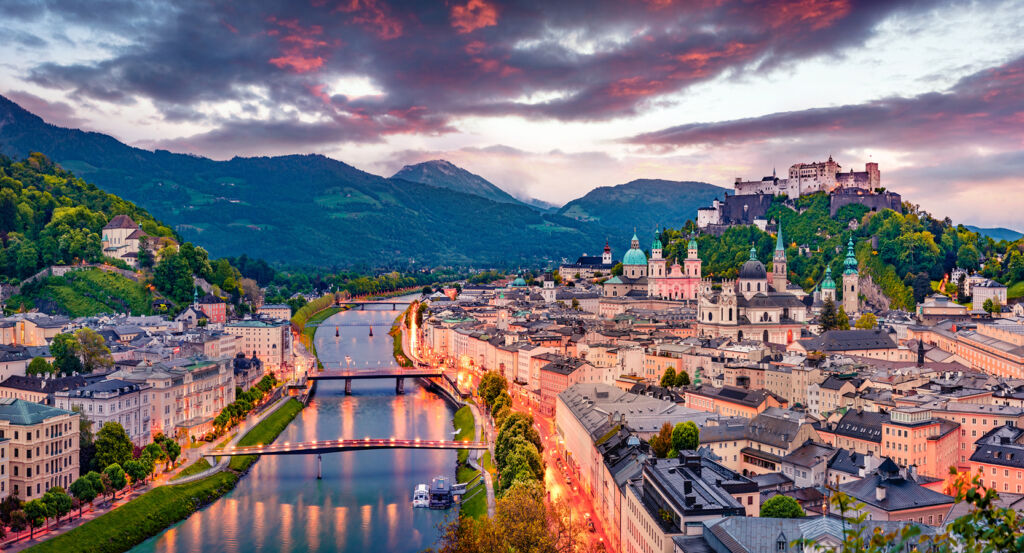
Located on a lively street in Salzburg's Neustadt district just across the Salzach from the Old Town, the hotel occupies a neighborhood shaped by daily movement, cafés, markets, and local routine. Arrival feels direct and composed: you step off an animated street into an interior that signals readiness and ease. Public spaces are arranged for use, seating that invites pause, lighting that supports orientation without mood play, and materials that feel tactile and grounded rather than ornamental. The overall tone feels contemporary, unpretentious, and spatially confident, a place that even before check-in communicates utility calibrated for presence. Guest rooms continue this functional refinement. Layouts are clear and well-proportioned, giving you room to settle, rest, and organize. Beds are supportive and structured for genuine rest after walking Salzburg's streets, museum circuits, or riverfront paths. The design language leans modern and refined, muted palettes, durable finishes, and furnishings selected for balance between comfort and endurance. Windows frame city streets, rooftops, or nuanced urban perspectives that reinforce your sense of being right inside Salzburg's lived environment rather than observing it from a distance. Bathrooms are practical and well-executed, designed to support routine with clarity. Across the property, the experience feels composed, capable, and appropriately scaled for both first-time visitors and repeat residents of the city. Cityhotel Trumer Stube is ideal for travelers who want Salzburg to feel approachable, navigable, and authentic, a city experienced through repeat routes, local rhythm, and presence.
What you should know about Cityhotel Trumer Stube.
Cityhotel Trumer Stube is best known for urban embeddedness, the conviction that a hotel should integrate seamlessly with its neighborhood rather than stand apart as a separate destination, and this principle quietly informs how the environment feels and functions across your stay.
Unlike hotels that rely on dramatic architectural gestures or curated narrative to signal identity, this property highlights legibility and lived context. Circulation paths are direct and intuitive; you learn your way around quickly, and once familiar, the layout recedes into the background of your presence. Public areas are proportioned for calm occupancy, balanced between scale and comfort, allowing movement, conversation, and planning to coexist. Materials throughout the hotel are selected for durability and tactility: surfaces feel solid under hand, finishes show restrained texture rather than visual contrast, and overall the space feels composed rather than performed. This choice supports an environment that makes rest and focus easier because nothing in the interior demands notice. Acoustic conditions reflect this same logic. Exterior street sound registers as context rather than disruption, allowing rooms and shared spaces to function as true repositories of calm without artificial isolation. You remain aware you are in a living city. Lighting strategy reinforces continuity. Natural daylight enters common spaces with even clarity, while artificial lighting remains warm and directional, supporting transitions through morning, afternoon, and evening with subtlety. This visual rhythm aligns with the natural energy of travel, alertness in the day, calm in the evening. Service culture mirrors this operational coherence. Interactions are friendly, competent, and unobtrusive. Staff provide assistance with clarity rather than performance, anticipating needs with precision but without ceremony. There is an implicit respect for autonomy here, you are supported. Another understated strength of the hotel is how it reframes centrality. Its location near neighborhood cafés, local markets, and everyday city activity does not feel peripheral; it feels enabling. Over multiple nights, this becomes increasingly clear: arrival loses its tension, departure feels orderly, and Salzburg begins to feel familiar not just through landmarks but through repeated experience of place.
How to fold Cityhotel Trumer Stube into your trip.
Cityhotel Trumer Stube works best when you allow it to function as a practical urban base, a place that supports your engagement with Salzburg through rhythm, proximity, and ease.
Begin your mornings already in presence. The hotel's composed, accessible interior allows you to orient yourself before stepping out into the city's lived fabric. From here, principal corridors, Getreidegasse, Residenzplatz, Mozart's birthplace, as well as local cafés and markets are all walkable without extravagant effort, encouraging exploration that feels natural rather than choreographed. Return midday. Because the environment remains composed rather than dramatic, even short breaks feel genuinely restorative. Use these pauses to reset physically, plan the remainder of your day, or simply enjoy local rhythm in a café. Afternoons lend themselves to layered engagement, museum visits, long lunches, architectural wandering, riverfront walks, supported by the knowledge that your base remains calm and easy to reenter. Evenings unfold with flexibility. Dine locally or centrally, explore Salzburg's nightlife, attend performances, or take peaceful twilight walks before returning to a space that restores presence. For longer stays, this rhythm becomes deeply sustaining. Salzburg begins to feel navigable and familiar through repeated interaction. Business travelers benefit from the hotel's proximity to transit links and dependable rest that supports focus. Leisure travelers gain resonant bandwidth, the freedom to engage deeply without exhausting cognitive or physical energy at day's end. Anchoring your stay at Cityhotel Trumer Stube allows Salzburg to be encountered as a living, coherent city rather than a series of isolated highlights. The hotel does not compete with historic grandeur, opulent narrative hotels, or physical performance. It offers something equally essential: functional presence. In doing so, it delivers a stay that feels composed, accessible, and genuinely aligned with how people actually move through, live in, and remember a city like Salzburg, where rest supports exploration, orientation supports intention, and presence unfolds with clarity.
Where your story begins.
Foresyte Travel reveals places that feel extraordinary long before you arrive.
Experience premium editorial crafted for luxury travelers.