Why you should experience Hôtel Gutenberg in France.
Hôtel Gutenberg is where medieval Strasbourg, human-scale hospitality, and quiet intellectual charm intersect, offering a stay that feels intimate, grounded, and deeply woven into the city's oldest living fabric.
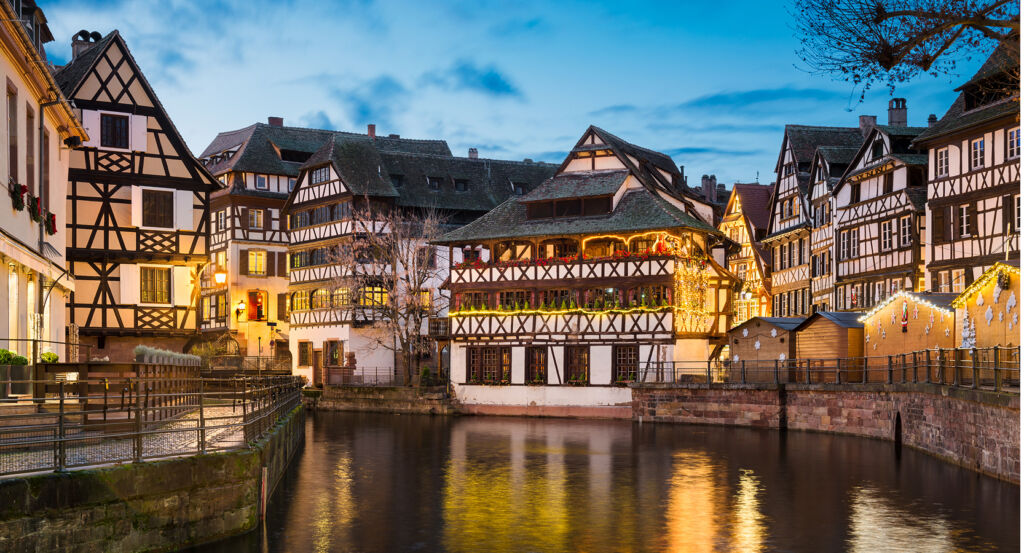
Positioned directly beside Strasbourg Cathedral, the hotel occupies one of the most emotionally charged locations in the city. Arrival is immediate and visceral. Stone streets narrow, the cathedral's spire dominates the sky, and the sense of history is not abstract. It is physical, close, and unavoidable. Hôtel Gutenberg does not attempt to compete with this gravity. Instead, it aligns with it. The exterior feels modest and intentional, signaling a place that understands its role as a participant in the city. Step inside and the atmosphere softens. Interiors are warm, composed, and thoughtfully restrained. Public spaces feel residential rather than performative, with seating arranged for conversation and pause instead of circulation alone. Light is diffused, not dramatic, allowing textures and materials to quietly reveal themselves over time. There is an immediate sense of calm here, a feeling that you have stepped into a place designed to hold you. Guest rooms continue this sense of considered intimacy. Proportions feel human and balanced. Nothing is oversized, nothing compressed. Beds are dressed in comfortable linens that favor rest over stiffness, encouraging sleep that feels natural. Furnishings are functional but warm, chosen to support real use. Windows often open toward cathedral stonework, historic rooftops, or pedestrian streets below, creating a constant discussion between room and city. You are never removed from Strasbourg here. You are simply given a quiet place from which to observe it. Bathrooms reflect the same philosophy. Clean lines, quality fixtures, and thoughtful lighting support daily rituals. Everything feels intentional and honest, as though the hotel has edited itself down to what truly matters. What defines Hôtel Gutenberg is its sense of proximity and humility. This is a hotel that understands the power of being close to something extraordinary. The cathedral sets the resonant tone, and the hotel responds with calm, care, and respect. The lounge and breakfast spaces feel like extensions of the surrounding city. Mornings here feel gentle and grounded, with the rhythm of footsteps outside and church bells marking time. Service is attentive and sincere. Staff interactions feel personal. Guidance is offered with nuance, shaped by genuine familiarity with the surrounding streets. Step outside and Strasbourg unfolds. Gothic architecture, half-timbered houses, canals, cafés, and bookshops sit within a compact, walkable radius. Hôtel Gutenberg is ideal for travelers who want Strasbourg to feel immediate, historic, and deeply human, a stay shaped by closeness, continuity, and quiet reverence.
What you should know about Hôtel Gutenberg.
Hôtel Gutenberg is best known for Strasbourg's role as a center of knowledge, printing, and cultural exchange, embodying a quieter intellectual lineage that runs beneath the city's visual grandeur.
The hotel takes its name from Johannes Gutenberg, whose innovations in printing transformed Europe's relationship with knowledge and whose legacy is deeply tied to Strasbourg. Long before becoming a tourist destination, this part of the city functioned as a crossroads of ideas, scholarship, and exchange. Streets around the cathedral were once filled with printers, scholars, and merchants whose work shaped intellectual life across the continent. Hôtel Gutenberg exists within this historical context not as a monument but as a continuation of the city's human-scale tradition. The building itself reflects this continuity. Rather than asserting architectural dominance, it fits into the medieval streetscape with restraint. Interiors respect this lineage through proportion and material choice. Spaces are not theatrical. They are legible, calm, and purposeful. Movement through the hotel feels natural, almost domestic, reinforcing the sense that this is a place for thought and rest. A lesser-known aspect of the hotel's character lies in how it manages physical experience. Despite being located at one of the most visited points in Strasbourg, interiors remain acoustically composed. Sound from the streets softens as you move inward. Conversations remain contained. Rooms feel insulated. This balance allows guests to remain close to the city's energy. Another subtle layer is how the hotel frames time. Staying here sharpens your awareness of rhythm. Cathedral bells mark the hours. Foot traffic ebbs and flows. Morning light reveals stone textures differently than evening glow. The hotel does not interrupt this rhythm with artificial performance. It supports it, allowing guests to synchronize with the city. The service philosophy mirrors this approach. Interactions are measured and human, guided by attentiveness. Recommendations often emphasize timing and mood. Where to walk early. When the cathedral is quietest. Which street feels most alive at dusk. These details reinforce the hotel's role as a facilitator of lived experience. Hôtel Gutenberg has long attracted travelers who value closeness over luxury and depth over display. Writers, solo travelers, couples, and culturally curious guests often choose it not because it promises escape, but because it offers immersion. Staying here places you within a Strasbourg that values knowledge, continuity, and presence. It is not a hotel that explains the city. It allows the city to speak for itself.
How to fold Hôtel Gutenberg into your trip.
Hôtel Gutenberg works best when you let proximity, repetition, and slow observation shape your Strasbourg experience rather than chasing novelty across the map.
Begin your mornings early, before the streets fully awaken. Step outside while the cathedral still feels contemplative. Walk the surrounding streets as shopkeepers prepare for the day and the city stretches into motion. This is when Strasbourg feels most intimate. Have coffee nearby and watch how light moves across stone and timber. From here, exploration becomes effortless. You are already inside the historic core. Walk. Let bridges, canals, and narrow lanes redirect you. The Grande Île rewards wandering more than planning. Late mornings are ideal for entering the cathedral itself. Allow time to sit, to look upward, to feel scale. Nearby museums and galleries reveal themselves best when approached slowly. Return to the hotel midday for a pause that feels earned. Sit quietly. Read. Let the city continue outside without feeling the need to follow it. This rest is part of the rhythm, not a break from it. In the afternoon, move outward slightly. Walk toward the Petite France district, or follow the river's curve to quieter residential streets. Strasbourg's charm deepens as you move just beyond its most photographed angles. Each return to Hôtel Gutenberg feels grounding rather than repetitive, like returning to a familiar anchor point in a dense and layered environment. As evening approaches, let dinner emerge. Choose a restaurant based on atmosphere. Alsatian cuisine is richest where it feels unhurried and sincere. After dinner, walk back through softly lit streets as the cathedral's presence shifts from dominant to contemplative. The city at night feels reflective. Returning to the hotel feels like continuity, not conclusion. On your final morning, linger. One more walk around the cathedral. One more glance at familiar streets now subtly changed by familiarity. One more moment of stillness.
Where your story begins.
Foresyte Travel reveals places that feel extraordinary long before you arrive.
Experience premium editorial crafted for luxury travelers.