Why you should experience The Wrigley Building in Chicago, Illinois.
The Wrigley Building isn't just a skyscraper, it's Chicago's declaration of elegance cast in white terra cotta.
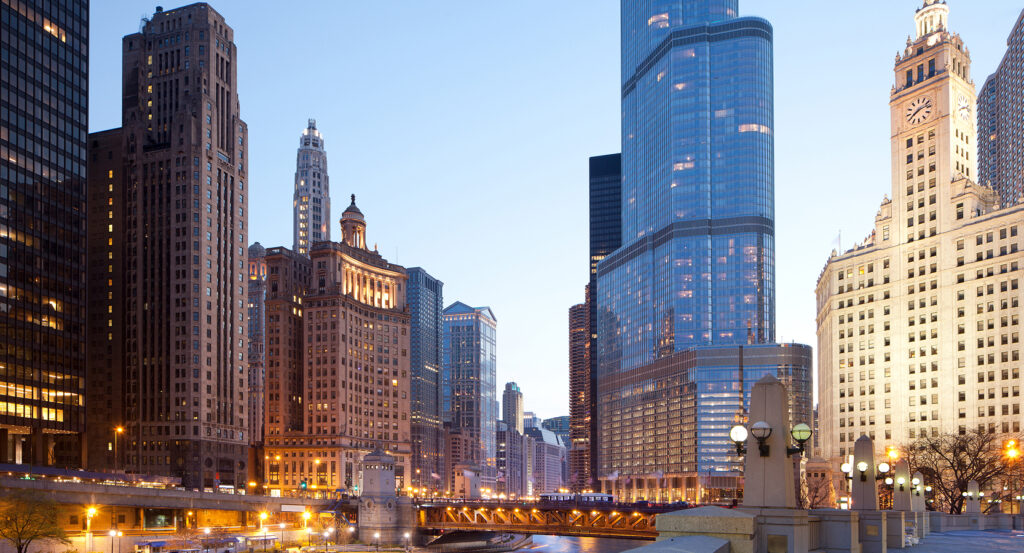
Perched at the foot of the Michigan Avenue Bridge, its twin towers gleam beside the river like ivory bookends to the Magnificent Mile. When sunlight hits its façade, the building almost shimmers, a reflection of the optimism that defined the city's roaring 1920s boom. Step into its marble-clad lobby and you'll feel the blend of precision and poetry that made Chicago the cradle of modern architecture. Its clock tower, modeled after Seville's Giralda, crowns the skyline with a European grace that still feels fresh a century later. To stand beneath it is to witness how ambition can take form in stone, rising not for power but for beauty's sake.
What you didn't know about The Wrigley Building.
Commissioned by chewing gum magnate William Wrigley Jr. and completed in 1924, the Wrigley Building was the first major skyscraper north of the Chicago River, a calculated move to anchor Michigan Avenue's transformation into a world-class boulevard.
Its architects, Graham, Anderson & White, crafted it from 250,000 glazed terra cotta tiles, each subtly tinted to create a gradient effect that brightens toward the top, an optical illusion that makes the tower appear to dissolve into the sky. At night, its floodlit exterior became one of the first illuminated facades in the city, earning it instant landmark status. Even the clock's four faces are eight feet in diameter, large enough to be read from the bridge below. Though it once served as headquarters for the Wrigley Company, today it houses modern offices and boutique retail, standing as a bridge between Chicago's gilded past and its ever-renewing present.
How to fold The Wrigley Building into your trip.
For the most breathtaking view of the Wrigley Building, approach from the Riverwalk just after dusk, when the last light fades and the tower glows with cinematic brilliance.
Cross the DuSable Bridge to admire how its illuminated façade reflects off the Chicago River, rippling like liquid marble. Step inside the lobby if it's open, the intricate tile work and ornate balustrades feel like a time capsule from the city's golden age. From there, wander into the adjacent plaza connecting the Wrigley to the Tribune Tower, where live musicians often perform under the glow of café lights. End with a nightcap at one of the nearby rooftop lounges, and watch as the clock tower presides over the city's energy below, timeless, luminous, and eternally Chicago.
Where your story begins.
Start your planning journey with Foresyte Travel.
Experience immersive stories crafted for luxury travelers.