Why you should experience Savannah Riverwalk in Savannah, Georgia.
Savannah Riverwalk is a historic waterfront corridor where Historic District's maritime heritage, commercial legacy, riverfront culture, and Southern hospitality create one of Georgia's most memorable pedestrian experiences.
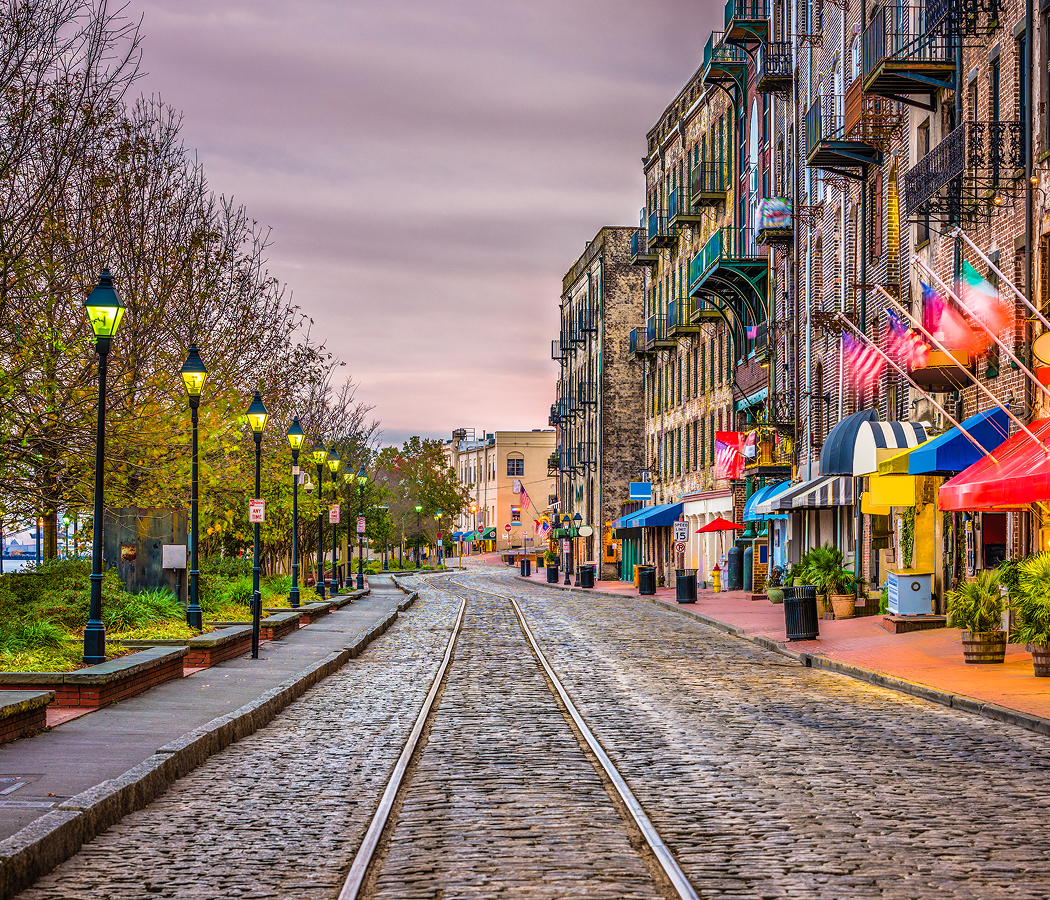
Running along the Savannah River between the Savannah Convention Center ferry landing and Eastern Wharf, this energetic waterfront promenade follows the city's original commercial shoreline past restored cotton warehouses, granite ballast stones, riverfront plazas, museums, restaurants, boutiques, and sweeping views of one of the busiest ports on the East Coast. Historic brick buildings rise above the lower river level while cargo ships, ferries, and tugboats continuously navigate the channel, creating a streetscape where Savannah's eighteenth-century origins remain inseparable from its modern maritime economy. The result is a corridor defined by living history, waterfront vitality, and one of the South's most celebrated urban promenades.
What you should know about the Savannah Riverwalk.
Savannah Riverwalk is best known for occupying the original commercial waterfront established following James Oglethorpe's founding of Savannah in 1733, preserving the historic bluff and riverfront warehouses that transformed the city into one of the British Empire's most important colonial ports before later becoming the world's leading cotton export center during the nineteenth century. The promenade follows Bay Street's elevated bluff beneath which Factors Walk developed as a sophisticated network of warehouses, bridges, ramps, retaining walls, and cobblestone passages engineered to overcome the nearly forty-foot elevation difference between the city above and the working river below. Granite ballast stones discarded by transatlantic sailing vessels became the foundation of River Street, while warehouses constructed from the late eighteenth through nineteenth centuries stored cotton, tobacco, naval stores, and imported goods destined for international markets linking Savannah with Britain, Europe, the Caribbean, and beyond. Following decades of commercial decline after World War II, an ambitious preservation movement during the 1970s and 1980s restored the surviving warehouse district into today's Savannah Riverwalk while carefully retaining its historic masonry architecture, iron bridges, original cobblestones, and industrial character. Today the waterfront remains directly adjacent to the Port of Savannah, now among the busiest container ports in North America, allowing visitors to experience more than 290 years of uninterrupted maritime commerce where colonial trade, Civil War history, preservation, tourism, and global shipping continue occupying the same remarkable landscape.
Savannah Riverwalk remains an authentic working waterfront. Massive container ships still pass within sight of eighteenth-century warehouses, ferries continue crossing the river, and the preserved commercial architecture reminds visitors that Savannah's prosperity has always depended upon the extraordinary relationship between the city and its river. Few American waterfronts reveal such an unbroken connection between colonial origins, industrial expansion, historic preservation, and modern global commerce.
How to fold the Savannah Riverwalk into your trip.
Savannah Riverwalk works as the historic spine of an exploration through Savannah's original waterfront district.
Begin at Factors Walk, where bridges, vaulted passages, granite ramps, and preserved cotton warehouses reveal the engineering that connected the bluff-top city to its thriving commercial docks before following Savannah Riverwalk along the riverfront. Continue to Ships of the Sea Maritime Museum, whose distinguished collections illuminate Savannah's centuries of shipbuilding, transatlantic commerce, and maritime heritage through historic models, artifacts, and gardens. Conclude at Plant Riverside District, where meticulously restored industrial buildings, contemporary dining, live entertainment, and dramatic riverfront public spaces demonstrate how Savannah continues reinventing its historic waterfront. The progression moves naturally from nineteenth-century commercial infrastructure to maritime interpretation before concluding within Savannah's newest waterfront destination, revealing how nearly three centuries of river commerce continue shaping one of America's most distinctive historic cities.
Where your story begins.
Foresyte Travel reveals places that feel extraordinary long before you arrive.
Experience premium editorial crafted for luxury travelers.