Why Topography of Terror matters.
The Topography of Terror is one of Berlin's most sobering and essential sites, a place where history's darkest truths are laid bare in the pursuit of remembrance.
Built on the grounds that once housed the headquarters of the Gestapo and SS, this open-air and indoor museum transforms a space of fear into one of education and conscience. The contrast is jarring: where orders of oppression were once issued, quiet exhibits now tell stories of resistance, propaganda, and complicity. Walking through the site, you sense the gravity of history in every steel beam and gravel path. The architectural design is stark and unembellished, allowing the weight of the content to speak for itself. Along the preserved excavation of the Gestapo prison cells, black-and-white photographs line the walls, pairing visual evidence with chilling precision. This isn't a memorial that seeks to comfort, it seeks to confront. It invites every visitor to look unflinchingly at the machinery of terror and to recognize the moral duty that comes with remembering it.
What defines Topography of Terror.
This site once stood at the center of Nazi power, housing the offices from which persecution and genocide were meticulously planned.
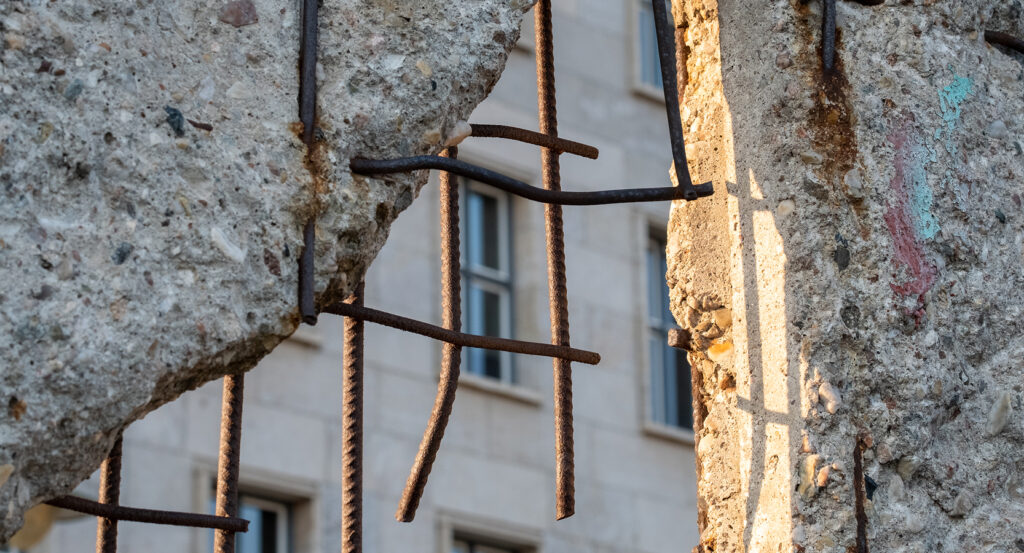
After World War II, the buildings were largely destroyed, and for decades, the site was neglected, covered in rubble, weeds, and silence. It wasn't until the 1980s that excavation revealed the foundations of the Gestapo prison cells, sparking renewed interest in preserving the site as a place of historical reckoning. The modern documentation center, opened in 2010, presents one of the most comprehensive exhibitions on Nazi institutions of terror, using photographs, documents, and personal testimonies to map the evolution of totalitarian control. Outside, a 200-meter stretch of the Berlin Wall runs parallel to the exhibit, among the few remaining sections in the city, visually linking the crimes of one era to the oppression of another. The museum's curators deliberately avoided sensationalism, focusing instead on the bureaucratic normalcy of evil, how ordinary offices, typewriters, and meeting notes facilitated extraordinary cruelty. The result is hauntingly effective: a history lesson that feels immediate, intimate, and impossible to forget.
How Topography of Terror fits.
A visit to the Topography of Terror is best approached with time and focus, it's not a quick stop, but a profound encounter with history.
Begin outside, walking the perimeter where the remnants of the Berlin Wall and Gestapo cell foundations remain exposed. The contrast of these structures creates one of Berlin's most powerful visual narratives. Then move inside the documentation center, where the chronological exhibition leads you through the rise of the Nazi regime, the implementation of its ideology, and the devastation it wrought across Europe. Give yourself an hour and a half; the density of information demands resonant and intellectual space. Visit early in the day or late in the afternoon when the crowds thin, silence is part of the experience. Afterward, take a quiet moment in the adjacent garden area before continuing toward Potsdamer Platz, just a short walk away. The Topography of Terror isn't a site you “enjoy”, it's one you honor. It stands as one of the world's most vital reminders of what happens when power goes unchecked, and why truth must always be preserved, even when it hurts to see it.
Where your story begins.
Foresyte Travel reveals places that feel extraordinary long before you arrive.
Enjoy editorial crafted for luxury travelers.
Foresyte may earn a commission when you book.