Why you should experience The Upholstery Shop at Betsy Ross House in Philadelphia, Pennsylvania.
The Upholstery Shop at Betsy Ross House in Philadelphia is where America's most enduring legend, the sewing of the first flag, comes vividly to life.
Stepping inside feels less like entering an exhibit and more like crossing into a moment in time. The scent of linen and leather fills the air as costumed artisans work with 18th-century tools, mallets, tacks, thread, and hand-dyed fabrics, to demonstrate how colonial tradespeople built their livelihoods through skill and precision. Here, history hums quietly in motion: bolts of cloth unfurled across a wooden table, shears glinting in soft window light, a flag taking form one careful stitch at a time. The Upholstery Shop reveals a side of the Revolution rarely told, not the battles or speeches, but the daily craftsmanship that sustained both home and cause. To watch the work unfold here is to witness independence expressed through the artistry of human hands.
What you should know about The Upholstery Shop at Betsy Ross House.
Upholstery in colonial America was far more complex than sewing cushions; it encompassed everything from repairing draperies and mattresses to crafting flags, banners, and uniforms for militias. Betsy Ross was apprenticed to an upholsterer named William Webster, where she learned fine needlework and furniture finishing, skills she later applied in her own shop. The workshop at the Betsy Ross House displays authentic tools of the trade: curved needles for tufting, hand-forged scissors, tacking hammers, flax stuffing, and natural dyes made from indigo, cochineal, and walnut hulls. What most visitors don't realize is that upholsterers in the 1770s were essential to civic life, blending artistry with practicality in service of both households and the Revolution. During wartime, Betsy and other artisans often sewed tents, flags, and cartridge bags for soldiers, work done quietly but vital to morale and identity. The workshop's interpreters bring these stories to life with demonstrations and storytelling, illuminating how trade skills could empower women economically long before they had political rights.
How to fold The Upholstery Shop at Betsy Ross House into your trip.
When visiting the Betsy Ross House, begin your tour with The Upholstery Shop, it sets the tone for understanding both the woman and the myth.
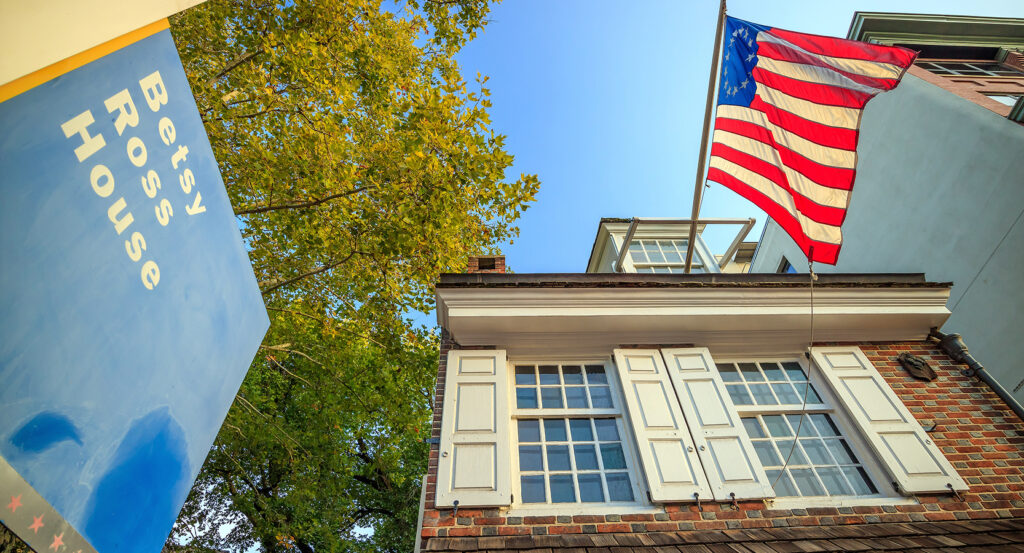
Arrive mid-morning, when live demonstrations are most frequent, and take time to observe the rhythm of the work: the snip of shears, the pull of thread, the quiet conversation between artisan and audience. Ask questions, the interpreters are experts in both technique and historical context, eager to explain everything from how upholsterers sourced materials to how Betsy's five-pointed star design improved efficiency in flag-making. Notice the tactile details: the grain of the worktable worn smooth by years of use, the glint of brass buttons and tacks, the smell of wool and beeswax in the air. Afterward, move through the adjoining rooms to see how Betsy balanced her home life and her trade, an act of independence as revolutionary as any flag she ever sewed. Before leaving, return to the courtyard and look up at the enormous American flag waving above the roofline; it's impossible not to imagine it beginning right here, stitched by candlelight in a room much like this. The Upholstery Shop isn't just a museum stop, it's the living pulse of the Betsy Ross House, where the artistry of freedom was handmade.
Where your story begins.
Foresyte Travel reveals places that feel extraordinary long before you arrive.
Experience premium editorial crafted for luxury travelers.