Why Café du Centre matters.
Café du Centre is a historic Geneva brasserie where Rues-Basses' centuries-old commercial heritage meets the enduring traditions of French café culture, fresh seafood, and the city's celebrated public-square dining.
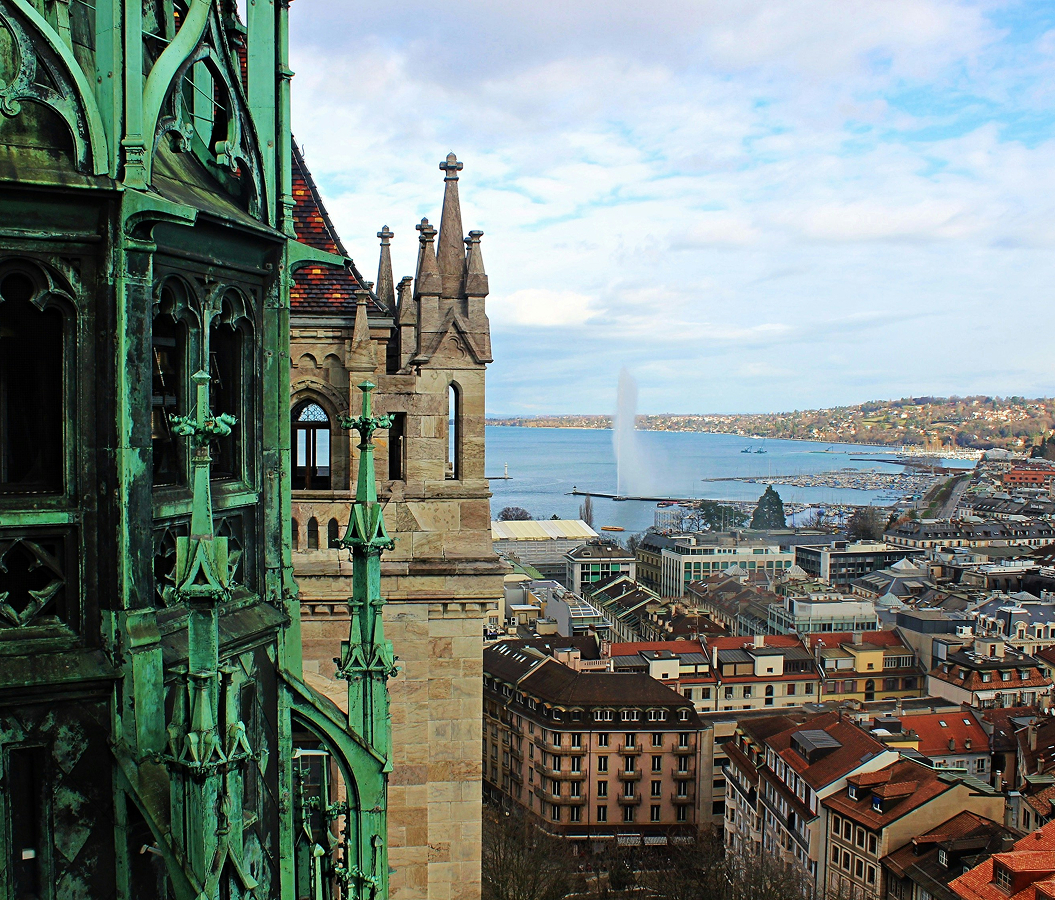
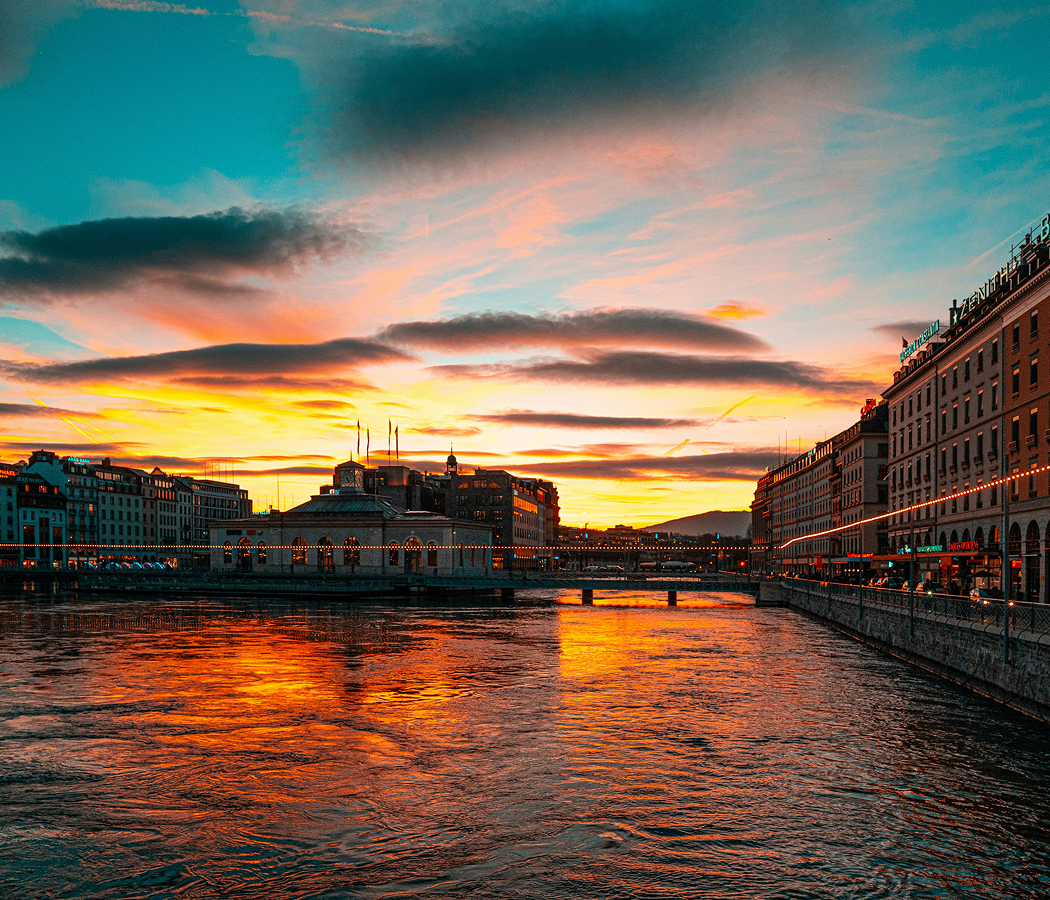
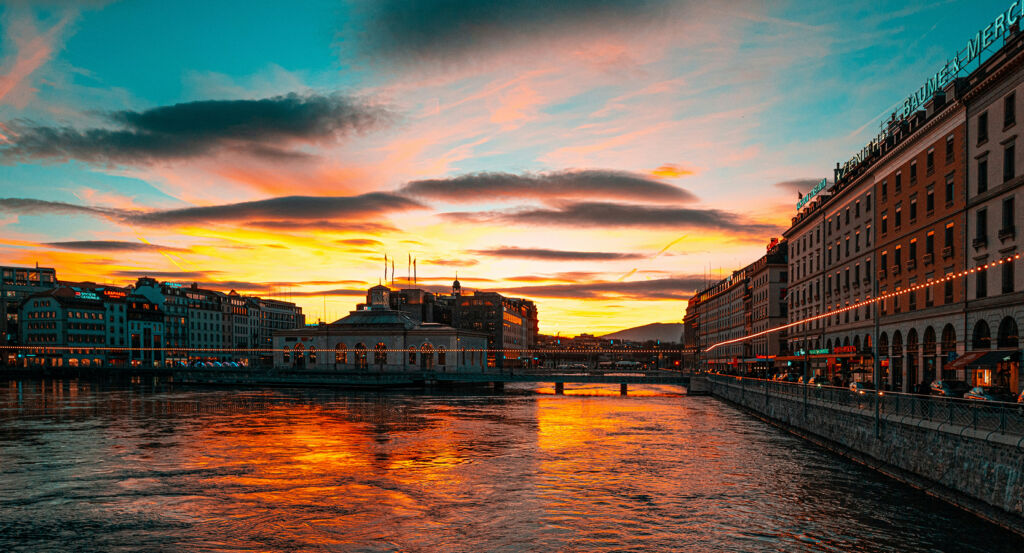
Set along the southern side of Place du Molard, the restaurant occupies a prominent position within Geneva's historic lower town, between the pedestrian shopping corridors of Rue du Marché and Rue de la Croix-d'Or, with the Rhône and the southern shore of Lake Geneva a short walk beyond the surrounding commercial streets. The broad paved square creates an unusually open setting within the compact medieval street network, placing the brasserie's outdoor tables among historic façades, luxury boutiques, and the pedestrian circulation of the city center. Café du Centre extends across an older café area, an adjoining restaurant interior, and a substantial terrace, allowing the establishment's traditional coffeehouse character to continue through its larger dining spaces. The terrace places diners directly within the square's daily activity, complemented by an interior whose closely arranged tables and traditional brasserie furnishings preserve the intimate proportions of a longstanding European café. The result is a historic Geneva restaurant whose central-square setting, established café rooms, and expansive outdoor dining preserve a distinctive expression of the city's urban hospitality.
What defines Café du Centre.
Café du Centre is best known for preserving a Geneva brasserie tradition dating to 1933, when the restaurant began serving customers in one of the city's oldest commercial districts. The establishment developed within a European café culture that brought coffee, conversation, newspapers, business meetings, and restaurant dining into a shared public setting. Its position in Geneva's historic commercial center gave the business a diverse clientele drawn from the surrounding shops, professional offices, and residential streets. Across successive decades, Café du Centre developed a culinary reputation centered on traditional brasserie cooking and an unusually substantial selection of oysters, shellfish, and crustaceans. Seafood became a defining specialty, extending the restaurant's French culinary character through preparations associated with the coastal brasseries of Paris and western France. The establishment's longstanding relationship with its customers acquired a particularly distinctive character under director Blaise Gumy, who joined the business during the late 1990s and subsequently oversaw its daily management for an extended period. By 2018, Gumy had spent almost twenty years directing the restaurant, providing continuity through changing patterns of commerce and dining in Central Geneva. His leadership coincided with a sustained partnership with Cafés Trottet, the Swiss coffee company whose beans became an established component of the brasserie's beverage program. The relationship began shortly after Gumy's arrival and had continued for seventeen years by the time of a detailed 2018 interview. Another extraordinary figure within the restaurant was Georges, a longtime employee who had already spent thirty-four years preparing coffee at Café du Centre by that year. His work connected generations of regular customers with the restaurant's traditional café service, using Trottet's Mélange Italien beans and a Franke Spectra machine to prepare the establishment's espresso-based drinks. The scale of that coffee tradition was substantial: the business served 500 customers and prepared 1,000 coffees daily during the period described by Gumy. The figures demonstrate the importance of coffee service within an establishment whose broader reputation had become closely associated with seafood and restaurant dining. Gumy also maintained a deliberate emphasis on accessible coffee prices, with espresso and other coffee preparations priced at CHF 2.50 during the 2018 period. That approach preserved the café's relationship with local workers and regular customers alongside the more substantial spending associated with its seafood program. The establishment's culinary development subsequently incorporated the Swiss Fait Maison label, recognizing dishes prepared within the restaurant's own kitchens from raw ingredients. This designation strengthened the relationship between the brasserie's traditional cooking and contemporary expectations surrounding food preparation. The restaurant also developed a broad selection of regional wines alongside its French brasserie classics, connecting the culinary traditions of neighboring France with the agricultural production of western Switzerland. Café du Centre represents an enduring form of Geneva hospitality in which traditional coffee service, established local management, and a substantial seafood program have developed together within a single historic institution.
Café du Centre's culinary character centers on the French brasserie tradition of serving fresh shellfish alongside carefully prepared fish, meat, and seasonal dishes, with the seafood counter establishing the kitchen's most recognizable specialty. Oysters provide the clearest expression of that approach, presenting the natural salinity, mineral character, and delicate texture of the shellfish with minimal intervention. The selection includes fines de claire oysters, whose maturation in shallow coastal basins develops a distinctive balance of marine flavor and refined sweetness. Their presentation emphasizes freshness and temperature, preserving the contrast between chilled shellfish and the clean, saline liquor retained within the shells. Crustaceans extend the same culinary foundation through preparations that bring sweetness and firmer textures into the meal, with prawns, lobster, and other shellfish appearing across the restaurant's seafood offerings. The kitchen develops those ingredients through a broader French cooking repertoire in which roasting, pan-frying, and carefully reduced sauces introduce greater richness. The restaurant's fisherman-style stew provides a substantial expression of that tradition, bringing several varieties of fish and shellfish into a preparation whose concentrated cooking liquid carries their combined marine flavors. Garlic, herbs, and aromatic vegetables contribute depth to the broth, connecting the individual seafood components through a unified savory foundation. Fish soup develops another classical preparation through the relationship between concentrated seafood stock, saffron, crisp croutons, and garlic mayonnaise. The mayonnaise introduces richness and pungency as it dissolves into the warm broth, creating a contrast with the soup's concentrated marine character. Lake Geneva perch fillets introduce a regional connection through their delicate flesh and restrained flavor, complemented by lemon butter whose acidity sharpens the richness of the sauce. The kitchen's treatment of larger fish follows a more ceremonial brasserie tradition, with whole sea bass and turbot prepared for two diners and served as substantial shared courses. Roasting develops the exterior of the fish while preserving moisture within the flesh, allowing the natural flavor of the principal ingredient to remain central to the preparation. Meat dishes extend the restaurant's French repertoire through classics such as Chateaubriand, whose tender beef fillet is accompanied by Béarnaise sauce, a preparation built around egg yolks, butter, vinegar reduction, and tarragon. The sauce's acidity and herbal aroma balance the richness of the beef, preserving the classical relationship between a carefully cooked protein and its accompanying emulsion. Café du Centre's seasonal cooking introduces another dimension through vegetables, mushrooms, and regional produce, allowing the kitchen to adapt its traditional preparations to the agricultural calendar. The wine selection complements that breadth with bottles from Swiss producers and established French regions, connecting seafood, meat, and classical sauces with contrasting expressions of acidity, body, and aromatic character. The restaurant's distinctive culinary appeal rests on this continuity between the direct flavors of chilled shellfish, the technical foundations of French brasserie cooking, and the regional ingredients that connect its kitchen with Geneva's surrounding landscape.
How Café du Centre fits.
Café du Centre works as the anchor for a Geneva city-center exploration connecting the surviving architecture of the medieval commercial district, the mechanical craftsmanship of Swiss watchmaking, and the religious heritage of the city's Protestant Reformation.
Begin at Tour du Molard, the historic clock tower occupying the eastern end of the square and preserving a surviving element of Geneva's former lower-town fortifications. The original defensive tower belonged to the medieval enclosure protecting the commercial waterfront, with its existence established during the fourteenth century. Nicolas Bogueret reconstructed the structure in 1591, incorporating a public clock transferred from a nearby building into the tower's architectural composition. Cantonal architect Charles Engels directed a substantial restoration between 1906 and 1907, introducing decorative stonework, small buttresses, and a heraldic frieze that transformed the surviving fortification into a monument celebrating Geneva's civic history. The frieze incorporates heraldic references to the city's medieval institutions and Protestant reformers, preserving successive chapters of political and religious history within the tower's decorative program. Continue to Horloge Malbuisson, the elaborate mechanical clock installed inside the covered Galerie Jean-Malbuisson. Created by Geneva watchmaker Édouard Wirth, the installation began operating in 1962 and introduced an extraordinary combination of clockmaking, automata, and historical storytelling into the city's commercial center. Its mechanical procession incorporates forty-two bronze figures accompanied by sixteen bells, creating an animated representation of the Escalade of 1602, when Geneva successfully resisted an attempted nighttime assault by forces of the Duke of Savoy. The figures advance through a miniature historical procession at hourly intervals, translating a defining episode of Geneva's independence into the precision engineering associated with the city's watchmaking industry. The installation's combination of moving sculpture, mechanical timing, and musical accompaniment preserves a distinctive expression of Geneva's horological craftsmanship. Conclude at Temple de la Fusterie, the historic Protestant church occupying the nearby square that developed around Geneva's former timber-trading waterfront. The temple emerged from the arrival of French Huguenot refugees following Louis XIV's revocation of the Edict of Nantes in 1685, which forced thousands of Protestants to leave France. Geneva's Council of Two Hundred approved construction of a new sanctuary in 1708, responding to the need for additional worship space within the fortified city. French Huguenot architect Jean Vennes developed the building between 1713 and 1715, drawing inspiration from the Protestant temple of Charenton near Paris, which had been destroyed under royal orders. The completed church became Geneva's first purpose-built Protestant sanctuary within the city since the Reformation, introducing an interior organized around the visibility and audibility of the pulpit. Its galleries and Tuscan columns preserve the architectural principles of Reformed worship, connecting the building's physical design with the religious traditions of the refugee community that created it. The progression moves from Tour du Molard's medieval defensive and civic history through Horloge Malbuisson's mechanical celebration of Geneva's independence and culminates at Temple de la Fusterie, where the city's Protestant heritage survives through a remarkable architectural legacy of religious refuge.
Where your story begins.
Foresyte Travel reveals places that feel extraordinary long before you arrive.
Enjoy editorial crafted for luxury travelers.
Foresyte may earn a commission when you book.