Why you should experience Carcosa Seri Negara in Kuala Lumpur, Malaysia.
Carcosa Seri Negara is sovereign heritage hospitality, where political history, ceremonial restraint, and literal separation from the modern city create an experience defined by authority, quiet power, and temporal distance.
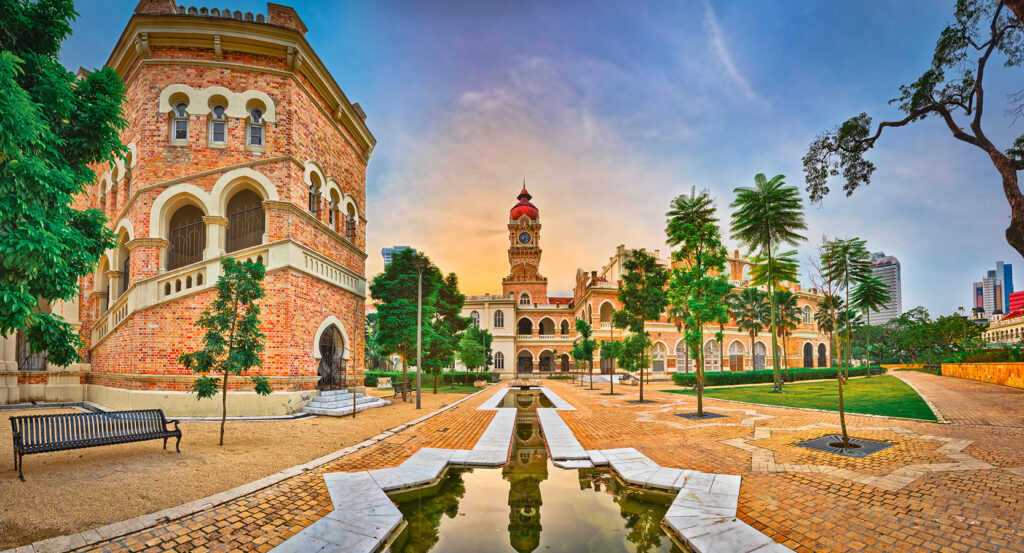
Carcosa Seri Negara does not behave like a hotel in the contemporary sense. It exists as a historical estate first and an accommodation second, and that hierarchy shapes every moment of the experience. Perched on a hill within the Perdana Botanical Gardens and surrounded by acres of greenery, the property feels physically and psychologically removed from Kuala Lumpur's commercial spine. Arrival reinforces this. The approach is calm and deliberate, winding upward through landscaped grounds that erase the city's noise before you ever reach the entrance. The architecture asserts itself without flourish: colonial-era forms, symmetry, white façades, and an unmistakable sense of institutional gravity. This was never meant to be casual lodging. Stepping inside feels less like checking in and more like entering a preserved seat of authority. Public interiors are restrained, formal, and proportioned for ceremony. High ceilings, polished floors, classical furnishings, and carefully maintained details create an atmosphere that encourages composure and silence. There is no background noise strategy, no social theater, no attempt to energize the space. Carcosa assumes you understand where you are. The effect is immediate and unmistakable: time slows, posture changes, and behavior adjusts. This is a place that demands presence. Guest rooms and suites extend this sense of historic gravity with discipline. They are not styled to feel modern, nor are they softened for mass comfort. Instead, they preserve the character of a colonial residence adapted for overnight stays. Rooms are generously sized, defined by high ceilings, tall windows, and classical proportions that prioritize air, light, and symmetry. Furnishings are traditional and understated, chosen to maintain historical coherence. Beds are substantial and comfortable, designed for rest. Seating areas feel residential and dignified, inviting reading, writing, or reflection. Windows overlook gardens, lawns, and tree canopies rather than traffic or skyline, reinforcing the sense that the city exists elsewhere. Bathrooms are spacious and practical, often featuring classic fixtures and layouts that emphasize function over luxury theater. Everything about the room reinforces continuity. Dining at Carcosa Seri Negara is inseparable from its identity. Meals are not positioned as experiences to be marketed; they are rituals tied to place. Breakfast unfolds slowly in formal dining rooms or outdoor settings framed by greenery, with an emphasis on calm pacing. Afternoon tea is a defining tradition here, carried out with ceremonial precision that reflects the property's colonial legacy. This is not performance; it is inheritance. Evenings maintain this tone, with dining experiences that feel private, measured, and intentionally restrained. Food exists to support conversation, reflection, and continuity, not stimulation. There are no crowds, no competing soundtracks, no urgency to turn tables.
What you should know about Carcosa Seri Negara.
Carcosa Seri Negara is not simply a historic residence; it is among the most politically and symbolically significant properties in Malaysia's modern history.
Originally constructed in the late 19th century, Carcosa was built as the official residence of the British High Commissioner during the colonial administration of Malaya. Its position, elevated, secluded, and surrounded by greenery, was intentional, reinforcing authority, control, and separation from the general population. The estate functioned not merely as a home, but as a center of governance, diplomacy, and power. Decisions that shaped the region's political trajectory were made within its walls. Over time, the property witnessed transitions that few buildings in Kuala Lumpur can claim: colonial administration, Japanese occupation, post-war restructuring, and eventually the emergence of an independent Malaysia. Following independence, Carcosa was gifted to the Malaysian government and later used for hosting foreign dignitaries, heads of state, and official delegations. This diplomatic function cemented its status as a symbol of sovereignty. Seri Negara, the neighboring mansion, complemented Carcosa's role by serving as an additional residence for official guests, reinforcing the estate's function as a controlled diplomatic enclave. When the property was later adapted for hospitality use, it was done with deliberate caution. Rather than transforming the estate into a commercial hotel, restoration efforts focused on preservation of form, proportion, and atmosphere. The goal was continuity, not reinvention. This explains why Carcosa feels fundamentally different from heritage-themed hotels elsewhere. It does not romanticize the past; it maintains it. Another lesser-known aspect of Carcosa Seri Negara is how its spatial design influences psychology. The combination of elevation, isolation, formal interiors, and limited visual stimulation creates a sense of authority and introspection that modern hotels rarely replicate. Guests often report altered perception of time and heightened awareness of environment, effects directly tied to architectural and contextual decisions made more than a century ago. Operationally, the property is intentionally limited in scale. Fewer rooms, controlled access, and restrained service ensure that the estate never loses its institutional character. This limitation is not a flaw; it is the point. In a city defined by expansion, density, and vertical growth, Carcosa Seri Negara stands as a fixed point, unchanged not because it cannot evolve, but because it does not need to.
How to fold Carcosa Seri Negara into your trip.
Carcosa Seri Negara works as a deliberate interruption, a chapter of stillness and historical immersion within a broader Kuala Lumpur itinerary.
Begin your stay with intention. This is not a place to arrive late and leave early. Allow time for the environment to assert itself. Spend mornings walking the grounds, sitting in silence, or reading in shared spaces where the architecture quietly shapes behavior. Use the estate as a retreat between intentional excursions into the city. Trips into Central Kuala Lumpur should be purposeful, cultural visits, meetings, or specific engagements, followed by a return to separation. Afternoons are ideal for tea service, writing, reflection, or simply occupying space. Evenings should remain restrained: formal dinners, quiet conversation, or early rest that respects the property's natural rhythm. For short stays, Carcosa provides perspective, an understanding of Kuala Lumpur's institutional past that contextualizes its modern ambition. For longer stays, it offers rare mental clarity, allowing days to unfold. Pair Carcosa Seri Negara with a centrally located hotel before or after to experience contrast, but do not dilute its purpose by treating it as a convenience base.
Where your story begins.
Foresyte Travel reveals places that feel extraordinary long before you arrive.
Experience premium editorial crafted for luxury travelers.