Why you should experience Centennial Olympic Torch Tower in Atlanta, Georgia.
Centennial Olympic Torch Tower is a symbolic Olympic monument where Summerhill's sporting legacy, architectural commemoration, global athletic achievement, and civic memory preserve one of the most enduring physical reminders of the 1996 Summer Olympic Games.
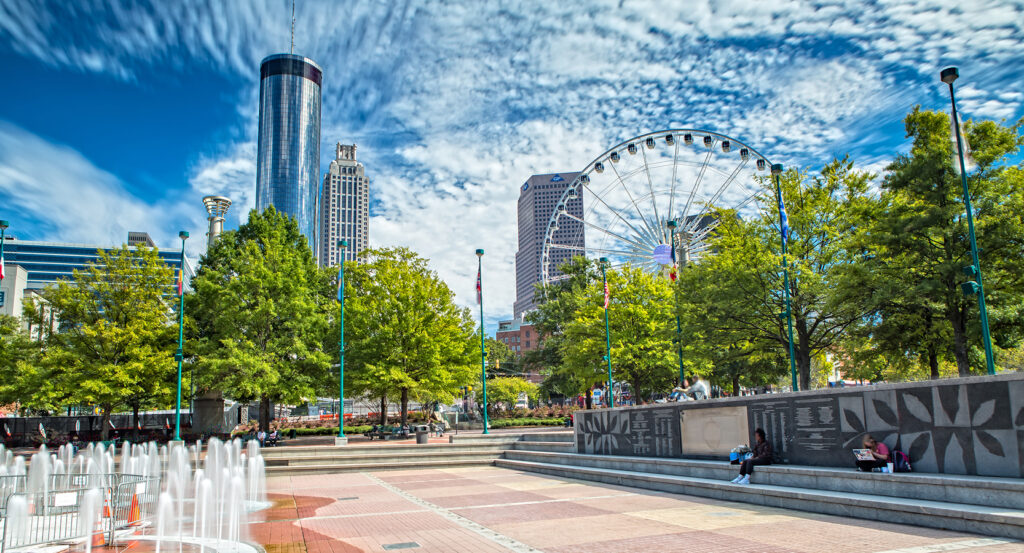
Set along Hank Aaron Drive near Fulton Street and just steps from Center Parc Credit Union Stadium, this soaring steel monument rises above the former Centennial Olympic Stadium site through its towering flame structure, grand Olympic rings, elevated pedestrian bridge, and commanding skyline presence that continues to define Atlanta's Olympic landscape decades after the Closing Ceremony. Sweeping views across Summerhill, the stadium district, and Downtown reinforce the monument's enduring relationship with the city that welcomed the world during the Centennial Olympic Games. Carefully preserved structural elements and ceremonial symbolism transform the site into a powerful expression of athletic excellence, international unity, and Atlanta's continuing Olympic legacy. The result is a destination defined by sporting history, civic identity, and one of the city's most meaningful commemorative structures.
What you should know about Centennial Olympic Torch Tower.
Centennial Olympic Torch Tower is best known for supporting the Olympic Cauldron ignited by Muhammad Ali during the Opening Ceremony of the 1996 Summer Olympics on July 19, 1996, creating one of the most unforgettable moments in Olympic history as the six-time Olympic medalist and boxing champion overcame the effects of Parkinson's disease to light the flame before a global television audience of billions. Constructed beside the 85,000-seat Centennial Olympic Stadium, the 120-foot monument became the ceremonial focal point of both the Olympic and Paralympic Games, overlooking athletics competitions that included Michael Johnson's world-record 200-meter performance, Donovan Bailey's world-record 100-meter victory, Carl Lewis's fourth consecutive Olympic long jump title, and Marie-José Pérec's historic sprint double. Following the Games, the stadium was reconfigured into Turner Field before later becoming Center Parc Credit Union Stadium after Georgia State University acquired and redeveloped the property, while the Torch Tower remained as one of the few surviving structures directly associated with the original Olympic venue. In 2026, Georgia State University announced that the historic cauldron itself would be relocated to Centennial Olympic Park, while the tower structure and Olympic rings bridge would remain permanently in Summerhill, preserving the monument's historic relationship with the former Olympic Stadium site while extending Atlanta's Olympic interpretation downtown.
Olympic ceremonies, Paralympic celebrations, and decades of subsequent preservation have elevated the monument beyond its original ceremonial function into one of Atlanta's most recognizable symbols of international sport. The adjoining Olympic rings bridge, surviving structural steel, and uninterrupted visual connection to the former stadium site preserve the spatial relationship experienced during the 1996 Games, allowing visitors to appreciate the scale and ambition of one of the largest privately financed Olympics in history. Georgia State University's stewardship has integrated the monument into the continuing evolution of Summerhill while protecting its historical significance through preservation initiatives that acknowledge both the neighborhood's Olympic heritage and its contemporary transformation. The tower continues to embody Atlanta's successful hosting of the Centennial Olympic Games, whose legacy reshaped downtown through new parks, sporting venues, transportation improvements, and billions of dollars in long-term investment.
How to fold Centennial Olympic Torch Tower into your trip.
Centennial Olympic Torch Tower works as part of an exploration celebrating Atlanta's Olympic legacy and the continuing evolution of Summerhill.
Begin at Center Parc Credit Union Stadium, where the former Centennial Olympic Stadium introduces the extraordinary sporting history of the site before walking to Centennial Olympic Torch Tower. Continue to Georgia State Convocation Center, whose modern athletic facilities demonstrate the district's ongoing transformation while reinforcing its enduring connection to competitive sport. Conclude at Phoenix II Park, where public gathering spaces and neighborhood renewal provide a fitting finale celebrating Summerhill's remarkable evolution from Olympic host district to thriving urban community. The progression moves naturally from Olympic venue to ceremonial monument before concluding through contemporary neighborhood revitalization, revealing why Centennial Olympic Torch Tower remains one of Atlanta's most significant Olympic memorials.
Where your story begins.
Foresyte Travel reveals places that feel extraordinary long before you arrive.
Experience premium editorial crafted for luxury travelers.