Why you should experience Wall Museum - Checkpoint Charlie in Berlin, Germany.
The Checkpoint Charlie Museum, or Mauermuseum, is where the human heartbeat of the Cold War still echoes.
Just steps away from the iconic border crossing on Friedrichstrasse, this museum tells the story not through politics or power, but through people, those who dreamed, resisted, and risked everything to be free. The walls here are alive with ingenuity: rusted car panels concealing secret compartments, homemade hang gliders suspended from ceilings, and photographs of families reunited after years apart. It's less a sterile exhibit and more a living archive of courage and creativity. Founded in 1963, while the Wall still stood, the museum became a beacon of defiance, collecting and preserving the evidence of escape attempts even as history was unfolding outside its doors. To walk its halls is to feel both the suffocation of oppression and the unstoppable pull of hope.
What you should know about Wall Museum - Checkpoint Charlie.
The Mauermuseum was founded by human rights activist Dr. Rainer Hildebrandt, who opened it just months after the Wall went up, in a small apartment near Checkpoint Charlie.
It began as a modest collection of photographs, documents, and testimonies, but quickly evolved into one of Berlin's most powerful symbols of resistance. The museum became a meeting place for activists, escapees, and journalists, where stories were exchanged and plans were hatched under constant surveillance. Over the years, it grew to house hundreds of authentic escape devices, from modified suitcases and tunnels to a reconstructed hot air balloon that carried a family to freedom in 1979. One of its most extraordinary exhibits is the “Trabant escape car,” whose panels were hollowed out to hide passengers beneath the floorboards. The museum also preserves rare letters and smuggled film reels from East Germany's underground networks, offering an unfiltered look at the courage that defied an empire. Beyond the Wall, the museum expanded its mission to global human rights, showcasing struggles from Tiananmen Square to modern refugee crises, carrying forward the legacy of those who once fought to cross a single street.
How to fold Wall Museum - Checkpoint Charlie into your trip.
Visiting the Checkpoint Charlie Museum is a journey into the human side of history, best experienced with time and intention.
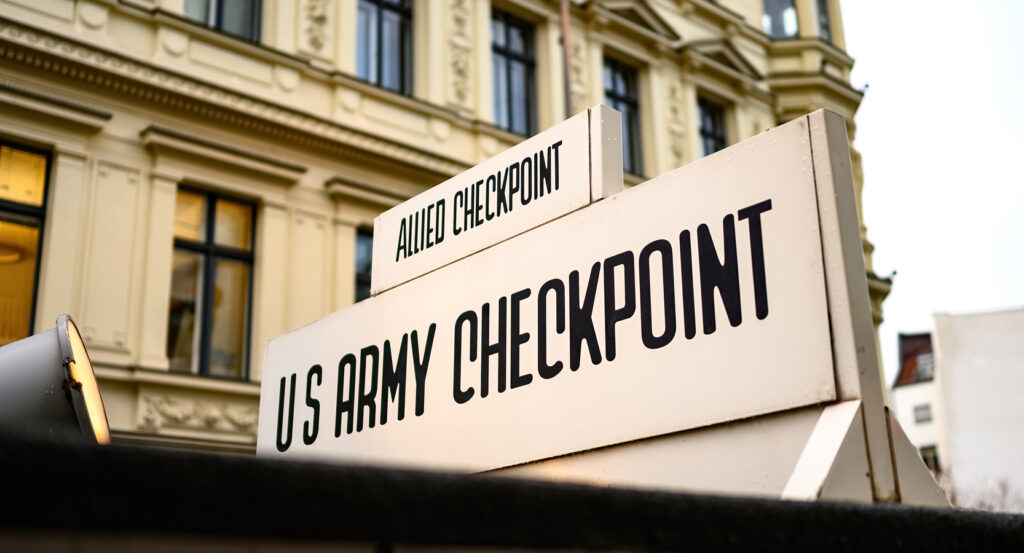
Begin at the reconstructed Checkpoint Charlie guardhouse outside to set the scene, then step inside the museum where the exhibits unfold chronologically. Give yourself two hours; there's a lot to absorb, and the density of stories deserves your focus. Take your time reading the personal accounts, many are handwritten and displayed beside the very tools people built to escape. Don't miss the upper floors, where rotating exhibitions connect the lessons of the Berlin Wall to modern struggles for freedom and justice. Afterward, pause at the café or step back outside to reflect on how ordinary people turned desperation into ingenuity. The Mauermuseum isn't polished or sleek, and that's its brilliance. It feels raw, immediate, and rebelliously alive, much like the spirit of Berlin itself.
Where your story begins.
Foresyte Travel reveals places that feel extraordinary long before you arrive.
Experience premium editorial crafted for luxury travelers.