Why Chico & Chang matters.
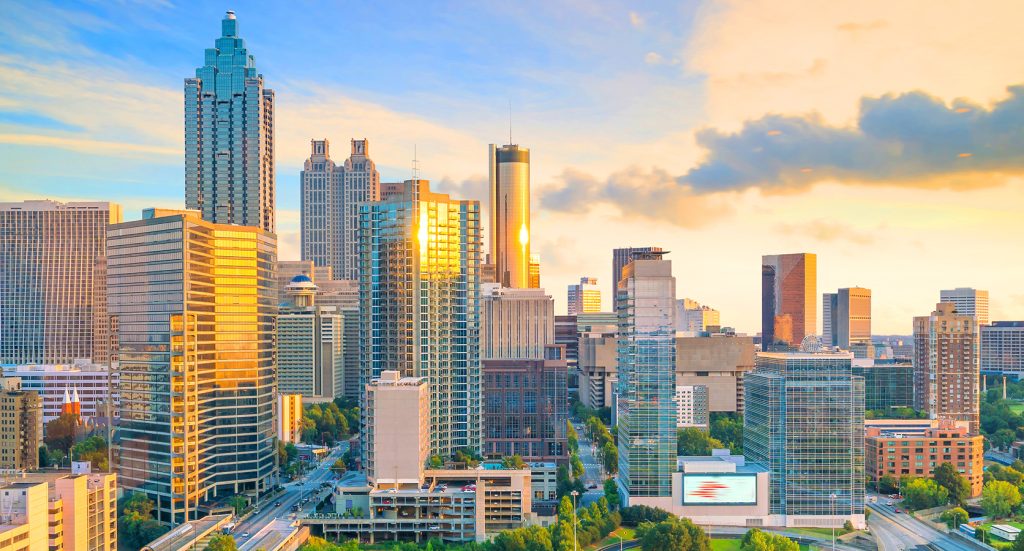
Chico & Chang is an unconventional fusion restaurant where Reynoldstown's independent commercial character meets Chinese cooking, Mexican formats and a cross-cultural concept that has persisted through nearly two decades of Atlanta dining.
Set along Bill Kennedy Way near Memorial Drive and just steps from the Atlanta BeltLine, the restaurant occupies southern Reynoldstown between the neighborhood's historic residential grid, the repurposed industrial properties lining Memorial Drive and the former rail corridor running toward Glenwood Park, with Interstate 20 marking the district's southern edge. The dining room supports a repertoire broad enough to move among wok-fired entrées, noodles, tacos, burritos and sushi without dividing those categories into separate concepts. Chinese preparations form the principal encounter through lo mein, fried rice, dumplings, Mongolian-style dishes and General Tso formulations. Mexican combinations add tortillas, cheese, jalapeños and other familiar components to a kitchen whose earlier Atlanta incarnation became known for placing the two cuisines under one roof. The result is a Reynoldstown restaurant whose unusual longevity has turned an initially improbable Chinese-Mexican pairing into an established part of Atlanta's east-side dining landscape.
What defines Chico & Chang.
Chico & Chang is best known for sustaining an Atlanta restaurant concept that placed Chinese and Mexican food on the same menu years before the business moved into Reynoldstown. The Atlanta operation was active by 2007, when its Ponce de Leon Avenue location was already serving customers a combination of tacos, burritos, egg rolls, soups and Chinese entrées. That earlier storefront developed an unusually extensive repertoire encompassing Asian appetizers, wings, fried rice, pork dishes, tofu, egg foo young and Mexican preparations, with flan and green-tea ice cream extending the dual structure into dessert. The business subsequently left Ponce de Leon Avenue and entered a new chapter in Southeast Atlanta under Ly Bai Inc., with Xuefeng Bai serving as agent for the new operation. The relocation placed Chico & Chang beside a former railroad corridor undergoing conversion into the Atlanta BeltLine and within Reynoldstown, among Atlanta's earliest African American communities. The restaurant remains active there in 2026, and its current business profile spans Chinese, Asian fusion, Mexican, noodle and sushi categories under the same operation.
How Chico & Chang fits.
Chico & Chang works as the anchor for an outing connecting a former rail corridor remade as public infrastructure with an industrial cooperative preserved through adaptive reuse and Atlanta's nineteenth-century garden cemetery.
Begin at Atlanta BeltLine Eastside Trail, the first completed mainline trail segment in the BeltLine system and a direct descendant of Atlanta's historic railroad geography. The BeltLine concept emerged in the early 2000s around the reuse of a 22-mile railroad corridor encircling the city, and the Eastside Trail opened in 2012 as the project's first major demonstration of that idea. Its route eventually extended south toward Reynoldstown, where former rail alignments had shaped settlement and employment since the nineteenth century. The trail now connects neighborhoods, public art and former industrial properties along a corridor once organized around freight movement. Continue to Atlanta Dairies, whose origins reach to the cooperative incorporated by Georgia dairy farmers in 1943 after producers confronted new pasteurization requirements and changing milk distribution. Members purchased shares tied to herd size and committed their milk to the cooperative, which assembled financing for land, processing equipment and a plant that began production on July 26, 1945. The permanent complex developed into a major Southeast Atlanta dairy operation, later passed to Parmalat and fell vacant after the 2008 tornado. Perkins & Will, Paces Properties and architects including David Rogers and Erika Kane subsequently adapted the Art Deco industrial property for contemporary use, retaining the enormous red-and-white milk-carton sign as a physical survivor of its manufacturing history. Conclude at Historic Oakland Cemetery, established by Atlanta on six acres in 1850 as a public burial ground and expanded after the Civil War as the growing railroad city required more space. The grounds reached their present extent by 1867 and received the Oakland name in 1872, drawing on the oak trees that covered the property. Victorian, Gothic, Greek Revival, Neoclassical and Egyptian Revival monuments accumulated across the garden cemetery, whose residents include Margaret Mitchell, Bobby Jones, Maynard Jackson, six Georgia governors and generations of Atlantans from profoundly different social circumstances. Its 1976 placement on the National Register coincided with the creation of the Historic Oakland Foundation, joining preservation of the cemetery's architecture with the survival of one of Atlanta's oldest continuously used public landscapes. The progression moves from railroad infrastructure recast for movement through an industrial plant preserving the physical legacy of Atlanta's dairy economy and culminates within a nineteenth-century landscape where architecture, sculpture and the lives of generations of Atlantans compress the city's history into a single public ground.
Where your story begins.
Foresyte Travel reveals places that feel extraordinary long before you arrive.
Enjoy editorial crafted for luxury travelers.