Why NASCAR Hall of Fame matters.
NASCAR Hall of Fame is a celebrated motorsports museum where Uptown Charlotte's racing heritage meets the origins of American stock-car competition, the engineering achievements of championship teams and the drivers who transformed a Southern sporting tradition into a national institution.
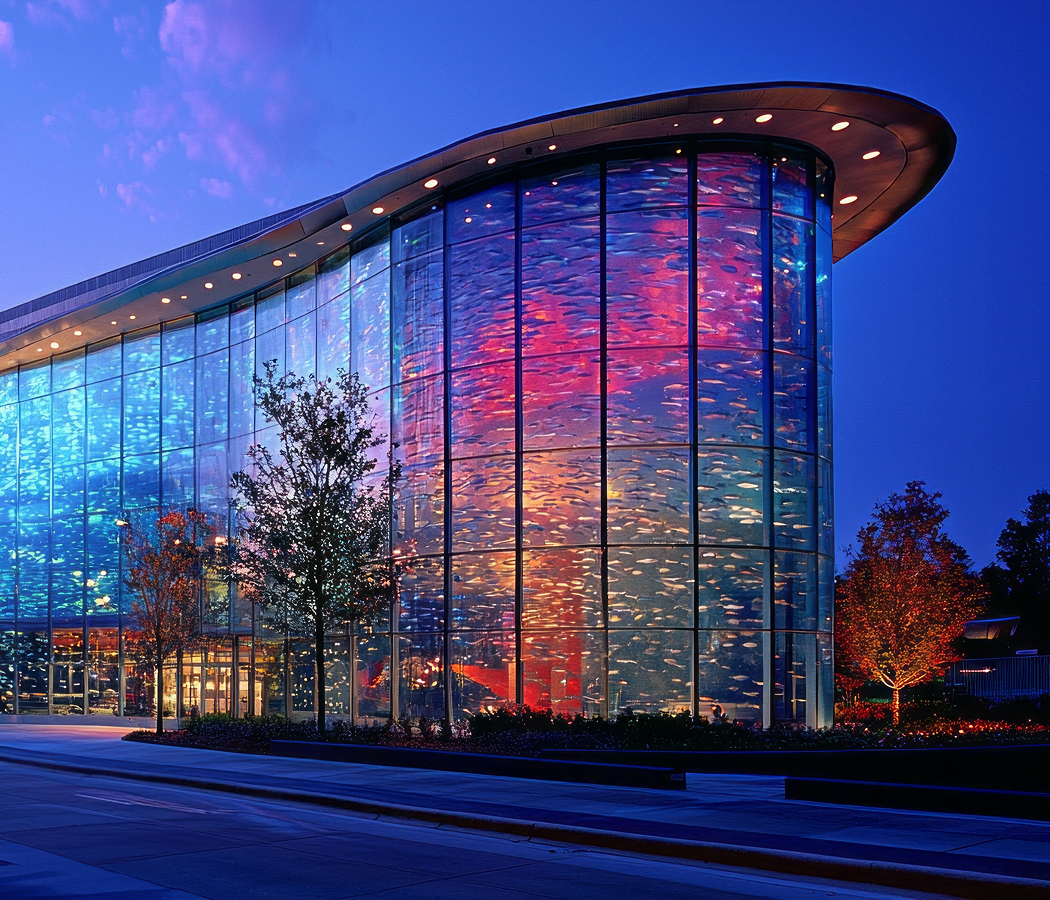
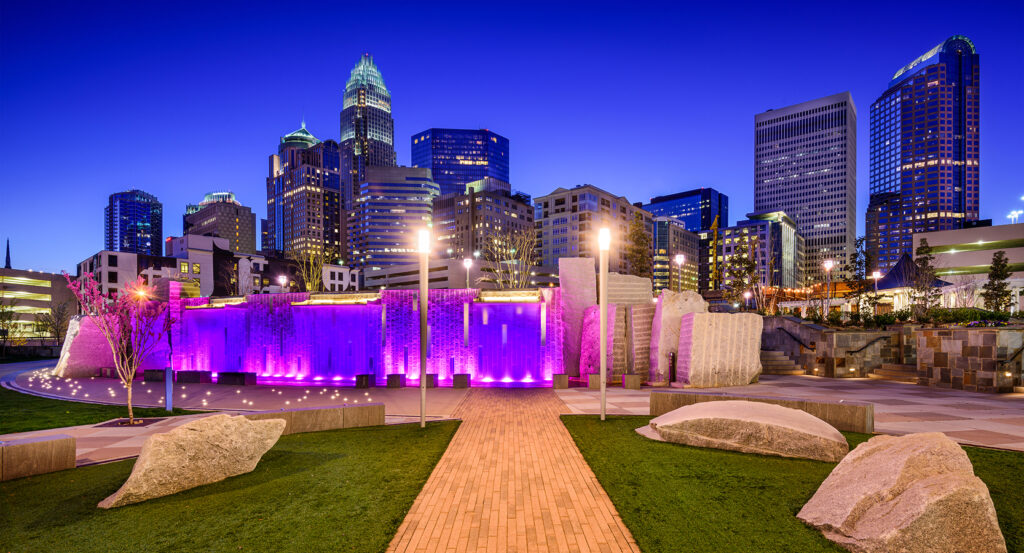
Set along East Martin Luther King Jr. Boulevard near South Brevard Street and just steps from the Charlotte Convention Center, the museum occupies a prominent corner of Uptown Charlotte's Second Ward, where contemporary civic architecture connects the central business district with the city's major entertainment and cultural facilities. A sweeping stainless-steel ribbon wraps around the building's exterior, recalling the curvature and banking of a racetrack. Expansive glass walls reveal the multistory interior, whose open galleries accommodate historic racing vehicles, mechanical displays and interactive installations. The entrance plaza establishes a broad pedestrian approach beneath the building's dramatic metal facade. The result is an architecturally distinctive museum whose racing-inspired design and extensive collections celebrate Charlotte's central position in American motorsports.
What defines NASCAR Hall of Fame.
NASCAR Hall of Fame is best known for honoring the drivers, team owners, crew chiefs and other figures who shaped the development of American stock-car racing. NASCAR originated in 1948 under the leadership of Bill France Sr., who organized a sanctioning body to establish consistent rules and championship competition among professional stock-car drivers. The organization developed around the racing culture of the American Southeast, where dirt tracks, modified production automobiles and independent promoters had established a substantial regional following. Charlotte became an important center of the sport through its concentration of racing teams, mechanical specialists and automotive businesses. The opening of Charlotte Motor Speedway in 1960 strengthened the region's position within professional racing, establishing a major venue for high-speed competition. During the following decades, NASCAR expanded through national television coverage, corporate sponsorship and increasingly sophisticated racing technology. Richard Petty became one of the sport's defining competitors, accumulating 200 victories and seven championships during a career that established extraordinary standards of sustained success. Dale Earnhardt subsequently emerged as another dominant figure, winning seven premier-series championships through an aggressive driving style and intense competitive reputation. The sport's national growth created increasing interest in a permanent institution devoted to preserving its history and recognizing its leading contributors. Charlotte secured the Hall of Fame project following a competitive selection process involving several cities with substantial racing connections. The museum opened on May 11, 2010, establishing a major cultural institution within the city's expanding convention and entertainment district. Its inaugural induction class honored Bill France Sr., Bill France Jr., Richard Petty, Dale Earnhardt and Junior Johnson. The annual induction program subsequently expanded the institution's account of motorsports achievement, recognizing competitors and innovators whose contributions shaped NASCAR across successive generations.
Pei Cobb Freed & Partners designed the museum's distinctive architectural complex, developing a dramatic exterior composition inspired by the movement and geometry of stock-car racing. The building's sweeping metal ribbon curves around its principal elevation, establishing a visual connection with the banking of a speedway. Glory Road forms the museum's central exhibition feature, presenting historic racing automobiles along a dramatically banked interior ramp. The display incorporates vehicles associated with different periods of NASCAR competition, illustrating changes in automotive design, mechanical engineering and racing regulations. Racing simulators introduce the physical demands of stock-car driving through interactive controls and digitally recreated circuits. The Pit Crew Challenge allows participants to perform simulated tire changes and other tasks associated with professional racing operations. The Hall of Honor occupies a ceremonial gallery devoted to inducted members, presenting commemorative displays and individual achievements within an architecturally prominent setting. Historic uniforms, helmets, trophies and mechanical components provide additional connections with the sport's competitive development. Exhibitions examine the evolution of racing safety, including advances in protective equipment, vehicle construction and track design. Engine displays introduce the technical requirements of high-performance stock-car competition, including power delivery, mechanical reliability and aerodynamic efficiency. The museum also addresses the importance of teamwork through displays devoted to crew chiefs, mechanics and pit crews. Its collections preserve the commercial development of NASCAR through sponsorship graphics, racing liveries and promotional material associated with major teams. Educational programming introduces engineering principles and mechanical problem-solving through activities connected with motorsports. The institution's distinction rests in its combination of historic vehicles, technical interpretation and formal recognition of the individuals who developed American stock-car racing.
How NASCAR Hall of Fame fits.
NASCAR Hall of Fame works as the sporting anchor for an Uptown Charlotte outing connecting the city's contemporary art institutions, its architectural development and the cultural collections surrounding the central business district.
Begin at Harvey B. Gantt Center for African-American Arts + Culture, the cultural institution devoted to the artistic achievements and historical contributions of African Americans. The center takes its name from Harvey Gantt, the architect and civic leader who became Charlotte's first African American mayor. Its contemporary building, designed by architect Philip Freelon, incorporates a striking facade inspired by traditional African American quilting patterns. Galleries present exhibitions of painting, photography, sculpture and other artistic media, emphasizing the cultural contributions of African American artists. The institution also maintains connections with the history of Charlotte's former Brooklyn neighborhood, a substantial Black residential and commercial community transformed by twentieth-century urban redevelopment. Continue to Mint Museum Uptown, the major art museum occupying a contemporary building along South Tryon Street. Designed by Machado Silvetti, the structure opened in 2010 as an expansion of Charlotte's longstanding Mint Museum institution. Its collections include American art, contemporary works, craft and design, and significant examples of decorative arts. The museum's craft collections incorporate ceramics, glass, metalwork and fiber art, examining the relationship between artistic creativity and technical craftsmanship. Its exhibition galleries contribute to the concentration of cultural institutions surrounding the Levine Center for the Arts. Conclude at Bechtler Museum of Modern Art, the distinguished museum devoted to twentieth-century European and American artistic production. Designed by Swiss architect Mario Botta, the building incorporates a striking terracotta exterior and a dramatic fourth-floor gallery volume extending above the entrance plaza. The museum opened in 2010 to present the collection assembled by the Bechtler family, whose interests encompassed major developments in modern art. Its holdings include works by Alberto Giacometti, Joan Miró, Pablo Picasso and other influential artists associated with twentieth-century European modernism. The collection establishes an important connection between Charlotte's cultural institutions and international artistic movements. The progression moves from Harvey B. Gantt Center for African-American Arts + Culture's historical and artistic collections through Mint Museum Uptown's craft and design galleries and culminates at Bechtler Museum of Modern Art's modernist masterpieces, connecting three significant dimensions of Charlotte's cultural development.
Where your story begins.
Foresyte Travel reveals places that feel extraordinary long before you arrive.
Enjoy editorial crafted for luxury travelers.
Foresyte may earn a commission when you book.