Why you should experience U.S. Coast Guard Historic District in Sullivan's Island, South Carolina.
U.S. Coast Guard Historic District is a preserved coastal lifesaving station complex where Sullivan's Island's maritime rescue heritage, Atlantic shoreline defense history, federal lifesaving service evolution, and Lowcountry coastal engineering converge along one of the region's most historically active barrier island corridors.
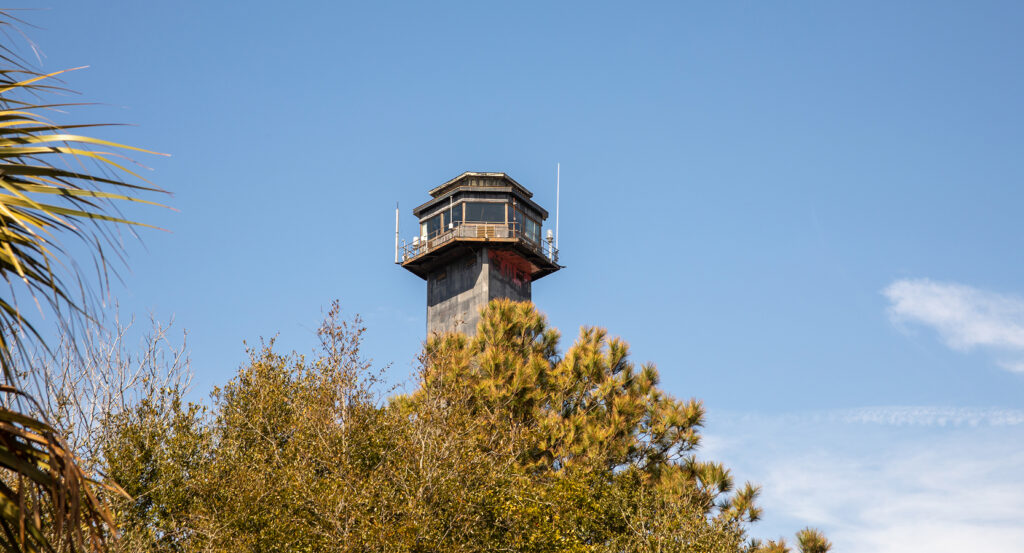
Set along Station 18 and Station 18 1/2 on Sullivan's Island's eastern shoreline, this historic operational district preserves a rare surviving cluster of late 19th century United States Life Saving Service architecture, including the original station house, boathouse, and auxiliary structures arranged around a functional courtyard designed for rapid surf rescue deployment. Built in 1891 and later integrated into the United States Coast Guard in 1915, the site reflects the transformation of localized volunteer and federal rescue operations into a unified national maritime safety system. A circa 1898 bunker or sighting station once monitored offshore conditions for shipwreck activity, while later additions such as a 1938 garage and signal tower expanded operational readiness during the interwar modernization period. The result is a preserved working landscape defined by maritime vigilance, coastal engineering, and one of the most intact examples of early American lifesaving infrastructure.
What you should know about U.S. Coast Guard Historic District.
U.S. Coast Guard Historic District is best known for its establishment as a United States Life Saving Service station in 1891 and its subsequent integration into the United States Coast Guard in 1915 as part of a national consolidation of maritime rescue operations designed to standardize coastal emergency response across the United States. The district includes the original station house and boathouse constructed circa 1891, a centrally positioned bunker or sighting station dating to circa 1898 used for offshore surveillance and rescue coordination, and later expansions including a garage and signal tower built circa 1938 reflecting modernization of equipment storage, communication systems, and operational readiness. The arrangement of these structures around a central courtyard reflects a functional design optimized for launching surfboats, storing rescue equipment, and coordinating rapid response to shipwrecks along the hazardous approaches to Charleston Harbor. The site was formally listed on the National Register of Historic Places in 1973, recognizing its significance in the evolution of organized coastal rescue infrastructure in the United States.
The district occupies a historically dangerous maritime corridor shaped by shifting sandbars, strong Atlantic currents, and frequent vessel groundings near the entrance to Charleston Harbor, conditions that made permanent lifesaving infrastructure essential long before modern navigation systems. Crews stationed here operated under continuous readiness protocols, launching small boats directly into breaking surf to reach distressed sailors stranded offshore. The preserved station layout demonstrates how federal lifesaving services combined architecture, engineering, and environmental awareness into a unified operational system that predates modern Coast Guard infrastructure. Today, the district remains one of the most intact surviving examples of early coastal rescue architecture in the southeastern United States, preserving both the physical structures and the operational logic of 19th century maritime emergency response.
How to fold U.S. Coast Guard Historic District into your trip.
U.S. Coast Guard Historic District works as part of a coastal exploration of Sullivan's Island's maritime and military landscape.
Begin at Station 18 Beach Access, where shifting surf conditions and Atlantic exposure explain the operational necessity of permanent lifesaving infrastructure along this stretch of coastline. Continue to Fort Moultrie, where layered coastal defense history contextualizes the island's long strategic importance in protecting Charleston Harbor. Conclude along the Sullivan's Island shoreline pathways, where dunes, tidal edges, and open ocean views provide a reflective finale that connects the lifesaving station to the broader maritime environment it was built to serve. The progression moves naturally from active surf zone to historic fortification to open coastal landscape, revealing why the district remains inseparable from Sullivan's Island's character as a site of continuous maritime vigilance.
Where your story begins.
Foresyte Travel reveals places that feel extraordinary long before you arrive.
Experience premium editorial crafted for luxury travelers.