Why Cottage Café matters.
Cottage Café is a historic garden café where Pâquis' nineteenth-century lakeside heritage meets Nicole Boder's creative hospitality and Geneva's tradition of informal Mediterranean dining.
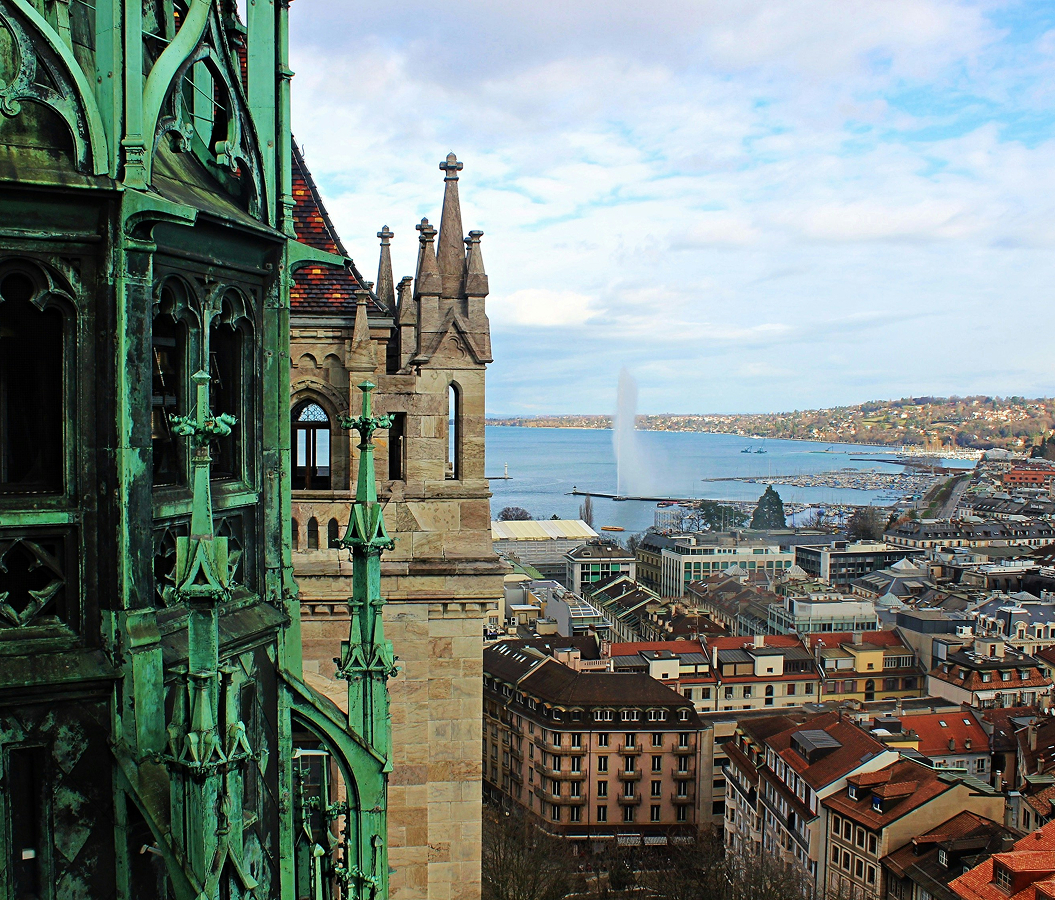
Set within a small landscaped square between Geneva's northern lakefront and the streets surrounding Rue des Alpes, the café occupies a secluded position behind the grand hotels of Quai du Mont-Blanc, with the Rade and the distant Alpine skyline extending beyond the surrounding buildings. Its compact brick pavilion preserves the proportions of a nineteenth-century garden structure, giving the establishment an intimate architectural character amid the larger stone façades of the waterfront district. A glazed veranda extends the dining area toward the garden, connecting the interior with the surrounding trees and establishing a sheltered transition between the café and its outdoor tables. Black floor tiles, brown parquet, aged gilded stucco, vintage furnishings and carefully arranged lighting introduce a layered decorative character that combines the original building with Boder's eclectic interior design. The result is an unusually intimate lakeside café whose historic garden pavilion, richly furnished interiors and shaded outdoor dining preserve the atmosphere of a private retreat within Central Geneva.
What defines Cottage Café.
Cottage Café is best known for Nicole Boder's transformation of a neglected nineteenth-century garden pavilion into an independent Geneva restaurant that brings together her interests in cooking, photography, cinema, fashion and interior design. The small brick building originated during the development of Geneva's lakeside district in the late 1870s, serving as temporary accommodation for construction workers before assuming a subsequent function as a gardener's pavilion. Its conversion into a café around the 1930s introduced a public hospitality function to a structure originally associated with the maintenance and development of the surrounding grounds. That transition gave the building a second life within Geneva's expanding culture of public gardens, waterfront promenades and neighborhood cafés. The establishment subsequently passed through decades of changing use before becoming completely vacant in 2006, leaving the historic pavilion awaiting restoration. Geneva's municipal authorities undertook a renovation of the property, preserving the building and preparing it for renewed commercial occupation. Boder assumed responsibility for the establishment in October 2008, completing the transformation of the restored structure into a café shaped by her unusually broad creative background. Born in Morocco, she moved to Switzerland at the age of twenty and developed her professional career through a succession of artistic and culinary pursuits. Photography and cinema formed part of her interests, alongside the creation of lighting fixtures, fashion and interior decoration. Her practical restaurant education began in Neuchâtel, where she spent fifteen years working first as a waitress and subsequently as a cook. That extended apprenticeship gave her direct familiarity with both the dining room and the kitchen, establishing a foundation for the integrated approach to hospitality she later developed in Geneva. Boder subsequently spent three years as a chef at the Maison des Arts du Grütli, a cultural institution associated with Geneva's independent cinema and contemporary artistic programming. Her work there connected food preparation with a setting devoted to creative activity, strengthening the relationship between her culinary career and her interests in the visual arts. The opportunity to establish Cottage Café brought these different pursuits together within a single small building whose historical character offered considerable scope for personal decoration. Boder assembled furniture and decorative objects from flea markets, creating an interior whose individual pieces carry the visual character of different periods and domestic traditions. Her interest in lighting design informed the arrangement of warm illumination throughout the rooms, allowing the restored pavilion to acquire a distinctive atmosphere after dark. The renovation preserved older decorative features alongside these additions, establishing a deliberate relationship between the structure's historical fabric and the proprietor's personal collection of furnishings. The restaurant's culinary direction developed around a flexible café format that changes throughout the day, accommodating breakfast, lunch, afternoon refreshments and evening small plates within the same setting. This arrangement allowed Boder to combine the accessible character of a neighborhood coffeehouse with a broader Mediterranean culinary repertoire. The business subsequently developed a recognizable position within Geneva's independent restaurant culture, attracting customers through the combination of its historic setting, personal creative authorship and informal approach to dining. Cottage Café's significance rests on that unusual convergence of architectural reuse and individual artistic direction, giving a former garden outbuilding a third major chapter as a restaurant whose character reflects the varied professional life of its founder.
Nicole Boder's cooking follows the changing character of the day, developing from substantial café breakfasts into Mediterranean-inspired lunches and an evening table built around small plates. Morning service emphasizes bread, dairy, fruit and coffee, with tartines providing a versatile foundation for contrasting savory ingredients. Toasted bread carries combinations such as salmon and eggs or mozzarella with pesto, allowing the crispness of the base to support softer textures and concentrated toppings. Bircher muesli introduces a distinctly Swiss element through soaked grains, yogurt and fresh fruit, connecting the café's international culinary influences with a familiar regional breakfast preparation. The transition into lunch broadens the kitchen's repertoire through salads, savory tarts, pasta and seasonal dishes that preserve the direct flavors of their principal ingredients. Mediterranean influences become more pronounced through olive oil, fresh herbs, citrus and vegetables, creating continuity between lighter midday preparations and the more elaborate combinations served later. The evening menu develops this approach through tapas and mezzes, encouraging several small preparations to form a shared meal across the table. Hummus introduces the richness of puréed chickpeas and tahini, with lemon and garlic providing acidity and aromatic intensity against its smooth texture. The same preference for contrasting textures informs crisp pastry preparations filled with tuna, whose delicate exterior gives way to a savory interior sharpened by garlic and chili. Vegetables acquire greater depth through sautéing and the use of paprika, cumin and tomato, bringing the warmth of Mediterranean spices into preparations grounded in familiar produce. Fresh cheese introduces another register through combinations of feta, cucumber, mint and tomato, balancing salinity with coolness and herbal freshness. These elements create a coherent culinary style built around recognizable ingredients whose flavors become more expressive through acidity, spice and changes in texture. The wine selection extends the Mediterranean character through bottles from France, Spain and Italy, complemented by Geneva producers whose wines establish a direct relationship with the surrounding canton. Individual glasses accompany the small-plate format, allowing the meal to develop through successive combinations of food and wine as the evening progresses. Coffee and pastries preserve the establishment's original café function throughout the broader dining program, connecting its substantial breakfast service with the quieter intervals between lunch and dinner. Cottage Café brings Boder's personal approach to cooking into a format that evolves naturally through the day, using Mediterranean flavors, Swiss café traditions and shared plates to give a small historic pavilion a remarkably versatile culinary character.
How Cottage Café fits.
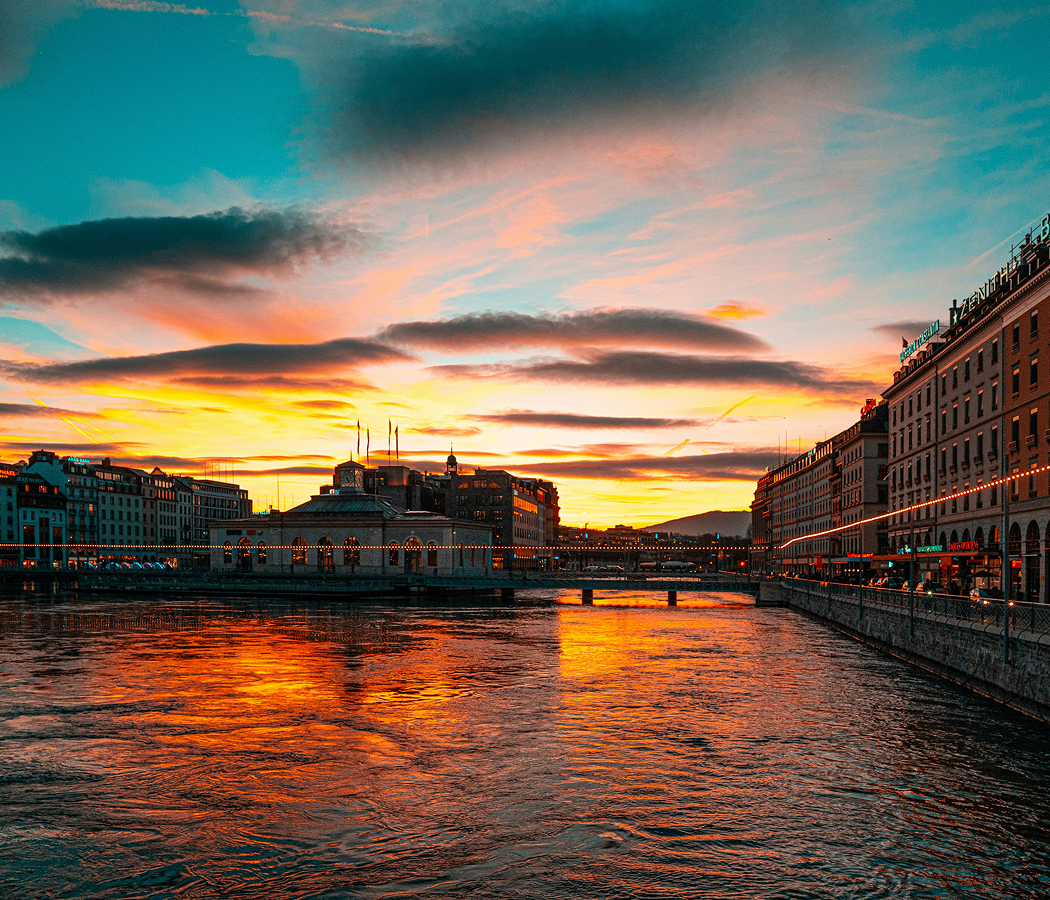
Cottage Café works as the anchor for a Geneva waterfront exploration connecting an extraordinary nineteenth-century funerary commission, the city's emergence as a center of international diplomacy and a defining episode in European imperial history.
Begin at Brunswick Monument, the elaborate neo-Gothic mausoleum created following the death of Charles II, Duke of Brunswick, in Geneva in 1873. The exiled German ruler left the city an extraordinary inheritance of 24 million gold francs on the condition that it construct a grand tomb modeled on the medieval Scaliger monuments in Verona. The commission generated a substantial artistic dispute involving sculptor Vincenzo Vela, architect Jean Franel and French architectural authorities, whose competing interpretations of the duke's wishes complicated the development of the project. Franel ultimately directed the design, incorporating Carrara marble, pink Verona stone and sculptural contributions from Auguste Caïn into a richly ornamented monument inaugurated in 1879. The inheritance transformed Geneva's civic finances, supporting major public projects including the Grand Théâtre and educational institutions. Continue to Palais Wilson, the expansive former Hôtel National whose history connects Geneva's nineteenth-century luxury hospitality with the emergence of the League of Nations. Architects Jacques-Élysée Goss developed the original hotel between 1873 and 1875 for Alexandre Rufenacht and Charles-Frédéric Aldinger, whose ambitious project encountered severe financial difficulties shortly after completion. Marc and Jean Camoletti subsequently undertook an extensive modernization that attracted the attention of League of Nations secretary-general Sir Eric Drummond during his search for a permanent institutional headquarters. The League purchased the building for 5.5 million francs in 1920, converting its former hotel rooms into diplomatic offices and meeting spaces. Renamed in honor of American president Woodrow Wilson in 1924, the property became the League's principal Geneva headquarters before the organization's transfer to its purpose-built complex during the 1930s. Conclude at Monument à Sissi, the memorial associated with the assassination of Empress Elisabeth of Austria during her final visit to Geneva. Elisabeth had arrived from Caux near Montreux in September 1898, traveling under the name Countess of Hohenembs to preserve the privacy she sought during her extensive European journeys. On September 10, Italian anarchist Luigi Lucheni attacked the empress near the waterfront as she walked toward the steamer Genève, striking her with a sharpened metal file. Elisabeth returned to the Hôtel Beau-Rivage, where she died from internal bleeding at the age of sixty-one, bringing an abrupt end to one of the most widely followed lives in nineteenth-century European royalty. Geneva organized a public tribute two days later, drawing civil, religious and military representatives into a ceremony that demonstrated the international significance of her death. The progression moves from the Brunswick Monument's extraordinary transformation of a private fortune into civic architecture through Palais Wilson's conversion from luxury hotel to diplomatic headquarters and culminates at Monument à Sissi, where Geneva's waterfront preserves the memory of an event that reverberated across imperial Europe.
Where your story begins.
Foresyte Travel reveals places that feel extraordinary long before you arrive.
Enjoy editorial crafted for luxury travelers.
Foresyte may earn a commission when you book.