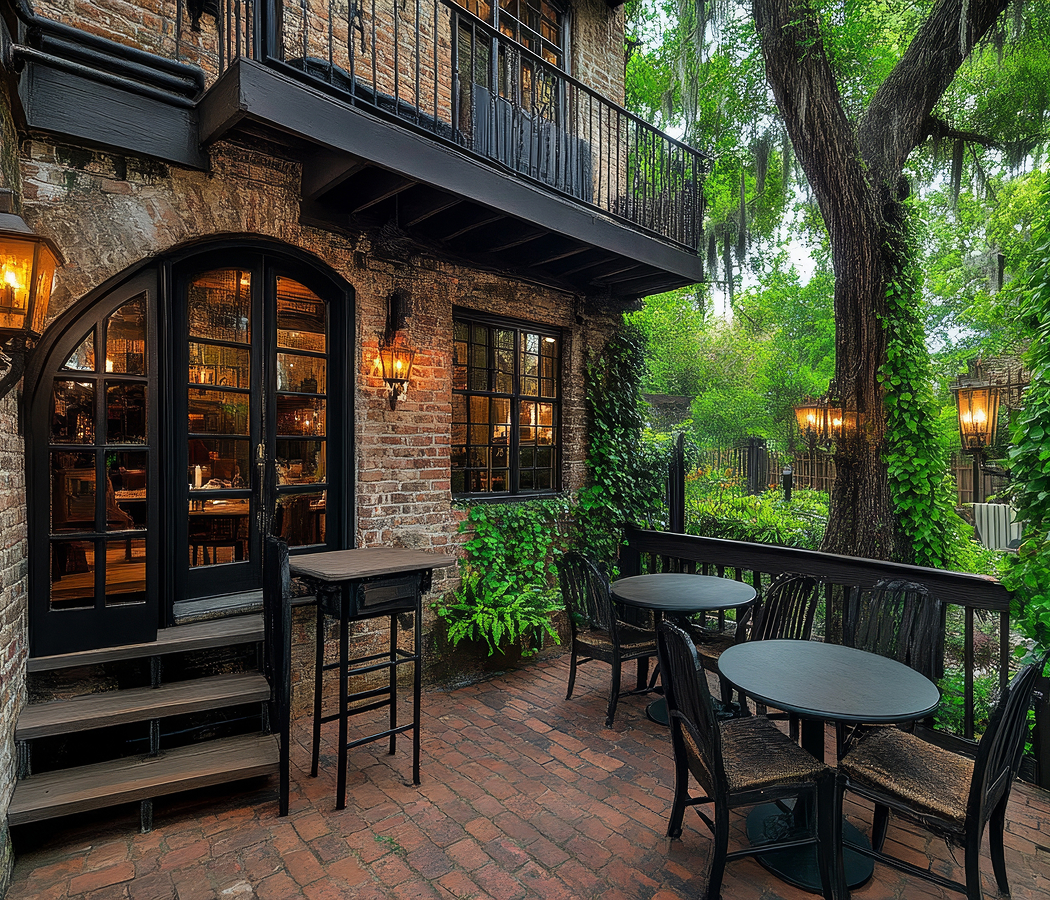
Why you should experience The Gin House at Boone Hall Plantation & Gardens in Charleston, South Carolina.
The Gin House echoes past, its weathered timbers and aged machinery speak softly of an era that shaped both Charleston's prosperity and its pain.
Standing near the edge of Boone Hall's fields, this 19th-century structure once processed the plantation's most valuable crop: cotton. The rhythmic churn of the gin separated fiber from seed, driving the Lowcountry economy and binding the region to the brutal labor of enslaved people. Inside, the scent of old wood and iron lingers; you can almost hear the hum of machinery, the voices of workers, the thud of heavy bales landing on the floor. The Cotton Gin House is less ornate than the mansion or gardens, but it may be the most honest, a raw reflection of industrial ambition built upon human endurance. Its worn beams and preserved equipment form a tangible link to the daily realities that powered the antebellum South, a history that feels both distant and unnervingly present.
What you should know about The Gin House at Boone Hall Plantation & Gardens.
Boone Hall's Gin House is among the few surviving examples of its kind in the United States.
Unlike many plantations where such buildings were lost or repurposed, Boone Hall preserved this site to educate visitors on the complex relationship between innovation and exploitation. The cotton gin, invented by Eli Whitney in 1793, revolutionized Southern agriculture, making cotton production enormously profitable while simultaneously deepening the institution of slavery. Enslaved laborers at Boone Hall not only harvested the cotton but operated and maintained this machinery, often working in punishing heat and dust. Historical records indicate that Boone Hall produced both long-staple Sea Island cotton and short-staple upland varieties, prized for their softness and durability. The Cotton House's wooden frame and brick foundation have survived centuries of hurricanes, fire, and humidity, a physical tribute to Charleston's agricultural past. Today, interpretive exhibits and guided discussions within the building invite reflection on progress, loss, and moral reckoning, offering education where silence once prevailed.
How to fold The Gin House at Boone Hall Plantation & Gardens into your trip.
Include the Gin House midway through your Boone Hall visit, it bridges the human story of the Slave Cabins with the architectural grandeur of the Main House.
Start by walking the dirt path that connects the cabins to the fields, letting the changing landscape mirror the plantation's economic engine. Step inside the Cotton House to view the preserved gin machinery, interpretive panels, and artifacts that reveal how technology reshaped both work and life here. Guides often pause to explain the broader agricultural systems that linked plantations like Boone Hall to global trade, and the devastating human toll that underpinned it. Afterward, step outside and look toward the horizon: the same fields that once grew cotton now stretch in quiet stillness, reclaiming space once defined by toil. The Cotton Gin House is not a grand building, but it carries gravity, a place where innovation met injustice, and where history, at last, is told in full.
Where your story begins.
Foresyte Travel reveals places that feel extraordinary long before you arrive.
Experience premium editorial crafted for luxury travelers.