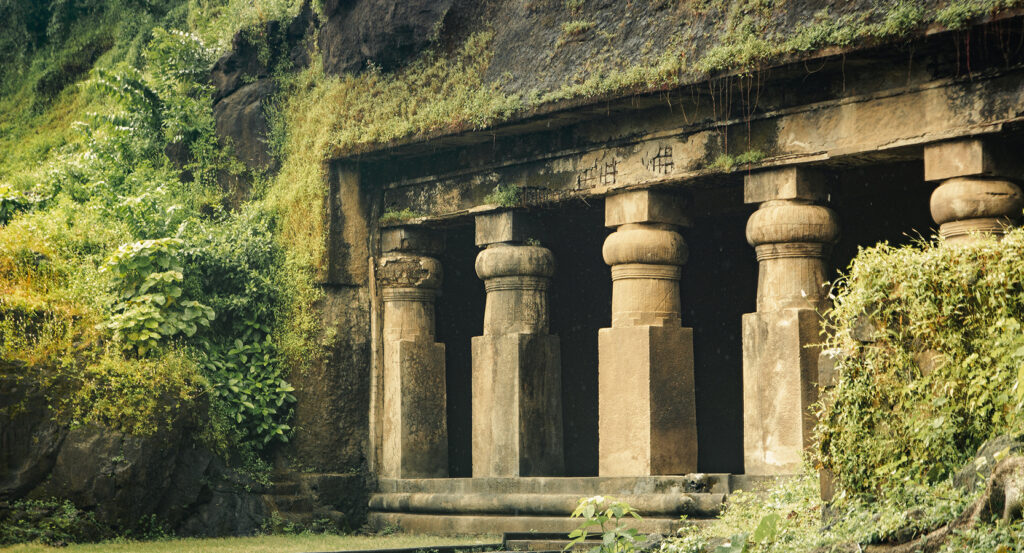
Why you should experience the Elephanta Ferry in Mumbai, India.
The Elephanta Ferry in Mumbai is where the island's journey begins and ends, a slender bridge between the modern city and its ancient heart.
As the ferry from the Gateway of India slows into the harbor, the jetty comes into view like a quiet promise, a wooden walkway stretching over blue-green waters toward the rising hills of Elephanta. The moment you step ashore, the rhythm of Mumbai fades behind you. The hum of engines gives way to the rustle of palms, the chatter of monkeys, and the scent of sea salt mingled with incense from nearby shrines. It's a threshold, part pilgrimage, part arrival, where visitors cross from the restless pulse of the metropolis into the timeless silence of rock and faith. To walk its length is to move from motion to stillness, from noise to awe.
What you should know about the Elephanta Ferry.
The Elephanta Ferry is more than a docking point, it's a modern descendant of a route used for over 1,500 years by traders, monks, and pilgrims who came to this island sanctuary.
The current structure, a long concrete and wooden causeway built during the 1970s, replaced the earlier stone pier used since the Portuguese era, when the island was known as Ilha Elefante. Historical records suggest that even in the 6th century, boats brought worshippers from the ancient ports of Sopara and Kalyan to this same cove, landing near what is now the base of the jetty. The site's geography was chosen carefully, a sheltered inlet protected from monsoon winds, with deep enough waters for small vessels to anchor safely year-round. The modern ferry route from the Gateway of India traces a near-identical course to those ancient crossings, skimming past naval docks, lighthouses, and passing tankers before the island's silhouette emerges from the haze. Beneath the modern jetty lie remnants of older moorings and carved basalt blocks that once supported landing platforms used by early visitors to the caves. Despite its contemporary appearance, this spot holds the memory of centuries of devotion and discovery, a literal gateway to one of India's most sacred rock-cut monuments.
How to fold the Elephanta Ferry into your trip.
The Elephanta Ferry works as both arrival and reflection, the prologue and epilogue to your journey through the Elephanta Caves.
Ferries to the island depart every 30 minutes from the Gateway of India, with the trip taking about one hour each way. For the best experience, sit on the upper deck to watch the city skyline recede, the Taj Mahal Palace, Colaba's spires, and the Harbor cranes shrinking into the horizon as seagulls trail behind the boat. On arrival, you'll disembark at the far end of the jetty and can either walk the 1-kilometer causeway or take a miniature toy train that shuttles passengers to the base of the island's main staircase. Walk if you can, the view along the jetty is extraordinary, with fishing boats bobbing beside mangrove-lined shallows and the caves' basalt cliffs rising ahead. Visit in the morning (before 11 AM) or late afternoon (around 4 PM) to avoid the midday heat and capture the golden light shimmering across the bay. As you leave the island, stand near the jetty's end for one last look back, the forested slopes of Elephanta glowing in the sunset, the sea calm and infinite. In that moment, the Elephanta Ferry Jetty becomes more than a pier, it's the narrow thread connecting two worlds: the sacred and the modern, the eternal and the everyday.
Where your story begins.
Foresyte Travel reveals places that feel extraordinary long before you arrive.
Experience premium editorial crafted for luxury travelers.