Why you should experience Field Museum in Chicago, Illinois.
In the heart of Chicago, along the sweeping shores of Lake Michigan, Field Museum stands as one of the world's great temples of discovery, a place where science, history, and wonder converge beneath grand marble halls.
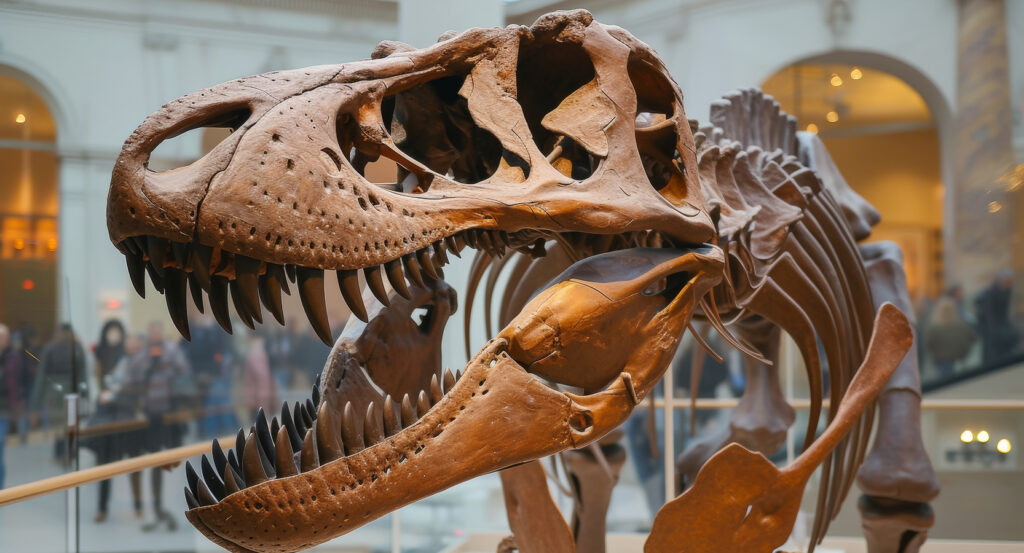
Stepping inside feels like crossing the threshold of time itself. Towering columns and echoing atriums give way to vast exhibits that celebrate the story of life on Earth, from the age of dinosaurs to the rise of human civilization. At the museum's entrance, you're greeted by Máximo the Titanosaur, one of the largest dinosaurs ever discovered, stretching across Stanley Field Hall in breathtaking scale. Nearby, the preserved skull of Sue the T. rex, the most complete Tyrannosaurus rex fossil ever found, stands as both scientific marvel and cultural icon, a Chicago treasure. Yet, beyond these world-famous specimens, the Field Museum's magic lies in its ability to connect the cosmic with the personal. Its galleries unfold like a living encyclopedia: glittering gems, ancient mummies, sacred totems, and meteorites that once blazed through the heavens. The air feels thick with stories, of curiosity, courage, and the human drive to understand our place in the universe. Whether you're tracing the evolution of species, wandering through a re-creation of an Egyptian tomb, or marveling at the taxidermy mastery in the Hall of Birds, the Field Museum is not just a collection of artifacts, it's a cathedral of curiosity that humbles and uplifts all who enter.
What you didn’t know about Field Museum.
Field Museum of Natural History was founded in 1893, born from the legacy of the World's Columbian Exposition, which introduced Chicago to the world.
Initially named the Columbian Museum of Chicago, it was established to preserve and expand upon the scientific and cultural exhibits showcased during that world fair. It later took its current name in honor of Marshall Field, the famed department store magnate whose endowment secured its future as a premier research institution. But the Field Museum isn't just a showcase of global history, it's an active center of scientific exploration. Its research teams conduct fieldwork on every continent, from unearthing fossils in Patagonia to cataloging species deep in the Amazon. The museum's collection now exceeds 40 million specimens and artifacts, making it one of the largest natural history repositories in the world. Among its lesser-known treasures are the exquisite Tsavo lions, the man-eating pair that once terrorized railroad workers in Kenya and later inspired Hollywood legend. Visitors can also explore Inside Ancient Egypt, which houses one of the most extensive displays of Egyptian antiquities outside Cairo, including mummified remains and reconstructed burial chambers. Behind the scenes, the museum's scientists are sequencing genomes, studying climate change, and conserving endangered species, continuing a tradition of research that stretches back over a century. The Field's architecture, inspired by classical Greek temples, reflects its mission: a union of knowledge, beauty, and permanence. Every hall tells a different story, and together, they form a single narrative, the history of our planet and the fragile web of life that connects us all.
How to fold Field Museum into your trip.
A visit to Field Museum is an experience best approached with time and curiosity, a full day of discovery that rewards both depth and wonder.
Start early to explore the Stanley Field Hall, where Máximo's towering skeleton dominates the space beneath a ceiling of skylit grandeur. From there, move into Evolving Planet, an exhibit that traces 4 billion years of life through fossils, interactive displays, and multimedia that make evolution come alive. Next, pay homage to Sue the T. rex in her dedicated gallery, her story, from excavation to global fame, is as thrilling as the fossil itself. Continue your journey through the Hall of Gems, where diamonds and rare minerals sparkle under precise light, before venturing into the Grainger Hall of Gems or Cultural Halls, which feature rich anthropological collections from Asia, Africa, and the Americas. Take a pause for lunch at the Field Bistro, offering views of Lake Michigan and the Chicago skyline, then head downstairs to the immersive Underground Adventure, where visitors shrink to the size of insects to explore the hidden world of soil and ecosystems. Allow at least four hours, but ideally a full afternoon, to absorb the museum's scale without rush. The Field Museum anchors Chicago's Museum Campus, alongside the Shedd Aquarium and Adler Planetarium, making it easy to turn your visit into a complete day of exploration. Whether you come for dinosaurs, mummies, or the secrets of evolution, the Field Museum reminds you that curiosity isn't just for scientists, it's the spark that defines what it means to be human.
Hear it from the Foresyte community.
Just enough life around you not to be overwhelming. Right pace.
Where your story begins.
Start your planning journey with Foresyte Travel.
Experience immersive stories crafted for luxury travelers.