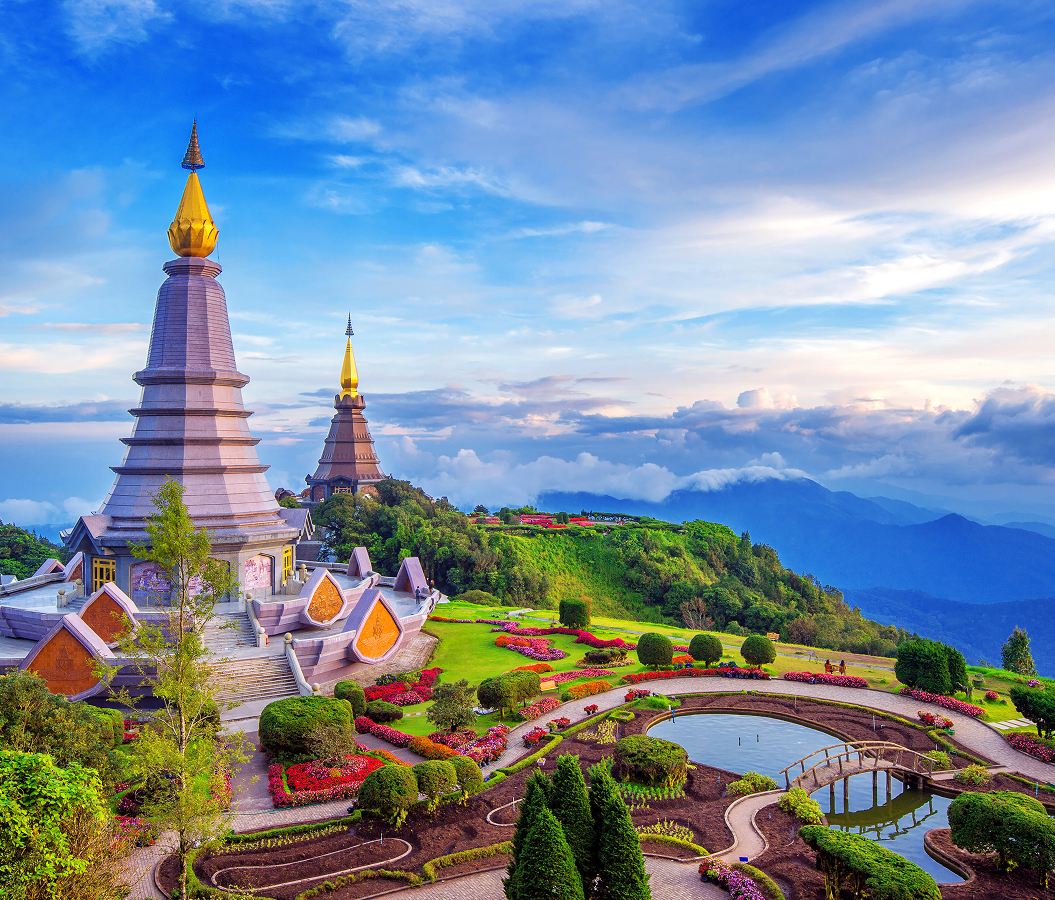
Why Four Seasons Resort Maldives at Kuda Huraa matters.
Four Seasons Resort Maldives at Kuda Huraa is a landmark island resort where Maldivian village traditions meet a living coral reef, Indian Ocean surf culture and one of the world's most developed forms of marine-centered luxury hospitality.
Set on a private coral island in the North Malé Atoll, Four Seasons Resort Maldives at Kuda Huraa lies within a chain of shallow lagoons and reef formations north of Malé, reached by speedboat across the open Indian Ocean. The resort's beaches curve around turquoise water, with over-water villas extending toward the lagoon and a separate spa island reached by boat. Nearby inhabited islands add a human scale to the surrounding seascape, connecting the resort to local fishing communities, mangrove wetlands and Maldivian maritime life. The horizon remains almost entirely ocean, interrupted by reef flats, dhoni routes and passing surf. Sandy paths move through palms, flowering gardens and thatched structures, creating a village-like circulation pattern across the island. The result is a resort whose character depends on the close relationship between Maldivian architecture, coral-island geography and the surrounding North Malé Atoll.
What defines Four Seasons Resort Maldives at Kuda Huraa.
Four Seasons Resort Maldives at Kuda Huraa originated during the transformation of the Maldivian tourism industry from a collection of independently operated island retreats into an internationally recognized luxury hospitality destination. The Maldives had introduced commercial resort tourism in 1972, establishing an economic sector whose expansion brought substantial changes to the archipelago's infrastructure, employment and international commercial relationships. Four Seasons entered this developing market through Kuda Huraa, establishing the company's first Maldivian property and extending its international resort portfolio into the Indian Ocean. Australian architectural practice Grounds Kent Architects developed the resort's original design around the spatial character of traditional Maldivian island villages, incorporating thatched roofs, timber construction and decorative latticework into an architectural program shaped by the surrounding tropical environment. Landscape architects One Degree North contributed to the island's cultivated setting, establishing a relationship between the built environment and the vegetation associated with Maldivian coastal settlements. Hospitality design practice Hirsch Bedner Associates developed the original interiors, translating the resort's architectural philosophy into residential spaces incorporating teak, natural textures and traditional decorative elements. Four Seasons Resort Maldives at Kuda Huraa opened in May 1998, becoming an important early example of internationally managed luxury resort development in the archipelago. Its arrival also marked a significant expansion of Four Seasons' recreational hospitality portfolio, introducing the company to the Maldives' established traditions of diving, snorkeling and marine exploration. The resort's early development coincided with the devastating 1997-1998 El Niño bleaching event, which caused extensive damage to coral reefs throughout the Indian Ocean. Coastal oceanographer Thomas Le Berre subsequently approached Four Seasons with a proposal to propagate coral through artificial reef structures, initiating a conservation partnership that developed into the Reefscapers marine restoration program. The initiative established an important institutional relationship between luxury tourism and marine ecological stewardship, bringing scientific expertise into the long-term management of the resort's surrounding environment. A defining interruption occurred on December 26, 2004, when the Indian Ocean tsunami caused substantial destruction throughout the Maldives and severely damaged Kuda Huraa's original facilities. The property closed for eighteen months as a comprehensive reconstruction program restored its accommodations, public spaces and coastal infrastructure. The resort reopened in September 2006, beginning a renewed period of development that incorporated architectural improvements and expanded recreational programming. Four Seasons subsequently strengthened its Maldivian presence through the opening of Four Seasons Resort Maldives at Landaa Giraavaru in November 2006, establishing a complementary hospitality destination within Baa Atoll. Kuda Huraa developed a particularly distinctive international character through surfing, drawing upon its proximity to some of the Maldives' most celebrated reef breaks. In 2011, the resort introduced the Four Seasons Maldives Surfing Champions Trophy, an invitation-only competition that brought internationally recognized professional surfers to the renowned Sultans break. The competition established an unusual three-discipline format requiring participants to compete on single-fin, twin-fin and thruster boards, connecting different generations of surfing equipment with the technical demands of contemporary competition. Australian champion Mark Occhilupo won the inaugural event, beginning a competitive history subsequently associated with athletes including Damien Hardman, Taj Burrow, Josh Kerr, Kelly Slater and Joel Parkinson. The tournament's international reputation strengthened through successive editions, developing into a distinctive institution within the professional surfing community. The fourteenth edition took place in September 2026, with Brazilian surfer Caio Ibelli winning the championship. Marine conservation advanced alongside the resort's sporting identity, with the combined Four Seasons Maldives restoration program reaching its 9,000th coral frame in March 2025. Four Seasons Resort Maldives at Kuda Huraa occupies an important position in Maldivian hospitality history through its pioneering international resort development, post-tsunami reconstruction, sustained marine conservation partnerships and enduring association with competitive surfing.
Executive Chef Eduardo Gandia Martinez develops Four Seasons Resort Maldives at Kuda Huraa's culinary character through the relationship between Indian Ocean seafood, the aromatic traditions of South Asian cooking and the international influences that have shaped Maldivian gastronomy. His philosophy emphasizes the natural character of fresh ingredients, establishing a culinary approach grounded in careful handling, precise preparation and the balance between regional flavors and contemporary technique. Maldivian cuisine developed through centuries of maritime commerce connecting the archipelago with southern India, Sri Lanka and the wider Indian Ocean trading world, introducing culinary traditions built around tuna, coconut, rice and aromatic spices. The islands' dependence upon fishing established seafood as a defining element of local food culture, with preservation techniques and coconut-based preparations contributing to the distinctive character of Dhivehi cooking. Martinez interprets these foundations through a broader international culinary program that connects the Maldives' maritime inheritance with the established cooking traditions of neighboring regions. Baraabaru develops the South Asian dimension through Indian gastronomy influenced by Kerala, whose coastal cooking shares important agricultural and maritime relationships with the Maldives. The kitchen's approach to spice emphasizes the interaction between aromatic compounds, controlled heat and carefully developed sauces, allowing individual ingredients to contribute to a balanced culinary composition. Tandoor cooking introduces a complementary technique through intense radiant heat, creating concentrated roasted flavors and distinctive surface textures through the relationship between marinades, temperature and rapid cooking. Coconut contributes another dimension through its natural richness and capacity to soften the intensity of chili and aromatic spices, connecting the restaurant's Indian influences with ingredients central to Maldivian cooking. Celebrated Indian chef Hari Nayak contributes to Baraabaru's culinary character through a dedicated tasting-menu program, bringing contemporary interpretations of Indian regional cooking into the resort's gastronomic culture. The relationship between seafood and aromatic seasoning becomes particularly significant in the preparation of Indian Ocean fish, whose delicate natural flavors respond to carefully balanced acidity, spice and cooking temperatures. Martinez extends the property's connection with Maldivian food traditions through Kandu Grill's Friday barbecue program, which explores the relationship between locally caught seafood, open-fire cooking and the communal customs of island dining. The kitchen's treatment of lobster, tuna and other regional catches emphasizes the concentrated savory character developed through direct heat, complemented by preparations incorporating curry leaves and other ingredients associated with South Asian coastal cuisine. Reef Club introduces a Mediterranean interpretation of the same marine environment through Italian culinary traditions, connecting the precision of seafood preparation with handmade pasta, olive oil and the contrasting flavors of fresh herbs and citrus. Its stone-fired cooking develops another expression of temperature control, establishing the characteristic relationship between fermented dough, intense heat and carefully selected toppings. Café Huraa contributes a pan-Asian dimension through culinary techniques and flavor combinations associated with East and Southeast Asia, extending the resort's gastronomic character beyond the immediate Indian Ocean region. The beverage program complements these traditions through tropical fruit, refreshing acidity and carefully composed cocktails suited to the archipelago's warm maritime climate. Culinary instruction introduces a participatory dimension through Indian and Italian cooking classes, connecting professional techniques with the ingredients and preparation methods underlying the resort's restaurants. Beyond gastronomy, ŪRJĀ Naturopathy Island develops a distinctive approach to restorative hospitality through a separate island sanctuary reached by a short boat crossing. Its therapeutic philosophy connects naturopathic practices with the physical character of the Indian Ocean, incorporating open-air treatment pavilions and carefully structured wellness programs into an environment dedicated to physical and mental restoration. The resort's marine conservation activities extend this relationship with the natural environment through coral propagation, ecological education and opportunities to participate in reef restoration. Together, these culinary, therapeutic and environmental traditions establish Four Seasons Resort Maldives at Kuda Huraa as a distinctive expression of Indian Ocean hospitality shaped by Maldivian maritime culture, South Asian culinary craftsmanship and the ecological importance of the surrounding coral reefs.
How Four Seasons Resort Maldives at Kuda Huraa fits.
Four Seasons Resort Maldives at Kuda Huraa works as a base for understanding the Maldives through coral-island ecology, Maldivian royal history and the relationship between local communities and marine environments.
Begin at Huraa Island, the inhabited Kaafu Atoll community associated with the Huraa dynasty that ruled the Maldives from the eighteenth century into the modern era. The island's history includes Sultan Ghazi Hasan Izz al-Din, whose family connection to Huraa shaped one of the country's most important royal lines. Fishing, tourism and local craftsmanship remain part of the island's community life, and its harbor connects the settlement with the surrounding atoll. Continue to Huraa Mangrove Area, a protected 5.32-hectare wetland on the island's northern side. The mangrove contains true mangrove species, associated plants, crabs, fish and protected birdlife, forming one of the few remaining mangrove environments near Malé. Conclude at Dhonbandaara Miskiiy Compound, where a mosque commissioned in 1753 is associated with Sultan Ghazi Hasan Izz al-Din. The compound contains coral gravestones, burial enclosures and a mausoleum shrine, preserving a rare connection between Maldivian royal history, Islamic architecture and coral-stone funerary traditions. The progression moves from an inhabited island shaped by a royal dynasty through a protected coastal wetland and culminates in a historic religious compound, connecting community, ecology and Maldivian cultural memory across the waters surrounding the resort.
Where your story begins.
Foresyte Travel reveals places that feel extraordinary long before you arrive.
Enjoy editorial crafted for luxury travelers.
Foresyte may earn a commission when you book.