Why you should experience Grand Hotel Beau Rivage in Switzerland.
Grand Hotel Beau Rivage is where Swiss lakeside elegance, quiet aristocratic charm, and the soft glow of Belle Époque refinement blend into a stay that feels like stepping into a more graceful, more cinematic version of your life.
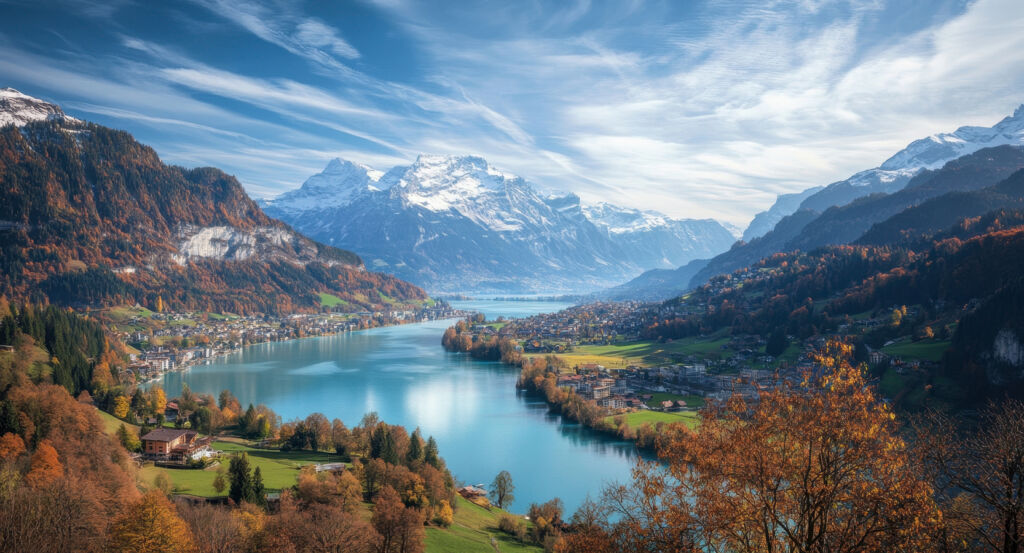
Set along the banks of the crystalline Aare River, Grand Hotel Beau Rivage rises with the stately symmetry and warm grandeur of a classic Swiss landmark, arched windows, carved balconies, soft cream façades, manicured gardens, and a sense of serenity that radiates outward like a whisper. Its riverside setting is nothing short of dreamlike: flowing turquoise water, footbridges connecting you to Interlaken's charming center, mountain silhouettes etched into the horizon, and sunlight striking the Jungfrau Region with a golden clarity you only find in Switzerland. Step inside and the mood deepens. The lobby glows with polished marble, classical detailing, elegant chandeliers, and refined furnishings arranged with a timeless sense of hospitality. The air feels calm, balanced, intentional, the kind of atmosphere that slows your breathing the moment you cross the threshold. Rooms and suites follow this thread of understated luxury with plush bedding, soft neutral palettes, high ceilings, warm woods, elegant fabrics, and windows that open to sweeping views of mountains, riverbanks, or the hotel's beautiful garden terraces. Some rooms include balconies that feel like private opera boxes overlooking Interlaken's picturesque scenery. Bathrooms carry a clean, classical sophistication: stone textures, deep tubs, bright mirrors, polished chrome, and thoughtful amenities designed for comfort and ease. Dining at Grand Hotel Beau Rivage is a celebration of Swiss culinary tradition and refined European gastronomy. Expect seasonal menus shaped by mountain produce, lake fish, regional herbs, artisanal cheeses, delicate sauces, warm breads, and desserts crafted with precision and indulgence. The dining room itself glows with soft lamplight, crisp linens, elegant table settings, and an ambience that blends intimacy with quiet grandeur. Breakfast is a beautiful ritual, pastries, eggs, fruit, smoked fish, yogurts, cereals, cheeses, breads, charcuterie, and perfectly balanced Swiss coffee, served in a sunlit room that feels like the inside of an old-world dream. The bar and lounge deepen the hotel's sense of timeless calm. Pianissimo music, warm lighting, richly upholstered seating, and the hum of clinking glassware create the perfect setting for aperitifs, nightcaps, and conversations that stretch comfortably into the evening. Outside, the hotel's gardens and river-facing terraces offer peaceful sanctuaries for reading, relaxing, and absorbing the beauty of Interlaken. Location is one of Grand Hotel Beau Rivage's greatest strengths: a gentle stroll from the train station, steps from riverside paths, near Lake Brienz's luminous water, close to Interlaken's cafés and boutiques, and at the gateway to the Jungfrau Region's hiking trails, ski areas, mountain railways, and panoramic lookouts. Staff complete the experience with warm, polished hospitality, attentive without being intrusive, refined without being distant, and anchored in a Swiss tradition of service where every detail is quietly, gracefully handled.
What you did not know about Grand Hotel Beau Rivage.
Grand Hotel Beau Rivage occupies a pocket of Interlaken shaped by glacial history, Celtic settlement, Roman influence, monastic agriculture, industrial-era innovation, and the golden age of European travel that transformed the Alps into an international icon.
The land along the Aare River, where the hotel now stands, was carved by the retreat of the Aare Glacier around 10,000 years ago. As the glacier withdrew, it left behind mineral-rich soil, river channels, gentle terraces, and the distinctive turquoise water that still defines the river due to glacial sediment suspended in meltwater. Before modern Interlaken existed, this land was home to Celtic tribes whose presence shaped early agricultural patterns, spiritual practices, and footpaths linking lake villages to alpine passes. The region's Celtic roots remain in place names, archaeological remnants, and local folklore that predates Swiss Confederation history by centuries. When the Romans expanded into the region, they used the Interlaken area as a travel corridor between their settlement at Aventicum and northern Europe. Roman artifacts found near Lake Thun and Lake Brienz indicate that soldiers, traders, engineers, and migrants passed through regularly, leaving behind infrastructure traces that later influenced medieval road placement. In the Middle Ages, the land belonged primarily to the Interlaken Monastery, founded in the 12th century. The monks cultivated vineyards, orchards, grains, and livestock along the riverbanks, shaping the early agraria character of the region. Their influence extended across both lakes, controlling trade, farmland, and spiritual life for centuries. The name Interlaken, “between the lakes”, comes from this era. By the 18th and early 19th centuries, Interlaken began attracting adventurous travelers, naturalists, and artists captivated by the dramatic peaks of the Jungfrau, Mönch, and Eiger. Romantic-era thinkers, poets, and painters described the region as a place of sublime beauty, elevating it from a rural valley to a destination of spiritual inspiration. This shift set the stage for the development of grand hotels in the 19th century, including the rise of Beau Rivage. Built during the Belle Époque, the hotel was part of a wave of architectural and cultural development that included the arrival of railways, improved roads, lakeside steamships, and the emergence of mountaineering as a European obsession. Interlaken became a gateway for expeditions up the Jungfrau and surrounding peaks. Grand Hotel Beau Rivage's placement near the river, with unobstructed sightlines to the mountains, reflected the era's desire to merge natural grandeur with refined hospitality. Guests during this period included aristocrats, scientists, climbers, artists, and luxury travelers who viewed the Alps as both playground and muse. The hotel's classical design, its arches, balconies, stonework, cornices, and symmetrical geometry, mirrors Belle Époque ideals of beauty, optimism, and leisure. The surrounding region also played a major role in Swiss tourism innovation. The creation of the Jungfrau Railway, completed in 1912, was a grand engineering achievement that carried travelers into a high-alpine world of ice and sky. Interlaken became a centerpiece of global travel, and hotels like Beau Rivage offered the essential luxury infrastructure supporting this new international fascination.
How to fold Grand Hotel Beau Rivage into your trip.
Grand Hotel Beau Rivage becomes the elegant, calming, lakeside anchor of your Swiss journey, a place where mornings glow softly over the river, days expand into alpine adventure, and evenings return you to a world of refined serenity and old-world beauty.
Begin your morning with breakfast in the hotel's sunlit dining room, pastries, breads, cheeses, smoked fish, eggs, fruit, yogurt, charcuterie, cereals, cakes, and rich coffee that warms you as you plan the day ahead. After breakfast, walk to the nearby station for panoramic journeys into the Jungfrau Region, ascending through Grindelwald, Wengen, Mürren, Kleine Scheidegg, or continuing all the way to Jungfraujoch to stand above the clouds in a world of ice. In summer, take advantage of lake cruises, balcony trails, forest paths, alpine meadows, waterfalls, mountain railways, and breathtaking viewpoints above Lakes Thun and Brienz. Interlaken's riverside walks, paragliding launches, gardens, boutiques, cafés, and lakeside promenades are all within steps. In winter, use the hotel as your warm base for skiing, sledding routes, snowshoeing trails, winter rail excursions, and snowy village strolls through the Jungfrau Region. After returning to the hotel, unwind along the riverbank, relax in the lounge, sip a cocktail by lamplight, or retreat to your room for soft afternoon sun and mountain air drifting through your balcony doors. Dinner becomes a highlight, refined Swiss cuisine served in a room glowing with elegance, quiet conversation, and the timeless beauty of Belle Époque décor. After dinner, take a peaceful riverside walk or simply return to your room to watch the last light fade behind the mountains. Grand Hotel Beau Rivage becomes not just where you stay, but the luminous, lakeside, quietly luxurious soul of your entire Interlaken experience.
Where your story begins.
Foresyte Travel reveals places that feel extraordinary long before you arrive.
Experience premium editorial crafted for luxury travelers.