Why Grand Hotel Zell am See matters.
Grand Hotel Zell am See is a lakeside hotel whose Belle Époque beginnings, wartime upheavals and repeated reconstruction mirror the changing fortunes of Alpine tourism.
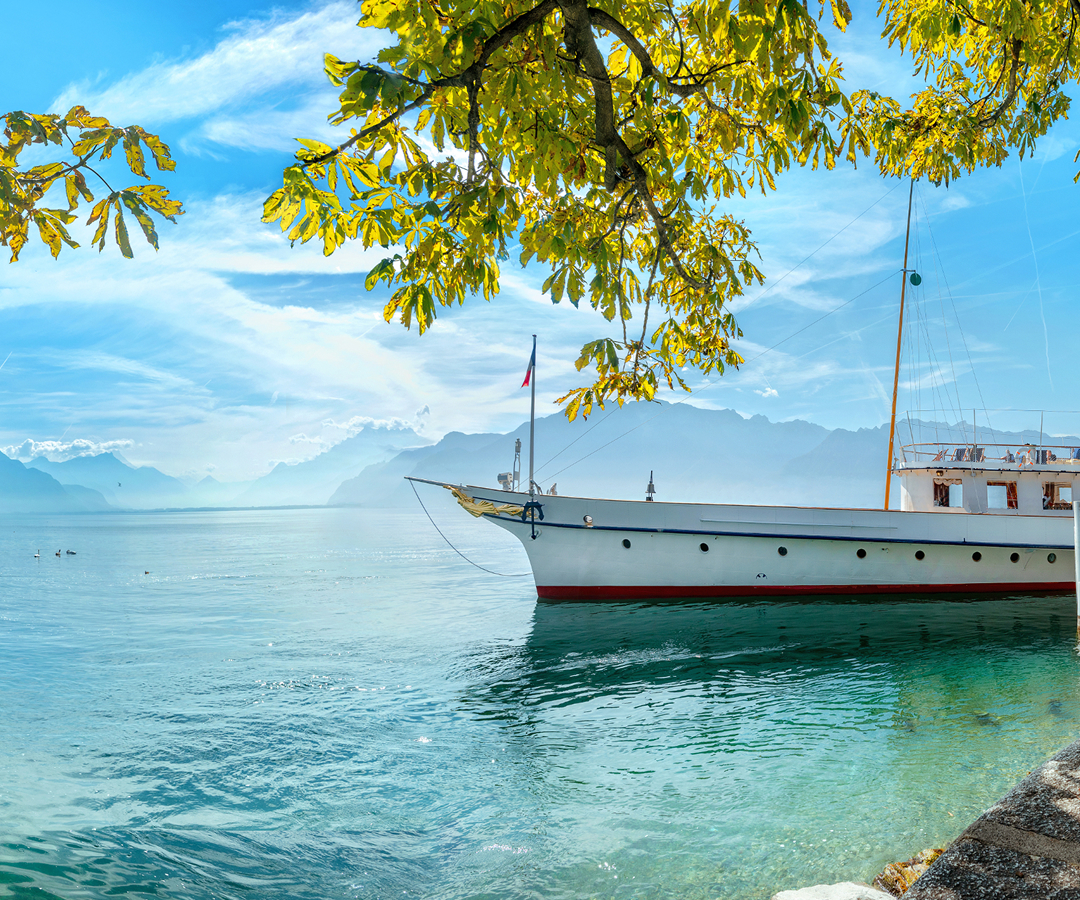
The hotel occupies a narrow peninsula projecting into Lake Zell, with water on several sides and the town's waterfront directly behind it; the Hohe Tauern range closes the southern horizon, giving the old resort a dramatic alpine frame. Its position makes the lake the first and constant reference point, drawing the experience outward from the historic façade toward open water. The surviving Gründerzeit appearance gives that encounter a distinctly turn-of-the-century character, while later additions reveal how the property adapted. The result is a hotel shaped by both its lakeside setting and the successive eras that remade it.
What defines Grand Hotel Zell am See.
Grand Hotel Zell am See is best known for its transformation from a modest lakeside annex into a grand resort whose history records the rise, interruption and return of Alpine tourism. Hotel Krone opened in 1878 under Josef Schwaiger, while the present hotel took shape between 1884 and 1886 as the Hotel am See, an annex on the peninsula. Carl Böhm, a waiter and coffeehouse owner from Linz, and his Salzburg-born wife Therese invested in the property in April 1887 after several changes of ownership. Their renovations and expansions gave the building the substantial Gründerzeit form that later restorations would seek to recover. In May 1896, the couple renamed it Grandhotel am See, positioning the house for a new era of travel along the Austro-Hungarian rail network. Electric lighting arrived in 1902, an emblem of modernity that coincided with 25,000 overnight stays that summer. During the Belle Époque, ministers, industrialists and aristocrats made the hotel a social address on the lake, extending its reputation beyond regional tourism. The First World War ended that prosperity, and Böhm sold his life's work in 1918. Under Carl Pischkittel, the hotel regained momentum between the wars, and from summer 1925 the writer Stefan Zweig returned to Zell am See, working on stories from the hotel bar and balcony; his collection Confusion of Feelings appeared in 1927. The American occupation after the Second World War brought a new institutional use, as the hotel served as accommodation and a training centre for the Rainbow Division before fires left the building severely damaged. A 1950 fire destroyed the roof and furnishings, and American forces remained in the building until 1953, making the hotel's postwar passage inseparable from military occupation and reconstruction.
Franz Gramshammer, a Tyrolean ski instructor, acquired the damaged hotel in 1955 for one schilling and began a reconstruction that brought it back into the expanding winter-tourism economy. The 1965 flood again damaged the property, this time striking cellar rooms and undermining the building's fabric. When a Swedish timeshare group bought the hotel in 1980, Zell am See required the reconstruction to retain its Wilhelminian architectural style, making preservation a condition of renewal. Hans Waltl, Wilhelm Holleis and the municipality shaped the rebuilding around that requirement, so the 1984 reopening restored the historic exterior after eleven months of work even as the interior became a suite hotel. An underground passage had linked the neighboring Clima Hotel to the main building in 1990. The timeshare model struggled, and equalization proceedings in 1995 opened the way for the Holleis family to acquire both properties and launch another extensive renovation. The Imperial Café-Bar, opened in 1998, drew directly on the Grandhotel's Belle Époque past, placing a new social room inside the revived historical setting. In 2003, Friedensreich Hundertwasser's Austria Fountain brought a contemporary art commission into the garden; water sculptor Hans Muhr realized the work from architect Peter Pelikan's plans. The project gave the hotel's outdoor space a distinctive artistic focus and linked the property to Hundertwasser's broader collaboration with Pelikan. The casino's opening at midnight on 31 December 2015 marked another institutional shift, adding a gaming venue to the hotel's long history as a destination for public life and leisure. In 2020, Wilfried Holleis and his son Valentin opened Pinzga Bräu, connecting the property with the region's brewing tradition through an on-site brewery. Across these changes, the Grand Hotel has repeatedly absorbed new uses while making its reconstructed historic form central to its story.
How Grand Hotel Zell am See fits.
Grand Hotel Zell am See works as the starting point for a town-centre progression from civic memory through sacred architecture to the engineering that opened the alpine landscape to mass tourism.
Begin at Museum Vogtturm, where the six-storey tower anchors a collection tracing local life through centuries of political and cultural change. The tower's origins remain uncertain, but records connect its ownership to the lords of Goldegg and the Pinzgau fief of Dorfheim by the fifteenth century. A 1644 reference identifies it as a residence for a court servant and as a prison, showing how a private power structure became part of the town's civic fabric. Since 1984, the tower has housed the local museum, and its exhibitions pair regional objects with accounts of the Peasants' War of 1525-26 and later local figures. Continue to Church of St. Hippolyt, whose surviving crypt preserves a fragment of the Ottonian church that stood here in the tenth century. The present three-aisled pillar basilica grew through Romanesque and Gothic campaigns, extending the early religious foundation into a larger medieval structure. Its west tower and gallery represent the late Gothic phase, while the 14th- and 17th-century frescoes reveal later layers of devotional art. Neo-Gothic altars and stained glass added another period of transformation, making the church's interior a record of changing worship and architectural taste. Conclude at Schmittenhöhebahn, the cableway project that turned a local mountain into a reachable destination and altered the region's tourism economy. Lawyer Eduard Bittner, Ludwig Margreiter and Leo Gastgeber secured a preliminary concession in 1924, then formed a larger project group with banker Carl Spängler Jr., hotelier Willi Schandlbauer and former mayor Josef Wisgrill. Construction began in May 1927, and the line entered service on 31 December as Salzburg's first cableway and Austria's fifth. Its opening gave the region a permanent mechanical link to high-altitude tourism. The progression moves from the tower's civic records through the church's layered sacred architecture to a pioneering transport system, revealing how Zell am See's institutions and infrastructure turned a historic settlement into an alpine destination.
Where your story begins.
Foresyte Travel reveals places that feel extraordinary long before you arrive.
Enjoy editorial crafted for luxury travelers.
Foresyte may earn a commission when you book.