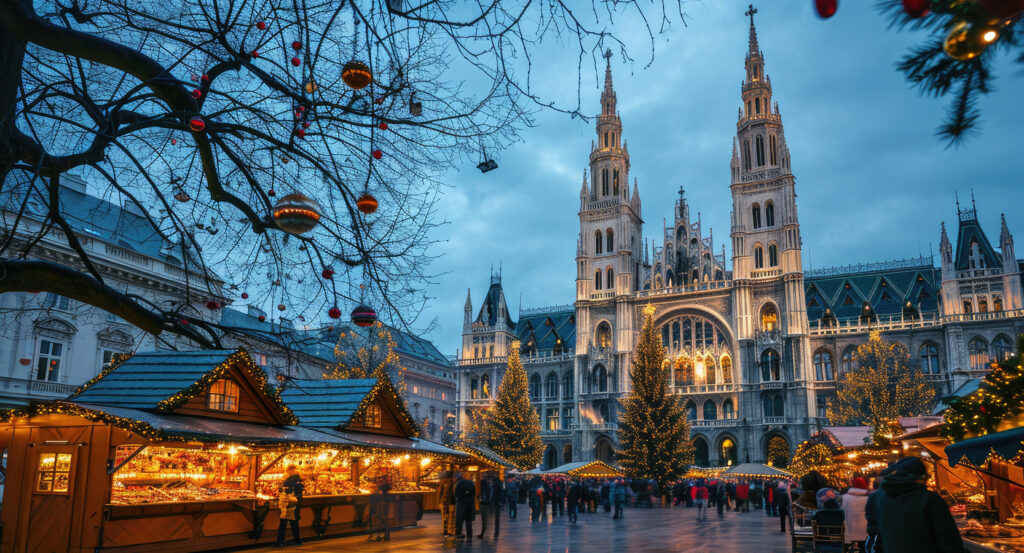
Why you should experience Hernals in Vienna, Austria.
Hernals is a hillside district where village heritage, artistic tradition, and natural landscapes converge within one of the capital's most authentic residential neighborhoods.
Historic churches, neighborhood wine taverns, forested trails, elegant residential streets, cultural venues, local markets, and community gathering spaces create a district that balances urban accessibility with a distinctly local atmosphere. Formed through the incorporation of several historic villages into Vienna during the nineteenth century, Hernals retained much of its original character even as the capital expanded around it. Artisans, merchants, winemakers, and working families helped shape communities that maintained strong local identities across generations. The district's proximity to the Vienna Woods encouraged a lifestyle closely connected to nature while preserving ties to the city's cultural and economic life. Today, visitors encounter a neighborhood that feels relaxed, welcoming, and deeply rooted in Viennese tradition. The result is a district defined by community, continuity, and environmental beauty. To the south, Ottakring extends naturally from Hernals through a network of residential streets, local businesses, and historic neighborhoods, reinforcing the district's position within western Vienna.
What you should know about Hernals.
Hernals is best known for being home to the Kalvarienbergkirche, a Baroque pilgrimage church that became the centerpiece of one of Vienna's most important eighteenth-century religious pilgrimage sites.
Constructed as devotion to the Stations of the Cross expanded throughout Central Europe, the church helped transform Hernals into a destination for pilgrims and religious processions. Its prominent position and richly decorated Baroque design reflected the importance of faith within the growing suburban communities beyond Vienna's historic center. The surrounding pilgrimage traditions attracted visitors from across the region and contributed to the area's cultural development. Over time, the church became a defining landmark of Hernals and a visible symbol of the district's historical identity. Its architectural significance and enduring presence continue to connect modern residents with centuries of local tradition. Few districts in Vienna possess a landmark so closely associated with the city's pilgrimage heritage.
How to fold Hernals into your trip.
Hernals works as an exploration of the historic landmarks, neighborhood traditions, and natural landscapes that define one of Vienna's most charming districts.
Begin at Kalvarienbergkirche, where the district's defining connection to religious heritage, architecture, and community life immediately comes into focus. Continue toward Kalvarienberggasse, whose local businesses and historic streets reveal the village character that shaped the neighborhood for generations. From there, make your way to the Vienna Woods trails along the district's western edge, where scenic pathways and forested landscapes provide a broader perspective on the natural environment that continues to define Hernals today. Along the route, you'll encounter neighborhood cafés, historic residences, community gathering spaces, cultural venues, local markets, green spaces, and architectural landmarks that showcase the district's remarkable depth. The progression moves naturally from pilgrimage landmark to historic commercial corridor to natural retreat, revealing the forces that transformed Hernals into one of Vienna's most distinctive residential districts. Hernals remains one of Vienna's most rewarding neighborhoods, preserving a remarkable balance between historical significance, local character, and environmental appeal.
Where your story begins.
Foresyte Travel reveals places that feel extraordinary long before you arrive.
Experience premium editorial crafted for luxury travelers.