
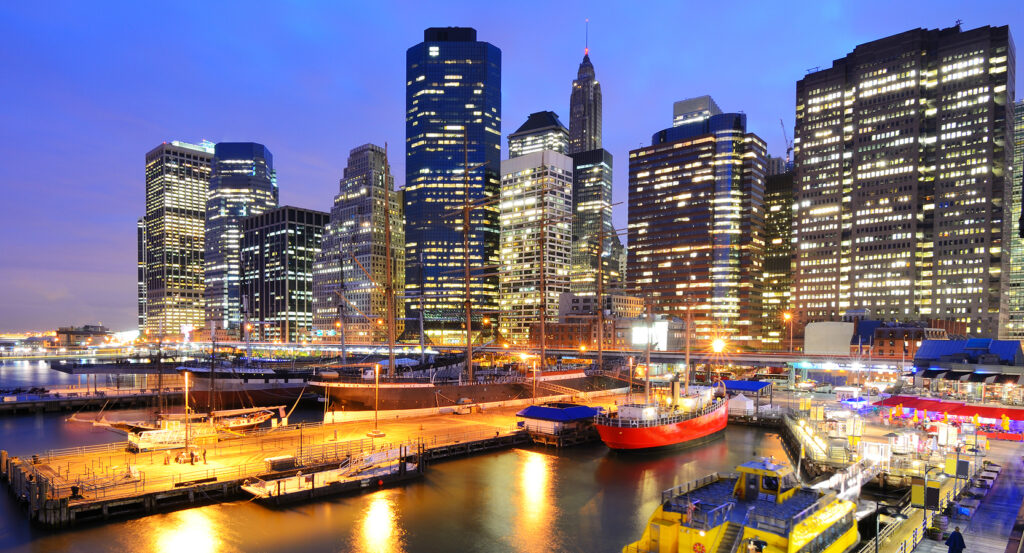
Why you should experience Fulton Stall Market in New York, NY.
Fulton Stall Market is a historic public marketplace where the Seaport District's maritime heritage, local agriculture, community entrepreneurship, and culinary tradition create one of Lower Manhattan's most distinctive food destinations.
Located within the The Seaport along Front Street near Fulton Street and just steps from Schermerhorn Row, this energetic community market connects visitors with regional farmers, artisanal food producers, specialty vendors, educational programming, and seasonal events inside one of New York City's oldest commercial neighborhoods. Historic warehouse architecture, locally sourced products, and thriving market activity create an atmosphere where centuries of waterfront commerce continue through a contemporary celebration of food and community. Every visit highlights the enduring relationship between New York and the agricultural regions that have supplied the city for generations. The result is an experience defined by culinary authenticity, historic preservation, and one of Manhattan's most meaningful public markets.
What you should know about Fulton Stall Market.
Fulton Stall Market is best known for continuing the commercial legacy of the historic Fulton Fish Market, whose origins date to 1822, by reconnecting New Yorkers with regional food producers through a nonprofit marketplace dedicated to local agriculture, education, and sustainable food systems. Established in 1995 by preservation advocates following the revitalization of the The Seaport Historic District, the organization occupies historic nineteenth-century mercantile buildings where merchants once traded seafood, produce, and imported goods arriving from around the world. Rather than operating as a traditional retail market, Fulton Stall Market functions as a 501(c)(3) nonprofit organization, supporting farmers, fishermen, bakers, cheesemakers, beekeepers, specialty food artisans, and small-scale producers from throughout the Northeast while promoting food access, environmental stewardship, and culinary education. Weekly farmers markets, seasonal harvest festivals, cooking demonstrations, educational workshops, youth entrepreneurship programs, and community partnerships reinforce the institution's mission of strengthening regional food economies while preserving the Seaport's commercial heritage. Located beside Schermerhorn Row and the The Seaport Museum, the market preserves the historic relationship between New York's waterfront and the agricultural networks that have sustained the city for more than two centuries, transforming one of America's oldest trading districts into a contemporary center for local food culture.
Beyond its market stalls, Fulton Stall Market demonstrates how historic preservation and community development can work together to sustain both neighborhood character and regional agriculture. Educational initiatives introduce visitors to seasonal farming, sustainable fishing, urban food systems, and culinary traditions while creating direct relationships between producers and consumers rarely found in major metropolitan centers. The market's intimate scale, historic surroundings, and continually changing roster of vendors ensure every visit reflects the rhythms of the growing season while honoring the commercial traditions that made the The Seaport one of America's great waterfront marketplaces. Agricultural heritage, nonprofit leadership, culinary education, historic preservation, and community engagement combine to create one of New York City's most influential public markets.
How to fold Fulton Stall Market into your trip.
Fulton Stall Market works as the culinary centerpiece of an exploration through the Seaport District.
Begin at the The Seaport Museum, where New York's extraordinary maritime history introduces the remarkable commercial landscape surrounding Fulton Stall Market. Continue to Schermerhorn Row, whose beautifully preserved Federal-style warehouses demonstrate the district's nineteenth-century mercantile legacy. Conclude at the Tin Building by Jean-Georges, where historic market traditions continue through one of Lower Manhattan's premier culinary destinations, providing a memorable finale celebrating the remarkable relationship between agriculture, commerce, and waterfront culture that defines the Seaport District. The progression moves naturally from maritime heritage to regional food traditions before concluding through two defining marketplace landmarks, revealing why Fulton Stall Market remains one of New York City's essential culinary experiences.
Where your story begins.
Foresyte Travel reveals places that feel extraordinary long before you arrive.
Experience premium editorial crafted for luxury travelers.







































































































