
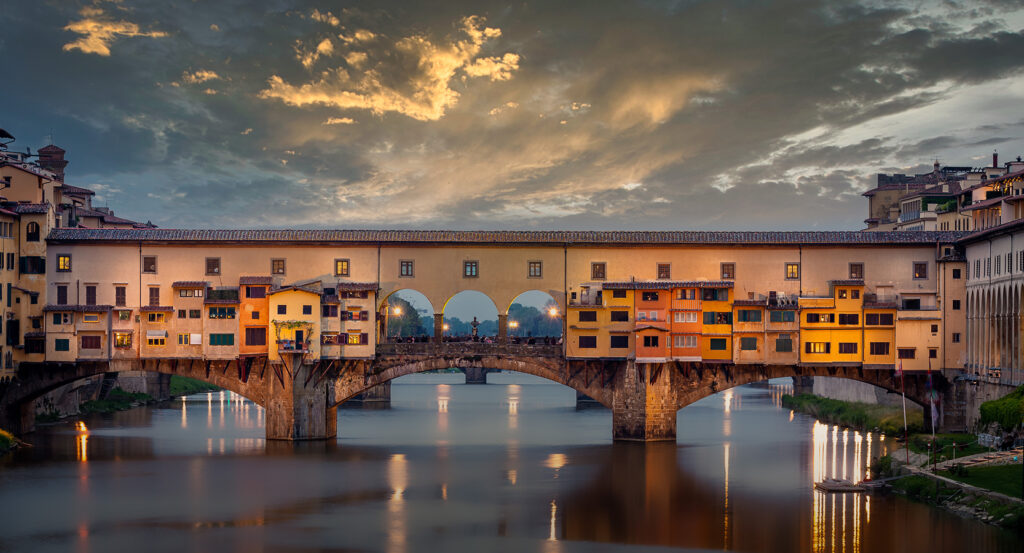
Why you should experience Hotel Hermitage in Florence, Italy.
Hotel Hermitage is where poetic riverfront calm meets intimate boutique warmth, where timeless Florentine character blends with one of the most magnetic rooftop views in the city, and where stepping inside feels like entering a quietly elegant refuge perched above the Arno with the Ponte Vecchio practically at your fingertips.
Set along Vicolo Marzio, a narrow, atmospheric lane just steps from the river, the hotel occupies a historic Florentine structure shaped by centuries of urban life, its façade blending seamlessly into the golden stone textures of the city's medieval core. The approach feels instantly immersive: cobblestones, artisan storefronts, soft Tuscan light filtering between buildings, and the unmistakable hum of Florence's heart beating just outside your door. Step inside, and Hotel Hermitage reveals itself as a romantic sanctuary: intimate public spaces, polished terracotta floors, curated antiques, velvet-upholstered chairs, warm lighting, vintage mirrors, floral arrangements, and a palette of creams, russets, and deep woods that cultivate a mood of classic, nostalgic elegance. The property feels like a lovingly preserved Florentine home infused with boutique refinement. Rooms continue this warm, timeless aesthetic with plush beds wrapped in crisp linens, soft drapery, polished wooden furnishings, framed art echoing Renaissance and classical themes, ambient lighting, and layouts designed for comfort and peaceful retreat. Many rooms feature Juliet balconies or tall windows overlooking the rooftops, courtyards, or, most coveted, direct views of the Ponte Vecchio and the glowing Arno below. The effect is deeply romantic and endlessly atmospheric: morning sunlight sparkling across the water, the warm golden glow of sunset illuminating the bridge's jewelry shops, and nighttime reflections that create a dreamlike rhythm outside your window. Bathrooms are thoughtfully updated with bright lighting, polished stone or tile, walk-in showers or tubs, refined fixtures, spacious vanities, illuminated mirrors, and amenities chosen for comfort and practicality. Higher-category rooms offer larger footprints, improved natural light, and even closer proximity to the river's shimmering beauty. Yet the soul of Hotel Hermitage lives on its terrace, among the city's most breathtaking local favorites. This rooftop garden, lush with potted plants, climbing vines, terracotta pots, and wrought-iron seating, opens onto a panoramic, open-air stage where Florence unfolds in every direction. Ponte Vecchio, the Arno, Palazzo Vecchio's tower, the Duomo's dome, Santa Croce, and a sea of terracotta rooftops stretch outward like a Renaissance painting brought to life. The terrace feels private, peaceful, and magnetic, an oasis above the city where you can savor a drink, read in the sun, or simply watch Florence breathe. Breakfast is served in a light-filled room overlooking the Arno, where floor-to-ceiling windows frame views so beautiful they almost distract from the morning spread. Expect pastries, breads, cakes, fruit, cheeses, eggs, charcuterie, yogurt, vegetables, cereals, juices, and wonderful Italian coffee. The atmosphere is warm and relaxed, with gentle background music and convivial staff creating an unhurried start to the day. The hospitality at Hotel Hermitage is one of its defining strengths: warm, sincere, personal, intuitive, and shaped by a team that treats guests not as customers but as friends returning to a familiar Florentine home.
What you should know about Hotel Hermitage.
Hotel Hermitage stands on land shaped by Florence's medieval trade routes, Renaissance commerce, and centuries of artistic and architectural evolution, making its foundation one of the most culturally significant micro-locations in the city.
Vicolo Marzio, the narrow lane where the hotel stands, traces its origins to medieval Florence, when the area east of the Ponte Vecchio served as a thriving hub for merchants, boatmen, and goldsmiths who relied on the bridge as a vital commercial artery. Before the jewelry shops took root on the Ponte Vecchio, this area was dominated by butchers and tanners whose work required frequent access to the river. The hotel's building sits atop foundations that once supported artisan stalls and riverside storage spaces used for materials transported by boat. These trades were eventually pushed out in the 16th century when Duke Cosimo I de' Medici transformed the bridge into a center for goldsmiths, a shift that elevated the entire district's status and character. During the Renaissance, the lane behind the bridge, now lined with boutique shops, art studios, and hidden entrances, saw constant movement from apprentices, merchants, scribes, and artisans. Historical documents indicate that the building that would become Hotel Hermitage may have served as a residential space for merchants tied to the jewelry trade on the bridge. Some stone alignments within the hotel's structure match those used during 16th-century expansions, suggesting that its walls witnessed the transformation of the Ponte Vecchio into one of the world's most famous commercial landmarks. The rooftop terrace's elevation aligns with historical evidence that many nearby buildings used their roofs as nighttime workspaces or observational decks for watching the city's festivals along the river. Florentines often gathered on rooftops to witness fireworks, Medici parades, rowing competitions, and significant processions across the Ponte Vecchio. Archaeological insights from neighboring structures reveal fresco remnants and decorative motifs similar to those found in private Renaissance residences. During 19th-century modernization efforts, the building was updated with architectural reinforcements and noble detailing, reflecting Florence's transition into a city of tourism, culture, and early-modern charm. The hotel itself emerged in the mid-20th century as a boutique lodging designed to preserve the building's historical intimacy rather than compete with larger, more imposing properties. Over time, it became known not for grand opulence but for offering the rare gift of proximity to Florence's artistic core while maintaining the character and warmth of a private home. The terrace, now one of the most beloved features of the hotel, was once a modest rooftop space used for drying linens and storing household goods. Today, transformed with greenery and design, it remains one of Florence's most enchanting vantage points: a preserved fragment of Renaissance rooftop culture elevated into a boutique experience. Hotel Hermitage carries layers of history: medieval commerce, Renaissance artistry, Medici-era transformation, early-modern residential life, and a boutique hospitality character that honors all of it with sensitivity and quiet pride.
How to fold Hotel Hermitage Florence into your trip.
Hotel Hermitage becomes your intimate Florentine hideaway, where mornings begin with sunlight sparkling on the Arno, afternoons unfold into Renaissance discovery, and evenings settle into golden rooftop calm with the bridge glowing beneath your feet.
Start the morning with breakfast overlooking the river, then step outside and walk directly onto the Ponte Vecchio before the shops open, enjoying its rare early-day stillness. Continue to the Uffizi Gallery, Piazza della Signoria, or the Duomo. Midday, return to the hotel for a calming rooftop moment, read, sip a coffee, or simply take in the panoramic views. In the afternoon, wander through the Oltrarno's artisan studios, discover hidden workshops on Via Maggio, or visit Palazzo Pitti and the Boboli Gardens. As evening arrives, savor aperitivo on the terrace while Florence glows in sunset light, then dine in Santo Spirito or near Piazza della Passera. After dinner, take a quiet riverside stroll beneath golden lamps before returning to your peaceful boutique refuge above the bridge.
Where your story begins.
Foresyte Travel reveals places that feel extraordinary long before you arrive.
Experience premium editorial crafted for luxury travelers.




















































































































