Why InterContinental Ljubljana matters.
InterContinental Ljubljana is a pioneering luxury hotel where Ljubljana's compact historic capital meets Slovenia's first internationally branded five-star tower, contemporary glass architecture and panoramic views toward the Alps, castle and old city.
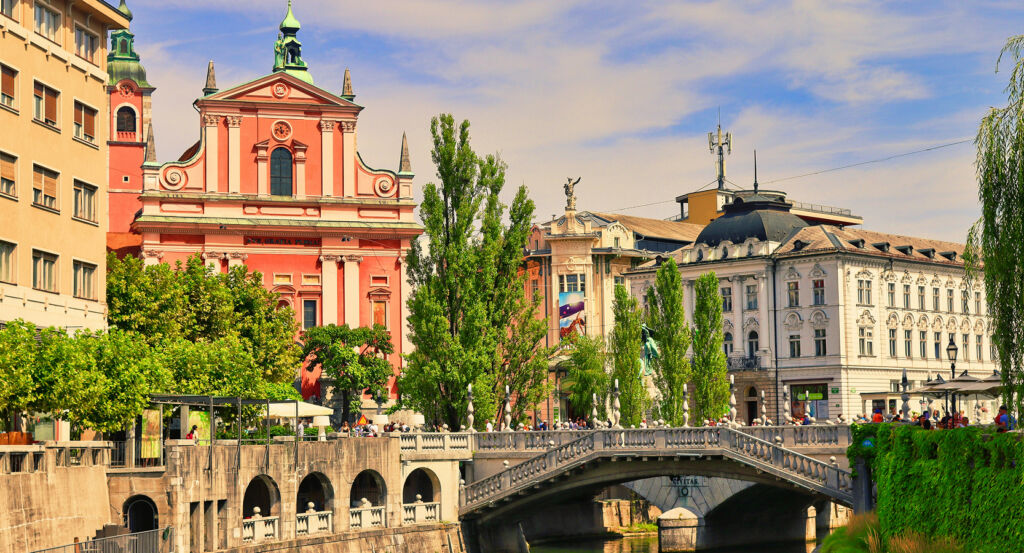
Occupying Slovenska cesta 59 near Bavarski dvor, InterContinental Ljubljana stands between Ljubljana's main railway station, Dunajska cesta, Tivoli Park and the historic center, with the Ljubljanica River and the city's older commercial streets extending southward toward the castle. The hotel rises above a dense urban junction where buses, pedestrians, cyclists and regional traffic converge around the northern edge of Central Ljubljana. Its glass façade reflects the surrounding streets, while the upper floors open toward the dome of Ljubljana Castle, the rooftops of the old town and the mountain ranges beyond the city basin. Dunajska cesta connects the property to northern Ljubljana and the wider business district, while Slovenska cesta leads south toward Prešeren Square and the riverfront. The surrounding architecture moves from modern offices and transportation infrastructure into nineteenth-century façades, market streets and historic civic buildings. The result is a hotel whose position makes the entire structure of Ljubljana legible from a single central address.
What defines InterContinental Ljubljana.
InterContinental Ljubljana is best known for introducing the InterContinental luxury hotel brand to Slovenia through an ambitious architectural development that transformed the northern entrance to the capital's commercial center. The project originated in a partnership between InterContinental Hotels Group and Serbian investment company Delta Holding, whose international hospitality investments had already established a substantial relationship with the British hotel operator. Their collaboration began in 2007 and included the management of Crowne Plaza Belgrade, creating the commercial foundation for a subsequent expansion into Slovenia. Ljubljana presented an opportunity to introduce a major international luxury hotel during a period of growing tourism, commercial investment and international recognition for the Slovenian capital. The city's designation as European Green Capital for 2016 strengthened its international visibility, connecting Ljubljana's environmental ambitions with a broader transformation of its urban identity. On November 10, 2015, IHG and Delta Holding announced their agreement to develop the property under the InterContinental brand, establishing a management arrangement that extended their existing partnership. Construction commenced on December 23, 2015, under a development program valued at €50 million. The project was undertaken through Bavarski stolp, the development company associated with the investment, and introduced a substantial contemporary tower into a tightly constrained urban site. Slovenian architectural practice OFIS Arhitekti designed the building, developing a slender glass-clad structure whose distinctive geometry responded to the intersection of two major urban thoroughfares. Engineering practice Elea iC contributed the structural design, addressing the considerable technical demands of constructing a high-rise building within Ljubljana's established urban fabric. The foundation required an excavation 13 meters deep, protected by a system of anchored retaining piles that stabilized the surrounding ground during construction. A reinforced-concrete structural core and perimeter columns provided seismic resistance, reflecting the engineering requirements associated with Slovenia's earthquake exposure. Post-tensioned concrete floor slabs supported substantial projecting elements, allowing the architects to develop the building's distinctive silhouette through a combination of structural efficiency and architectural expression. The tower rose 82 meters, establishing a prominent addition to Ljubljana's skyline through a composition of glazed surfaces and carefully articulated volumes. Its construction required 18 months, an unusually concentrated schedule for a development of such structural complexity. The completed building encompassed 23,400 square meters, integrating luxury hospitality, conference facilities and elevated leisure environments within a vertically organized architectural program. The hotel welcomed its first guests in late August 2017, introducing an international standard of luxury accommodation to the Slovenian capital. Its ceremonial inauguration followed on September 27, 2017, attended by representatives of the ownership group, international hotel operator and municipal government. The opening established InterContinental Ljubljana as the capital's first five-star hotel, marking an important milestone in the development of Slovenia's international hospitality sector. The property also strengthened Ljubljana's conference infrastructure through substantial meeting facilities designed to accommodate international business gatherings and institutional events. Its arrival coincided with the city's increasing prominence as a European destination for cultural tourism, professional travel and international conventions. The project represents a significant chapter in Ljubljana's twenty-first-century development, connecting international investment, Slovenian architectural authorship, advanced structural engineering and the emergence of a more internationally connected hospitality market.
OFIS Arhitekti's architectural vision establishes InterContinental Ljubljana's distinctive hospitality character through the relationship between contemporary high-rise design, Slovenian cultural traditions and the capital's extraordinary proximity to the Alpine landscape. The building's extensive glazing introduces natural light throughout its principal interiors, creating a visual relationship between the metropolitan environment and the mountains that define Slovenia's geographical character. Contemporary furnishings, warm decorative finishes and carefully composed lighting develop a residential atmosphere within the tower's modern architectural structure. The hotel's elevated public spaces give this design philosophy particular significance, transforming the building's vertical organization into a sequence of increasingly expansive environments for dining, social gatherings and personal restoration. Club InterContinental introduces a more intimate interpretation of international luxury through personalized service, refreshments and dedicated hospitality, connecting the property's metropolitan character with the brand's established traditions of attentive guest care. The upper-level conference environments develop a complementary expression of this philosophy through contemporary meeting design, allowing Ljubljana's commercial and diplomatic activities to unfold within a setting shaped by the surrounding cityscape. The hotel's culinary character draws particular inspiration from Slovenia's position at the intersection of Alpine, Mediterranean and Central European gastronomic traditions. Italian chef Alfredo Russo developed the original creative concept for B-Restaurant, introducing a culinary approach informed by his MICHELIN-starred work at Dolce Stil Novo in Turin. The restaurant's name references the Carniolan honey bee, a culturally significant Slovenian species whose importance extends through the country's longstanding traditions of beekeeping and agricultural stewardship. This association establishes a distinctive relationship between contemporary gastronomy and the rural heritage that continues to shape Slovenian culinary identity. Chef Komnen Bakić subsequently developed the restaurant's interpretation of regional cooking through an approach grounded in ingredient quality, Mediterranean influences and the reinterpretation of traditional Slovenian recipes. His culinary background includes professional training in Belgrade and experience at London's Ritz, contributing an international technical perspective to the restaurant's regional foundations. The kitchen draws upon Slovenia's agricultural diversity, incorporating seasonal vegetables, carefully selected meats and ingredients associated with the country's distinctive geographical regions. Mediterranean culinary traditions contribute an emphasis on aromatic herbs, olive oil and balanced acidity, complementing the substantial savory character of Alpine and Central European cooking. Bakić's preparation philosophy emphasizes the natural character of ingredients through controlled cooking, measured seasoning and carefully developed relationships between texture and flavor. The restaurant's open kitchen introduces a visible dimension of culinary craftsmanship, connecting the precision of professional preparation with the social atmosphere of contemporary dining. Its recognition in the MICHELIN Guide strengthens the property's gastronomic identity, establishing B-Restaurant within Ljubljana's increasingly accomplished restaurant culture. Slovenian wines contribute another essential expression of regional character through the country's distinctive viticultural traditions, particularly those associated with Primorska, Podravje and Posavje. The adjoining B-Bar develops a complementary social atmosphere through contemporary cocktails and an outdoor terrace, extending the restaurant's hospitality philosophy into a setting suited to informal gatherings and evening entertaining. Bloom Lounge introduces a quieter interpretation of metropolitan hospitality through cultivated greenery, coffee service and pastries that connect European café traditions with the relaxed social character of Ljubljana. The property's wellness philosophy develops another substantial dimension through its elevated spa, where an indoor swimming pool and restorative treatments establish a relationship between physical relaxation and the building's expansive architectural outlook. The integration of wellness facilities within the tower's upper levels gives the restorative program a distinctive spatial identity, connecting contemporary therapeutic practices with the natural light and open perspectives associated with the surrounding landscape. Together, these architectural, culinary, social and restorative traditions establish InterContinental Ljubljana as a distinctive expression of contemporary Slovenian hospitality, shaped by the country's Alpine geography, agricultural inheritance and growing prominence within European metropolitan culture.
How InterContinental Ljubljana fits.
InterContinental Ljubljana works as the starting point for an exploration connecting the capital's landscaped public realm, medieval hilltop history and open-air commercial culture.
Begin at Tivoli Park, the largest park in Ljubljana and the principal landscaped extension of the city center toward the western foothills. The park was formed through the connection of earlier gardens and landscaped grounds, including the area around Tivoli Castle and the Cekin Mansion. Broad avenues, wooded slopes, flowerbeds and open lawns create a transition between the dense center and the forested Rožnik hill. The Jakopič Promenade, designed by Jože Plečnik, provides a formal cultural axis for outdoor exhibitions and public movement. Tivoli Park gives Ljubljana a green civic threshold where urban streets dissolve into gardens, wooded paths and views toward the surrounding mountains. Continue to Central Market Ljubljana, the city's principal open-air and covered market beside the Ljubljanica River and the historic center. Jože Plečnik designed the market's riverside colonnade between 1939 and 1942, creating a long architectural edge between the river, Vodnik Square and the market stalls. Vendors sell fruit, vegetables, herbs, flowers, honey, cheeses, cured meats and other products from Slovenia and neighboring regions. The market connects everyday food commerce to Ljubljana's historic public spaces, with the cathedral, riverfront bridges and old-town streets gathered around its perimeter. Its arcades and open stalls preserve the capital's relationship with local agriculture, seasonal produce and direct public exchange. Conclude at Ljubljana Castle, the hilltop fortress rising above the old town and the Ljubljanica River. The site contains prehistoric settlements, Roman occupation, medieval fortifications and later Habsburg administrative structures, reflecting the strategic importance of the hill above the city. The present castle complex includes defensive walls, towers, courtyards, a chapel and restored rooms connected to Ljubljana's political and cultural history. Its elevated position creates the most comprehensive view of the capital, extending from the central streets to Tivoli Park, the railway district and the mountains beyond. The progression moves from Tivoli Park's cultivated landscape through Central Market Ljubljana's living food culture and culminates at Ljubljana Castle's layered historical prominence, connecting the city's public gardens, daily commerce and medieval skyline.
Where your story begins.
Foresyte Travel reveals places that feel extraordinary long before you arrive.
Enjoy editorial crafted for luxury travelers.
Foresyte may earn a commission when you book.