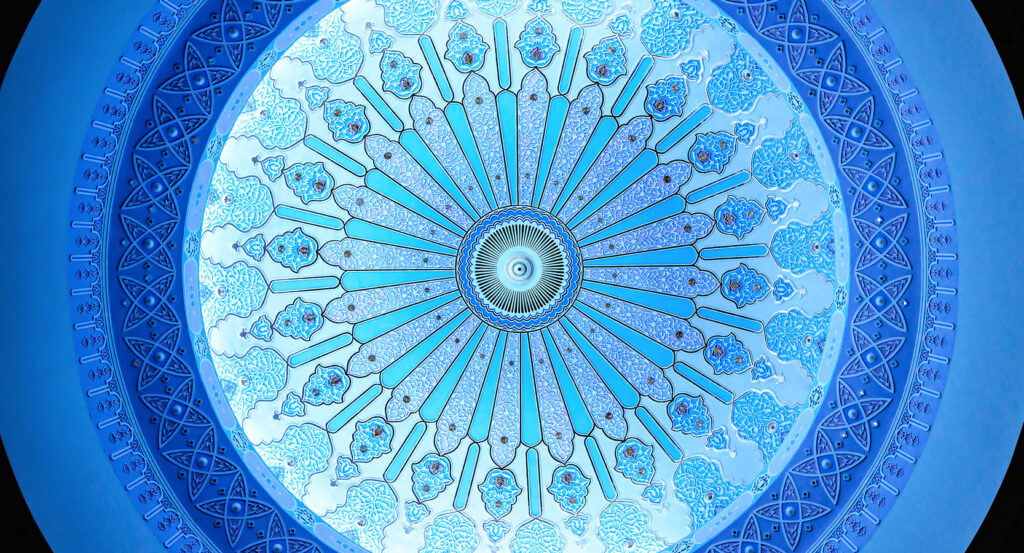
Why you should experience Decorative Arts Gallery at Islamic Arts Museum Malaysia in Kuala Lumpur, Malaysia.
The Islamic Decorative Arts Gallery is where faith takes shape, where devotion is carved, painted, woven, and cast into forms that shimmer with meaning.
Walking into the gallery feels like entering a treasury of human creativity guided by divine intention. Glass cases glow softly in the filtered light, illuminating objects that seem to breathe, ceramics glazed in cobalt blue, brass lamps engraved with verses, textiles embroidered in gold thread, and jewelry that glints with the quiet fire of centuries. Every piece feels alive with the pulse of beauty made sacred. What makes the experience so moving is the sense of unity, how across the Islamic world, from Morocco to Malaysia, artisans spoke a shared visual language of geometry, calligraphy, and arabesque. Here, beauty isn't ornamental, it's purposeful. The rhythmic repetition of pattern mirrors the infinite nature of God; the balance of symmetry reflects divine harmony. It's a gallery that reveals the spiritual architecture of everyday life, where even the smallest bowl, lamp, or textile becomes a vessel for worship.
What you should know about Decorative Arts Gallery at Islamic Arts Museum Malaysia.
The Islamic Decorative Arts Gallery houses one of Southeast Asia's most extensive collections of Islamic craftsmanship, a journey through 1,400 years of artistic innovation across continents and dynasties.
Its displays are divided into themes that trace both material and meaning: metalwork, ceramics, glass, woodcarving, textiles, and jewelry. The metalwork section gleams with artifacts from Mamluk Egypt and Safavid Iran, incense burners shaped like domes, ewers engraved with Quranic inscriptions, and brass candlesticks etched with geometric precision so intricate they could be mistaken for lace. The ceramics collection is equally unique: lusterware from Persia, Iznik tiles from Turkey, and Chinese-influenced blue-and-white pottery made for Mughal courts, each piece a tribute to cultural exchange along ancient trade routes. The glasswork is luminous, literally and spiritually, mosque lamps inscribed with calligraphy that once illuminated holy spaces, their glow now frozen in time. Perhaps most enchanting are the textiles: embroidered kiswah cloth fragments from the Kaaba, Ottoman silk brocades, and Malay songket woven with metallic threads that catch light like water. The gallery's jewelry section gleams with meaning, not merely adornment, but talismanic artistry. Rings inscribed with protective prayers, pendants carved with names of God, and bangles etched with celestial patterns tell stories of faith worn close to the body. Every item here has both aesthetic and symbolic weight, a fusion of design, devotion, and daily life. The curation intentionally avoids hierarchy; a simple carved wooden chest shares space with royal regalia, reflecting the Islamic ideal that beauty belongs to everyone, not just the powerful. Conservation efforts behind the scenes are meticulous, humidity control, UV-filtered glass, and microscopic restoration techniques preserve the fragile pigments, fibers, and metals so they may continue to inspire future generations.
How to fold Decorative Arts Gallery at Islamic Arts Museum Malaysia into your trip.
To experience the Islamic Decorative Arts Gallery fully, let your pace match the craftsmanship, unhurried, deliberate, reverent.
Start with the metalwork section, where light plays off polished brass and bronze. Stand close to see the inscriptions, each word a reflection of artistry so refined it feels like whispered prayer. Move on to the ceramics, where the world's trade routes come alive in form and color; Persian lusterware shimmers beside Chinese-inspired porcelain, revealing how Islamic art absorbed and transformed influences. In the textile wing, pause before the massive silk mosaic from Central Asia, its repetition of pattern and threadwork feels like meditation made visible. Bring your attention to the jewelry cases; even the tiniest ring carries the weight of meaning. Notice how each object is more than an artifact, it's a story of connection between faith, function, and form. Allocate an hour here, though true enthusiasts could linger much longer, tracing motifs that echo across materials and centuries. Before you leave, stand near the center of the gallery and turn slowly in a circle, the space itself is designed to feel like a mandala, radiating order and balance. You'll sense it, a quiet resonance between human hands and divine inspiration. The Islamic Decorative Arts Gallery doesn't just display objects of beauty; it celebrates the universal truth that in the Islamic tradition, to create beautifully is to remember the Creator.
Where your story begins.
Foresyte Travel reveals places that feel extraordinary long before you arrive.
Experience premium editorial crafted for luxury travelers.