Why DeKalb Avenue matters.
DeKalb Avenue is a historic East Atlanta corridor where railroad heritage, industrial commerce, and neighborhood connectivity converge along one of the city's oldest transportation routes.
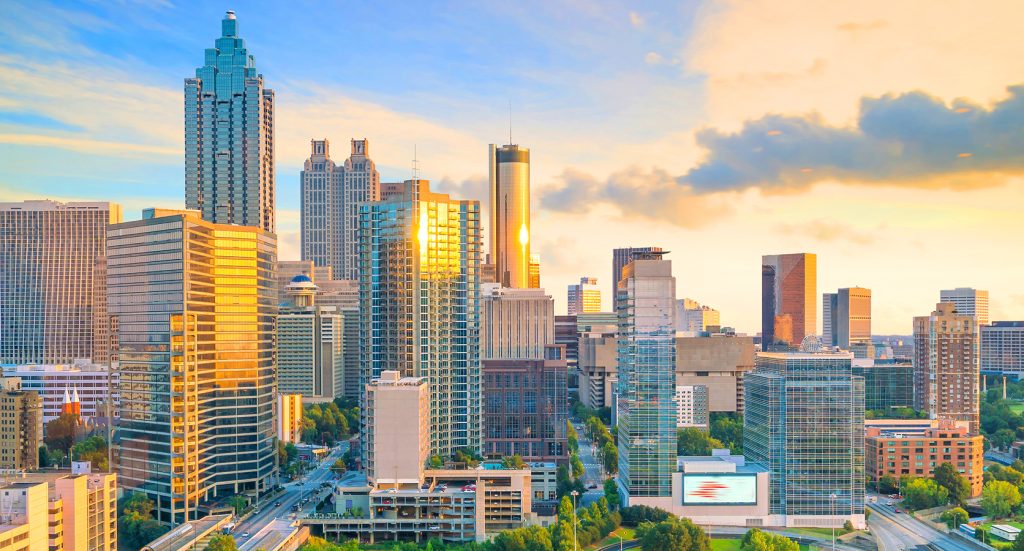
Running through Cabbagetown between Inman Park and Edgewood, this energetic corridor connects historic industrial districts, neighborhood business centers, adaptive reuse developments, public art, and longstanding residential communities that have shaped Atlanta's east side for generations. Preserved warehouses, active commercial corridors, mature tree canopies, and evolving mixed-use destinations create a streetscape where Atlanta's industrial past continues to influence its contemporary growth. Closely following some of the city's earliest rail infrastructure, the avenue has remained an essential east-west connection for more than a century. The result is a corridor defined by heritage, mobility, and enduring urban significance.
What defines DeKalb Avenue.
DeKalb Avenue is best known for following the historic transportation corridor that connected Atlanta with Decatur, the county seat of DeKalb County established in 1823, carrying travelers, freight, agricultural products, and commerce between two of North Georgia's earliest settlements long before the rise of the modern highway system.
As Atlanta emerged into the South's dominant railroad city, the corridor became a vital commercial artery supporting warehouses, textile mills, wholesale businesses, and manufacturing districts that fueled the city's industrial economy. Its close relationship with adjacent rail lines reinforced its importance as one of Atlanta's principal gateways to the eastern counties, shaping patterns of residential growth and commercial investment for generations. Today, DeKalb Avenue continues to reflect that transportation legacy while connecting some of Atlanta's most historic and rapidly evolving neighborhoods.
How DeKalb Avenue fits.
DeKalb Avenue works as an exploration of Atlanta's industrial heritage, historic neighborhoods, and creative eastside districts.
Begin at Krog Street Market, where the restored Atlanta Stove Works complex immediately establishes the corridor's industrial legacy. Continue toward Krog Street Tunnel, whose ever-changing murals reflect the creative energy that now defines the surrounding neighborhoods. From there, make your way to the Atlanta BeltLine Eastside Trail, where landscaped pathways and adaptive reuse projects provide a broader perspective on the transformation of Atlanta's historic industrial landscape. Along the route, you'll encounter restored warehouses, neighborhood cafés, public art, historic commercial buildings, locally owned businesses, and energetic gathering spaces that demonstrate how DeKalb Avenue seamlessly connects Atlanta's transportation heritage with one of its most dynamic urban districts. The progression moves naturally from historic industrial marketplace to iconic street art destination to transformative greenway, revealing why DeKalb Avenue remains one of the city's defining corridors.
Where your story begins.
Foresyte Travel reveals places that feel extraordinary long before you arrive.
Enjoy editorial crafted for luxury travelers.
Foresyte may earn a commission when you book.