Why Kiti Panit matters.
Kiti Panit is a historic Northern Thai restaurant where Chang Khlan's mercantile heritage meets Chiang Mai's nineteenth-century Chinese trading community, the preservation of an exceptional teak merchant house and a contemporary revival of Lanna cuisine within one of the city's earliest commercial establishments.
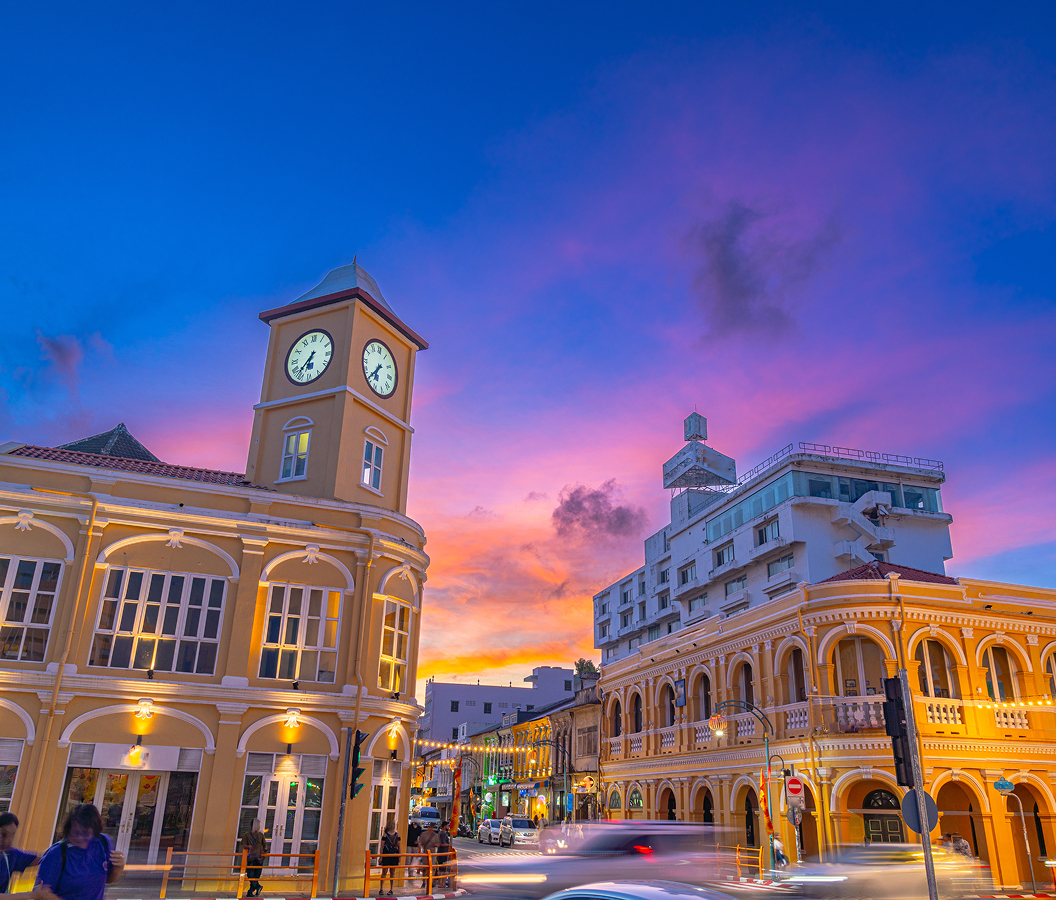
Standing along Tha Phae Road east of Chiang Mai's historic moat, between Tha Phae Gate and the commercial streets approaching Warorot Market, Kiti Panit occupies a prominent position near Wat Saen Fang, Wat Buppharam and the traditional trading corridors leading toward the Ping River. Its mustard-yellow exterior incorporates Burmese-influenced rooflines, ornamental gables and timber detailing that distinguish the building from the surrounding commercial properties. The two-story interior preserves substantial teak construction, with polished wooden floors, carved panels and an imposing staircase connecting the principal rooms. Original furniture, antique objects and historical photographs furnish the dining spaces, and an internal courtyard introduces natural light into the building's deeper sections. The result is a carefully preserved merchant residence whose historic architecture and intimate dining rooms connect Chiang Mai's commercial past with its contemporary restaurant culture.
What defines Kiti Panit.
Kiti Panit is best known for occupying a teak merchant house established in 1888 by a Chinese immigrant family during Chiang Mai's emergence as an important commercial center in northern mainland Southeast Asia. The original business operated under the name Yong Tai Heng, becoming one of the city's earliest general stores and a prominent establishment serving its prosperous merchant and aristocratic communities. Its merchandise included imported clothing, crystalware, fine china, French perfumes and household furnishings, connecting local consumers with luxury products transported through expanding regional trading networks. The building's commercial development coincided with the growth of the northern teak industry, which brought British timber companies and workers from Burma into Chiang Mai during the late nineteenth century. Burmese, Shan and Pa'O craftsmen contributed to the city's architectural development, and their influence became particularly visible in the decorative forms of commercial buildings along Tha Phae Road. Kiti Panit's original architecture combined northern Thai, Chinese, Western and Burmese influences, expressing the multicultural commercial environment in which the family business developed. The establishment subsequently adopted the Kiti Panit name, preserving its association with the founding merchant family through successive generations. Its function changed during the twentieth century when the premises became a medical clinic, extending the building's commercial history into another form of community service. The clinic closed during the Second World War, and the property entered a prolonged period of disuse that lasted for several decades. Ownership nevertheless remained within the original family, preserving the possibility of restoring the building through a later generation. That opportunity emerged when Rungroj “Tao” Ingkutanon, a fifth-generation descendant and restaurateur associated with Bangkok's Le Du, undertook the property's conversion into a restaurant. Ingkutanon collaborated with Fred Meyer, associated with Bangkok restaurant Naamsah, to develop a hospitality concept that would preserve the family building and introduce northern Thai cooking to a wider dining audience. The restoration involved local artists and craftspeople who worked to conserve original wooden ceilings, flooring, wall panels and structural elements. Historical furnishings and objects discovered inside the property were incorporated into the interior, preserving tangible connections to the former merchant household. Associate Professor Nawit Ongsavangchai of Chiang Mai University's Faculty of Architecture participated as a conservation architect and project consultant, contributing specialist knowledge of the building's historical construction. The restaurant opened in December 2019, restoring public access to a property that had stood unused for much of the preceding century. Chef Sujira “Aom” Pongmorn, associated with Bangkok's MICHELIN-starred Saawaan, developed the original savory culinary program around traditional northern Thai preparations and regional ingredients. Pastry chef Arisara “Paper” Chongphanitkul, known for her work at Bangkok dessert establishment Ici, created the original sweets program using Thai ingredients and contemporary pastry techniques. Their involvement connected the restored Chiang Mai property with prominent figures in Thailand's modern restaurant industry. The restaurant subsequently entered the MICHELIN Guide's Chiang Mai selection, gaining recognition for its interpretations of traditional Lanna dishes. Kiti Panit's significance rests on the convergence of five generations of family ownership, nineteenth-century commercial architecture, professional conservation and a culinary program developed through contemporary Thai restaurant expertise.
Sujira “Aom” Pongmorn's original culinary direction established a kitchen centered on the concentrated aromatics, fermented ingredients and layered spice preparations of northern Thailand. The cooking draws on the food traditions of the former Lanna Kingdom, incorporating influences associated with the region's connections to Burma and the Shan States. Makwaen, the aromatic prickly ash used throughout northern Thai cooking, introduces a distinctive citrus-like fragrance and tingling warmth that develops differently from the direct heat of dried chilies. Its presence in stir-fried beef demonstrates the kitchen's attention to spice combinations that penetrate the meat during high-temperature cooking, producing a concentrated savory preparation with a lingering aromatic finish. Slow cooking develops another dimension of this regional approach through gaeng hang lay, the northern pork curry whose historical connections to Burmese cooking are expressed through ginger, garlic, turmeric and a rich spice paste. The meat cooks until its connective tissue softens, allowing the sauce to become dense and deeply seasoned as the pork absorbs the surrounding aromatics. Tamarind contributes acidity to the preparation, balancing the richness of the pork and creating a curry whose flavor develops through the interaction of spice, fat and slow reduction. Fermentation introduces a complementary source of complexity through dishes incorporating preserved tea leaves, whose earthy bitterness and acidity establish a different foundation for northern Thai salads. The fermented tea leaf salad combines these characteristics with contrasting textures, allowing fresh vegetables and crisp components to sharpen the preserved leaves' concentrated flavor. Grilled chicken contributes another form of aromatic depth through surface browning and the fragrance produced by direct heat. Its preparation with coriander creates a relationship between charred meat, fresh herbal notes and savory seasoning, developing the restaurant's preference for clearly distinguished flavors within a shared plate. Northern Thai relishes extend the meal through preparations such as nam prik num, in which roasted green chilies develop smoky sweetness before being pounded with garlic and other seasonings. The resulting paste carries the flavor of the roasted vegetables into fresh accompaniments, establishing a contrast between concentrated spice and the natural moisture of uncooked produce. Khao soi develops the kitchen's treatment of layered textures through curry broth, wheat noodles and crisp fried noodles, with coconut milk contributing richness and preserved vegetables providing acidity. Its broth combines the aromatic foundation of a curry with the fluid consistency required for noodles, creating a different expression of the region's spice traditions. The original dessert program extended the use of Thai ingredients into contemporary pastry, including grilled mango with pandan-scented sticky rice and fruit-based preparations shaped by professional dessert techniques. The restaurant's broader dining arrangement supports the communal presentation of these preparations, allowing curries, relishes, grilled meats and vegetable dishes to develop complementary relationships across the table. Kiti Panit's culinary distinction emerges through this sustained attention to northern Thai spice, fermentation, roasting and slow cooking, preserving the complexity of regional preparations within the formal hospitality setting of a restored merchant residence.
How Kiti Panit fits.
Kiti Panit works as the starting point for an exploration connecting Chiang Mai's nineteenth-century commercial expansion, the Burmese influences embedded in its religious architecture and the development of its historic riverside trading district.
Begin at Wat Saen Fang, a Buddhist monastery whose surviving architecture preserves the influence of Burmese and Shan communities associated with Chiang Mai's historic timber trade. The temple originated during the sixteenth century, although its principal surviving buildings developed during the nineteenth century. Its assembly hall previously served as the royal residence of Prince Kawirolot, who ruled Chiang Mai from 1856 to 1870. His successor, King Inthawichayanon, converted the building into a religious hall in 1878, preserving an important connection between the city's royal household and Buddhist architecture. The monastery's gilded Burmese-style chedi incorporates decorative glass mosaics, and its ordination hall combines Lanna and Burmese architectural forms with kinnara figures associated with Buddhist mythology. Continue to Wat Buppharam, the historic Buddhist monastery founded in 1497 during the reign of King Muang Kaew of the Mangrai dynasty. The temple acquired renewed political significance when King Kawila began a ceremonial circumambulation of Chiang Mai from its grounds during the restoration of the city following prolonged Burmese domination. Its religious buildings preserve several stages of architectural development, including a teak ordination hall constructed in 1819 and decorated with glass-inlay mosaics. A Burmese-style chedi was reconstructed in 1958, continuing the architectural influence associated with communities that settled along the city's eastern commercial approaches. The monastery's surviving structures connect royal Buddhist patronage with the cultural exchanges that shaped Chiang Mai's historic trading district. Conclude at Warorot Market, the major commercial institution established in 1910 through the initiative of Princess Dara Rasmi, a consort of King Chulalongkorn and a member of Chiang Mai's ruling family. The market occupied the former royal cremation grounds and received its name in honor of Prince Inthawarorot Suriyawong, the eighth ruler of Chiang Mai. Its establishment coincided with the expansion of Chinese merchant activity along the western bank of the Ping River, where imported goods and regional agricultural products circulated through the city's growing commercial networks. A devastating fire destroyed the original market complex in February 1968, leading to reconstruction and reopening in March 1972. Its surrounding streets preserve the character of Chiang Mai's historic Chinatown, with merchants specializing in northern Thai foods, dried goods, textiles and household products. The progression moves from Wat Saen Fang's Burmese-influenced royal architecture through Wat Buppharam's religious and political heritage and culminates in Warorot Market's commercial history, connecting the communities, institutions and trading networks that shaped eastern Chiang Mai.
Where your story begins.
Foresyte Travel reveals places that feel extraordinary long before you arrive.
Enjoy editorial crafted for luxury travelers.
Foresyte may earn a commission when you book.