Why Lazy Betty matters.
Lazy Betty is a MICHELIN-starred contemporary American restaurant where Midtown's Peachtree Street corridor meets chef Ron Hsu's classical French training, Atlanta's Chinese-American restaurant heritage and the city's emergence as a major destination for technically sophisticated tasting menus.
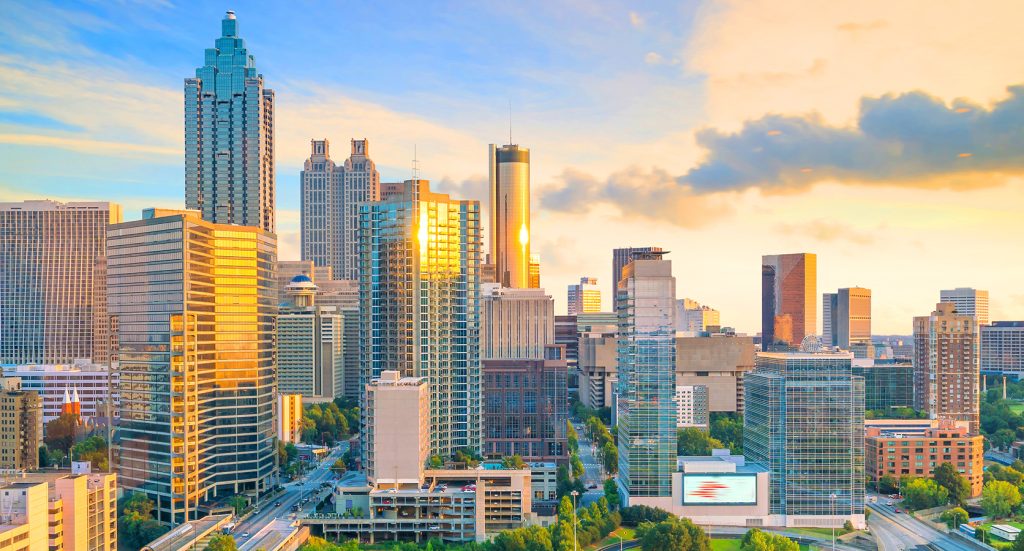
Set along Peachtree Street near 10th Street and just steps from Margaret Mitchell House, the restaurant occupies the ground floor of 999 Peachtree, opposite the Federal Reserve Bank of Atlanta and between the Midtown MARTA corridor to the west and Piedmont Avenue to the east. The 4,300-square-foot interior combines refinished heart pine flooring, terracotta plaster walls and teal velvet banquettes beneath large circular lighting installations, creating a carefully proportioned dining room with extensive natural light. Walnut and marble furnishings complement a spacious bar finished with reclaimed stone, polished brass and botanical arrangements, preserving elements of the restaurant's earlier architectural character through the reuse of original furnishings. A sculptural installation of birds by artist Jenifer Thoem occupies the lounge, with painted lighting elements and a private dining room mural by Atlanta artist Christina Kwan extending the decorative program throughout the restaurant. The result is a dining environment whose custom craftsmanship, carefully selected finishes and prominent Midtown location provide an architectural counterpart to one of Atlanta's most technically accomplished kitchens.
What defines Lazy Betty.
Lazy Betty is best known for receiving one of the first MICHELIN stars awarded in Atlanta and developing a contemporary American tasting-menu program shaped by the professional partnership of chefs Ron Hsu and Aaron Phillips. Hsu grew up in an Atlanta restaurant family whose matriarch, Betty Hsu, operated several Chinese restaurants across the metropolitan area during the 1980s and 1990s. His siblings Howard and Anita subsequently developed their own hospitality businesses, including Sweet Auburn BBQ, extending the family's culinary presence across successive generations of Atlanta dining. Ron pursued professional training in New York, working at Le Colonial before joining Le Bernardin, the three-MICHELIN-starred seafood restaurant directed by chef Eric Ripert. His responsibilities at Le Bernardin eventually included the position of creative director, developing the technical precision and ingredient-focused approach that would become central to his independent cooking. Aaron Phillips followed a separate professional path through New York restaurants including Bouley and The Mark before joining Le Bernardin, where he and Hsu first worked together. Phillips subsequently moved to Atlanta and joined Atlas at The St. Regis Atlanta, bringing his experience in elaborate tasting menus and classical French cooking to the city's fine-dining community. The two chefs reunited to develop an independent restaurant named in honor of Hsu's mother, Betty, whose family nickname affectionately acknowledged her tireless involvement in the restaurant business. Lazy Betty opened in March 2019 inside the former Radial Cafe premises on DeKalb Avenue in Candler Park, introducing an intimate dining room centered on an open kitchen and an ambitious sequence of individually composed courses. Betty Hsu died three months after the restaurant's opening, giving the establishment's dedication an enduring personal significance within the family. The restaurant became a finalist for the James Beard Foundation's Best New Restaurant award in 2020, placing the young establishment among the country's distinguished independent openings. Hsu and Phillips subsequently received recognition as semifinalists for Best Chef: Southeast, extending their professional standing through the foundation's regional awards program. MICHELIN's inaugural Atlanta guide awarded Lazy Betty one star in October 2023, placing the restaurant among the first five establishments in the city to receive that distinction. The achievement brought international recognition to a culinary project developed through the intersection of Hsu's family history, the chefs' shared professional training and Atlanta's expanding fine-dining community. A relocation to Midtown followed on March 16, 2024, bringing the restaurant into the former Empire State South premises at the intersection of Peachtree and Tenth streets. Phillips departed the kitchen partnership in April 2026, retaining an ownership interest as Hsu continued directing the restaurant's culinary operations.
Ron Hsu's cooking combines classical French preparation with seasonal Southern ingredients and carefully controlled influences from East Asian culinary traditions. The tasting-menu structure develops through successive courses whose compositions emphasize the relationship between concentrated sauces, delicate proteins, regional produce and intricate pastry techniques. A bluefin tuna preparation uses feuille de brick to create a crisp cylindrical shell filled with lemon and crème fraîche, subsequently wrapped in exceptionally thin slices of tuna. The dish balances the fish's natural richness against citrus acidity and the brittle texture of the pastry, demonstrating the kitchen's precision in handling ingredients with contrasting physical properties. An Ellijay Farms mushroom and chestnut doppio incorporates two distinct fillings within a single pasta preparation, combining earthy mushroom flavors with the sweetness of chestnut. Vidalia onion vichyssoise and potlikker accompany the pasta, connecting classical French soup technique with the vegetable cooking traditions of the American South. Crown-roasted duck receives a honey lacquer and brown butter jus, developing a concentrated savory preparation through careful roasting, controlled caramelization and the richness of browned milk solids. The menu has incorporated luxury ingredients including langoustines, squab, morel mushrooms and Wagyu beef, with seasonal availability determining their placement within the restaurant's extended tasting format. Dessert preparations continue the relationship between European technique and Asian ingredients, including poached pear accompanied by caramel and Asian pear mousse. Pastry chef Lindsey Davis directs the dessert program, developing composed sweets that balance fruit, cultured dairy, chocolate and carefully controlled sugar work. Beverage and wine director Gracie Barwick oversees a program encompassing international wines, specialty spirits and pairings selected for the changing acidity, richness and aromatic character of successive dishes. The restaurant's wine selection received Wine Spectator's Best of Award of Excellence in 2025 and 2026, recognizing the breadth and quality of its cellar. An expanded bar program complements the principal dining room through individually prepared cocktails and a separate selection of savory dishes, including Champagne and caviar service accompanied by steamed milk buns and scallion pancakes. The culinary program preserves the technical discipline of Hsu's New York training through compositions that draw directly on Georgia agriculture and the wider traditions of contemporary American cooking.
How Lazy Betty fits.
Lazy Betty works as the culinary centerpiece for an outing connecting Midtown's literary history, the architectural development of Atlanta's financial institutions and the performing arts heritage preserved along the Peachtree Street corridor.
Begin at Margaret Mitchell House, the historic residence associated with the author of Gone with the Wind and the literary development of twentieth-century Atlanta. Constructed in 1899 as a private residence, the building subsequently became an apartment property known as the Crescent Apartments, accommodating tenants during Midtown's transition from residential neighborhood to commercial district. Margaret Mitchell and her husband John Marsh moved into a small ground-floor apartment in 1925, occupying the premises during the years when Mitchell developed the manuscript that became her internationally successful novel. Published in 1936, Gone with the Wind received the Pulitzer Prize for Fiction in 1937 and became one of the most commercially successful works in American publishing history. The property entered the National Register of Historic Places in 1996 and became part of the Atlanta History Center's cultural operations, preserving the author's domestic surroundings and examining the novel's relationship with Southern history and American popular culture. Continue to Atlanta Monetary Museum, the educational institution housed within the Federal Reserve Bank of Atlanta's headquarters on Peachtree Street. The Federal Reserve Bank of Atlanta was established in 1914 as one of twelve regional banks within the Federal Reserve System, assuming responsibility for monetary operations across the southeastern United States. Its Midtown headquarters opened in 2001, designed by Smallwood, Reynolds, Stewart, Stewart & Associates in collaboration with Robert A. M. Stern Architects. The building incorporates white Cherokee marble, extensive public landscaping and preserved architectural elements from earlier Federal Reserve properties, including five marble columns originally installed at the bank's 1918 headquarters. The museum's exhibitions explore American currency, monetary policy and the development of the nation's banking institutions, with viewing areas overlooking automated cash-processing operations. Conclude at Fox Theatre, the historic performance venue whose elaborate architectural composition preserves the influence of Moorish Revival design on Atlanta's early twentieth-century entertainment buildings. The structure originated as a proposed headquarters for the Atlanta Shriners before financial difficulties led to its completion as a motion-picture palace. Architects Olivier J. Vinour and P. Thornton Marye developed the building's elaborate design, incorporating a theatrical auditorium beneath a ceiling representing a star-filled night sky. The theater opened on December 25, 1929, with a lavish interior featuring Islamic-inspired decorative forms, elaborate plasterwork and an extensive system of atmospheric lighting. A major preservation campaign during the 1970s prevented demolition and secured the building's future as a center for concerts, theatrical productions and cultural events. The progression moves from Margaret Mitchell House's literary history through Atlanta Monetary Museum's financial and architectural heritage and culminates at Fox Theatre's preserved performance spaces, connecting Lazy Betty to the cultural institutions that distinguish Midtown.
Where your story begins.
Foresyte Travel reveals places that feel extraordinary long before you arrive.
Enjoy editorial crafted for luxury travelers.
Foresyte may earn a commission when you book.