Why you should experience Leonardo Royal Hotel Munich in Munich, Germany.
Leonardo Royal Hotel Munich is where scale feels deliberate rather than overwhelming, where contemporary design supports focus and flow, and where staying feels like choosing a confident, modern base that absorbs the city's complexity without demanding attention.
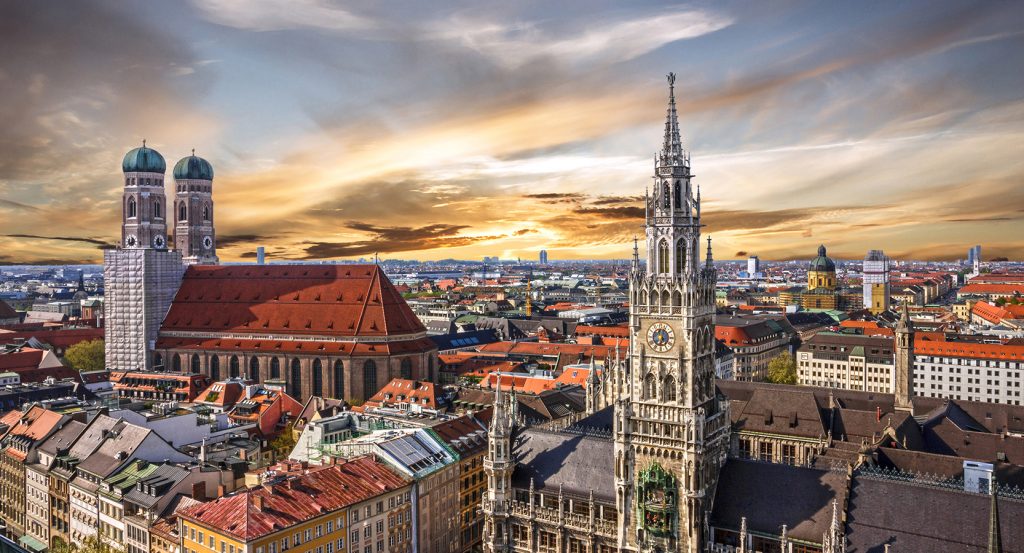
Positioned in Munich's northern Schwabing district near the Olympiapark, Leonardo Royal Hotel Munich immediately signals intention. The surrounding area is defined by broad streets, business campuses, and cultural landmarks, offering openness rarely associated with large city hotels. The hotel's exterior is architectural and assertive without excess, reflecting a property designed for relevance, longevity, and operational strength. Stepping inside, the lobby opens into a dramatic yet composed space defined by height, symmetry, and controlled energy. High ceilings, expansive sightlines, and clearly structured zones allow the hotel to manage volume gracefully. Despite its size, the atmosphere feels ordered rather than busy, allowing guests to arrive, orient, and move forward without physical friction. Materials and finishes lean contemporary and tactile, combining stone, wood, and soft textiles with lighting that adds warmth. Public spaces are layered to support multiple modes simultaneously, from business meetings and conference traffic to casual waiting and evening decompression. Guest rooms extend this balance between scale and restraint. Layouts are generous and efficient, allowing guests to settle quickly. Beds are substantial and engineered for dependable rest, dressed in crisp linens that emphasize consistency and comfort. Large windows introduce daylight and views across Schwabing, Olympiapark, or Munich's northern skyline, grounding rooms in place while maintaining strong acoustic insulation. Workspaces are properly scaled and thoughtfully placed, supporting productivity without improvisation, while seating areas offer functional comfort for reading or unwinding. Storage is intuitive and unobtrusive, reinforcing the hotel's character as a capable base. Bathrooms are modern, clean-lined, and composed, featuring walk-in rain showers or full baths depending on category, refined fixtures, and lighting calibrated for both morning routines and evening wind-downs. Everything functions predictably, reinforcing trust in the environment across multi-day stays. Dining at Leonardo Royal Hotel Munich reflects its role as a contemporary urban hub. Restaurants and lounges are designed to handle scale with composure, offering environments suitable for business lunches, relaxed dinners, or post-event gatherings. Menus emphasize balance and accessibility, supporting repeat dining. Breakfast service is expansive and well-orchestrated, capable of supporting high occupancy while maintaining order and pace. The bar functions as a social anchor without becoming loud, allowing evenings to transition naturally rather than escalate. Wellness facilities further reinforce continuity. A fully equipped fitness center supports routine and recovery, while spa and relaxation areas provide space to decompress after long days. Service throughout the hotel is professional, efficient, and situationally aware. Staff engagement prioritizes clarity, responsiveness, and operational fluency rather than ceremony, allowing the hotel to function smoothly even under sustained demand. The location completes the concept. With U Bahn access nearby, guests can reach Munich's historic center, business districts, and cultural landmarks efficiently while returning to a calmer, more spacious setting.
What you should know about Leonardo Royal Hotel Munich.
Leonardo Royal Hotel Munich was developed as a flagship-scale property, intentionally designed to serve conferences, long-stay business travel, and large international audiences while maintaining composure and design integrity.
The hotel's placement near Olympiapark reflects a strategic alignment with Munich's northern cultural and business axis, an area known for its open spaces, event venues, and institutional presence. Architecturally, the property was engineered to manage high occupancy. Lobby proportions, vertical circulation, and public space zoning were calibrated to prevent bottlenecks during peak conference and event periods. Acoustic planning plays a central role, with materials selected to absorb sound and maintain quiet even as volume increases. Guest room design reflects data-driven insights into extended urban stays. Layouts prioritize spatial clarity, allowing guests to maintain routine across consecutive nights. Lighting systems balance brightness and warmth to reduce eye strain and fatigue, while climate controls offer precise adjustment for individual comfort. Furnishings emphasize durability and ergonomics, ensuring consistency across heavy operational cycles. Bathrooms are designed for ease of maintenance and reliability, reinforcing trust over time. Operationally, the hotel serves a wide spectrum of guests, including conference delegates, business travelers, leisure visitors, and tour groups. This diversity shaped a service model focused on adaptability, escalation clarity, and efficiency. Staff training emphasizes situational awareness and smooth coordination across departments, allowing the hotel to function as a cohesive system under pressure. Culinary operations mirror this pragmatism. Dining venues are structured to support sustained demand, group dining, and individual guests simultaneously. Menus emphasize familiarity, quality, and dietary flexibility. Wellness facilities were integrated as essential infrastructure rather than luxury differentiators, recognizing that recovery and routine are baseline needs for many guests. Economically, Leonardo Royal Hotel Munich occupies a tier that balances full-service scale with contemporary design, making it suitable for high-volume travel. Over time, the hotel has established itself as a reference point for how large modern hotels can operate with precision, calm, and authority. Its success lies in execution, offering a model of hospitality aligned with capacity, clarity, and long-term relevance.
How to fold Leonardo Royal Hotel Munich into your trip.
Leonardo Royal Hotel Munich integrates best into itineraries that prioritize structure, efficiency, and balanced engagement across business and leisure.
Begin mornings with a workout in the fitness center to establish rhythm before breakfast, using the hotel's wellness infrastructure to anchor the day. Breakfast on property provides a dependable start, particularly for conference schedules or early meetings. From the nearby U Bahn stations, access Munich's historic center, museums, and business districts efficiently. Midday returns to the hotel are practical and restorative, offering space to reset between engagements or exploration. Afternoons can extend into Olympiapark for walks or cultural visits, deeper into Schwabing's neighborhoods, or across the city for professional commitments. Evenings may unfold within the hotel's dining and lounge spaces or elsewhere in Munich, depending on energy and intent. Nights conclude in rooms designed for reliable rest, allowing sleep to arrive. Over multiple days, a sustainable cadence forms, one that supports productivity. Leonardo Royal Hotel Munich functions as modern infrastructure, enabling Munich to be experienced with clarity, confidence, and forward momentum, allowing the city's scale to feel navigable.
Where your story begins.
Foresyte Travel reveals places that feel extraordinary long before you arrive.
Experience premium editorial crafted for luxury travelers.