Why Lumpini Park matters.
Lumpini Park is a historic public garden where Lumphini's royal heritage meets Bangkok's early twentieth-century modernization and the creation of the capital's first major municipal park.
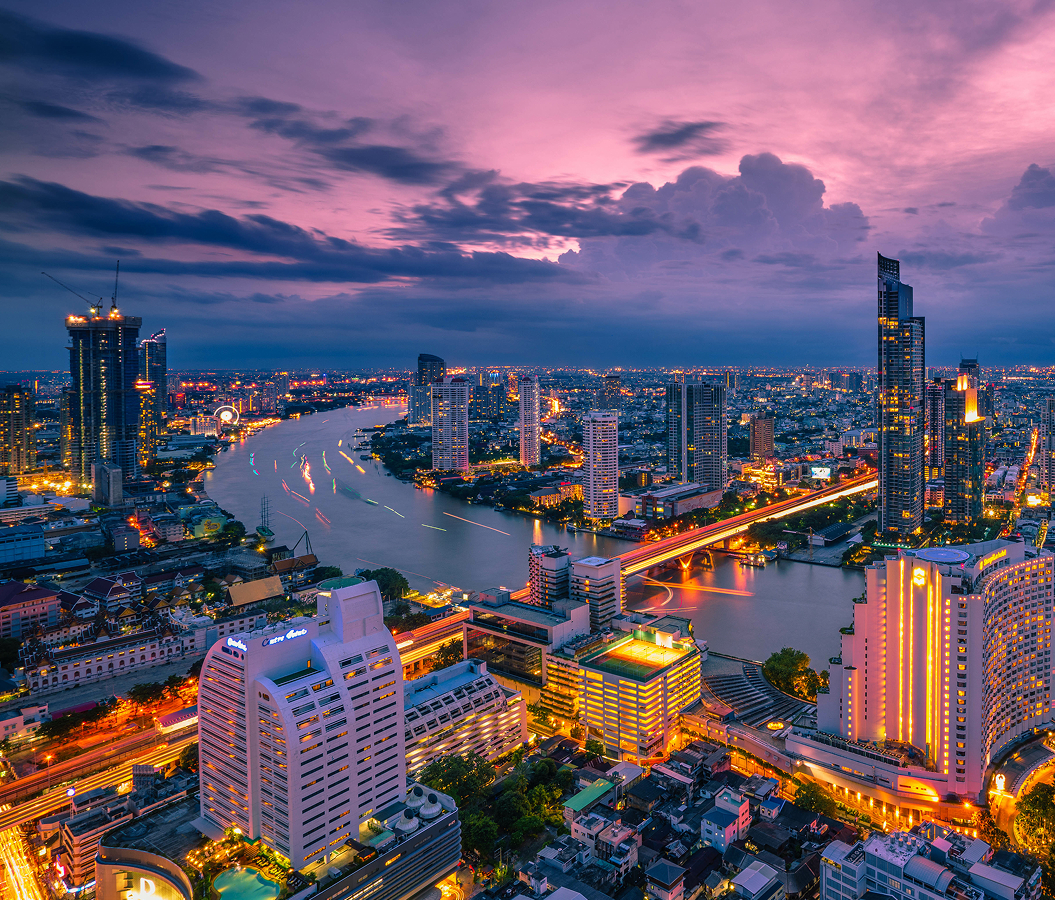
Set along Rama IV Road near Ratchadamri Road and just steps from the King Rama VI Monument, the park occupies a substantial green enclosure between the commercial towers of Silom, the diplomatic properties surrounding Wireless Road and the high-rise residential districts extending toward Lang Suan. Broad lawns, mature rain trees and winding pedestrian paths surround a network of ornamental lakes, creating an expansive landscape framed by Bangkok's central business district. Bridges cross narrow waterways, shaded exercise areas occupy the perimeter and open-air pavilions provide gathering places beside the water. The park's principal entrances connect formal landscaped avenues with recreational circuits, botanical planting areas and waterfront spaces used for boating and outdoor activities. The result is a metropolitan garden whose royal origins, extensive recreational landscape and central urban position establish one of Bangkok's most important public institutions.
What defines Lumpini Park.
Lumpini Park is best known as Bangkok's first major public park, established through the royal patronage of King Vajiravudh, Rama VI, during a period of substantial institutional and urban development in the Siamese capital. The park's origins belong to the transformation of royal land into public recreational space during the early twentieth century. King Rama VI initiated the project in the 1920s, directing the development of a substantial public garden on property associated with the royal estate. The site occupied land beyond the densely developed historical center, providing an opportunity to establish a large landscaped enclosure as Bangkok expanded southward and eastward. The king envisioned a public destination incorporating recreational grounds and exhibition facilities, connecting the project with contemporary approaches to civic improvement and urban planning. The park's name derives from Lumbini, the traditional birthplace of the historical Buddha in present-day Nepal, establishing a religious and cultural association within the royal development program. Construction involved substantial land preparation, the creation of artificial lakes and the establishment of landscaped grounds suitable for public recreation. The project incorporated areas intended for exhibitions and commercial activities, demonstrating the relationship between public leisure and the economic ambitions of the period. King Rama VI died in 1925 before the full development of the grounds was completed, leaving the project to continue under subsequent royal and municipal administration. The park opened to the public during the reign of King Prajadhipok, Rama VII, establishing a substantial recreational landscape within the growing capital. Its development represented an important departure in Bangkok's urban organization, introducing a large public garden intended for broad civic use. During the following decades, the surrounding districts underwent extensive commercial and residential development, transforming the park's position within the metropolitan landscape. The expansion of Silom and the adjoining business districts brought major office buildings, hotels and transportation infrastructure to the park's perimeter. Municipal authorities developed additional recreational facilities and landscape improvements, strengthening its role as a principal public green space. The park subsequently became an important setting for public gatherings, cultural activities and organized recreational programs. Its historical development established a distinctive relationship between royal land patronage, municipal administration and the expansion of Bangkok's modern civic institutions.
King Vajiravudh's original public garden occupies 57 hectares, creating a substantial landscape organized around artificial lakes, pedestrian circuits and extensive areas of mature tropical vegetation. The central lake system forms the principal geographical feature, with irregular shorelines and connecting waterways establishing varied views across the surrounding gardens. Pedal boats operate on designated portions of the water, providing a recreational activity associated with the park's long-standing public use. Walking and running circuits extend through shaded avenues, connecting the principal entrances with lawns, exercise areas and recreational facilities. Mature trees provide extensive canopy coverage, moderating the tropical climate and creating shaded environments within the surrounding high-density commercial district. The park supports populations of Asian water monitors, substantial reptiles frequently observed along the lakeshores and adjoining grassy areas. Their presence contributes to the park's distinctive urban ecology, demonstrating the persistence of wildlife within a heavily developed metropolitan environment. Birdlife includes common tropical urban species and water-associated birds attracted by the lakes and landscaped vegetation. Outdoor exercise areas accommodate group activities, including tai chi, aerobics and other forms of organized physical recreation. The park's recreational infrastructure includes playgrounds, sports facilities and open lawns used for informal gatherings and community activities. The Palm Garden presents a landscaped collection of tropical palms, contributing to the botanical variety of the grounds. Decorative bridges and small pavilions create architectural features along the pedestrian routes, establishing places for rest and observation beside the water. The park's southwestern sections contain substantial open spaces used for seasonal activities and public gatherings. Its perimeter paths establish important pedestrian connections between the surrounding commercial streets and the interior recreational landscape. The elevated towers of Silom and Sathorn form a striking backdrop to the lakes, emphasizing the contrast between the park's extensive vegetation and Bangkok's dense modern skyline. The development of nearby rapid transit stations strengthened access from surrounding districts, connecting the park with the metropolitan transportation network. The combination of mature landscape, extensive public facilities and urban wildlife establishes Lumpini Park as an important recreational and ecological resource within Central Bangkok.
How Lumpini Park fits.
Lumpini Park works as the green centerpiece for a Central Bangkok itinerary connecting the city's contemporary cultural institutions, its historical royal patronage and the commercial architecture of the surrounding metropolitan districts.
Begin at Bangkok Art and Culture Centre, the contemporary arts institution established near the Pathum Wan commercial district. The center opened in 2008, introducing a major public venue devoted to visual art, performance, film and cultural programming. Its architecture incorporates a substantial central atrium surrounded by curved exhibition galleries, creating an interconnected arrangement of public spaces and artistic facilities. Exhibitions present work by Thai and international artists, contributing to Bangkok's contemporary cultural landscape. The institution's location near major shopping centers and elevated rail infrastructure establishes an important connection between artistic programming and the commercial development of Central Bangkok. Continue to Erawan Shrine, the prominent Hindu shrine dedicated to Phra Phrom, the Thai representation of the Hindu deity Brahma. The shrine was established in 1956 in connection with the construction of the Erawan Hotel, becoming an important religious destination within the expanding commercial district surrounding Ratchaprasong. Its gilded central figure occupies an open-air ceremonial enclosure, where devotees present flowers, incense and other offerings. Traditional Thai dance performances accompany certain devotional practices, connecting religious observance with established performing arts traditions. The shrine's position beside major commercial intersections demonstrates the continuing importance of religious institutions within Bangkok's modern urban environment. Conclude at Jim Thompson House, the historic residential compound associated with American entrepreneur James H. W. Thompson and the revival of Thailand's silk industry during the twentieth century. Thompson assembled the property from traditional Thai wooden houses, creating an architectural ensemble incorporating elevated structures, steep roofs and extensive decorative woodwork. The interiors contain Southeast Asian artworks, ceramics and antique furnishings collected during his residence in Thailand. The compound became an important cultural institution following Thompson's disappearance in Malaysia in 1967, preserving his architectural collection and his contribution to the international recognition of Thai silk. Its landscaped grounds establish a distinctive historical environment within the surrounding commercial city. The progression moves from Bangkok's contemporary arts institutions through a major center of urban religious devotion and culminates in a preserved residential compound associated with the international development of Thailand's silk industry.
Where your story begins.
Foresyte Travel reveals places that feel extraordinary long before you arrive.
Enjoy editorial crafted for luxury travelers.
Foresyte may earn a commission when you book.