Why you should experience Magnificent Mile in Chicago, Illinois.
The Magnificent Mile is Chicago's pulse, a mile-long symphony of architecture, energy, and ambition that defines the city's character.
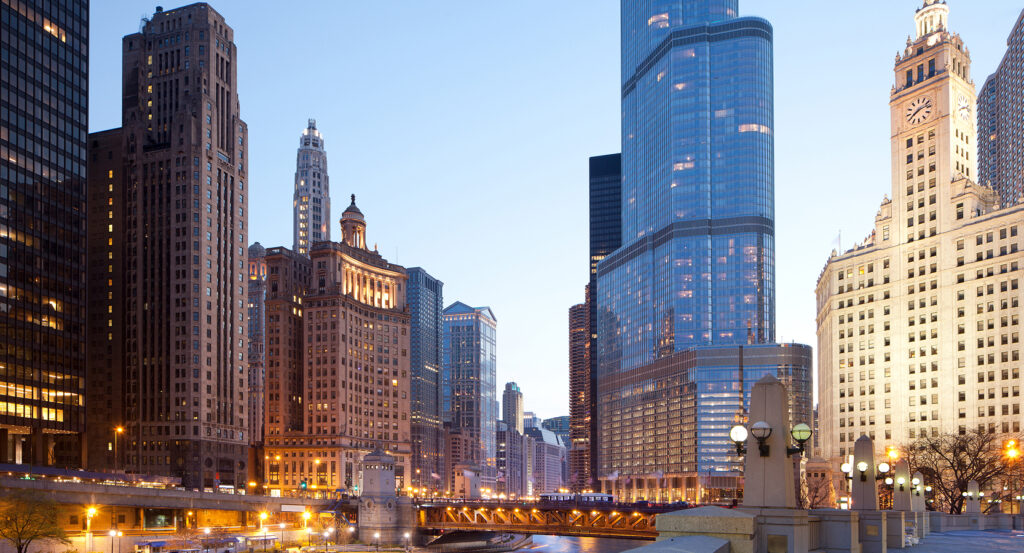
Stretching from the banks of the Chicago River to the base of the John Hancock Tower, this iconic stretch of Michigan Avenue blends historic grandeur with cosmopolitan flair. The skyline seems to rise and shimmer with purpose here, Gothic towers shoulder up beside modern glass marvels, while Lake Michigan's breeze cuts through the canyon of lights. It's a place where the past and future walk side by side: the Tribune Tower, with its stones from world landmarks embedded in its façade, faces the sleek modernism of the Apple Store's glass cube and the soaring height of 875 North Michigan Avenue. The Magnificent Mile carries the soul of Chicago in motion, taxis humming past luxury boutiques, street performers drawing crowds beneath the Wrigley Building, and the hum of conversation spilling from rooftop lounges. Every block seems choreographed, from the elegance of the Drake Hotel to the artistic rhythm of public sculptures that punctuate the walk. What makes it magnificent isn't the shopping or the glamour alone, it's the sense that here, in this single mile, Chicago's grit and grace meet in perfect balance.
What you didn’t know about Magnificent Mile.
The story of Magnificent Mile begins in the ashes of reinvention, a phoenix born from the Great Chicago Fire of 1871.
When the city rebuilt became a canvas for architectural experimentation, culminating in the 1920s vision of planner Daniel Burnham, who sought to create a boulevard that rivaled Paris or New York. But the “Magnificent Mile” name didn't come until 1947, coined by developer Arthur Rubloff to brand the area's revival. His dream wasn't just about commerce, it was about transforming Chicago's identity into one of elegance, innovation, and optimism. The result is a corridor that tells the story of a city's relentless evolution. Beneath the shimmer of storefronts lie deep layers of history: the old Water Tower, one of the few buildings to survive the Great Fire, now stands as both symbol and survivor. The avenue's architecture mirrors Chicago's confidence through the ages, art deco, beaux-arts, modernist, and postmodern all converging in an urban masterpiece. Few realize that beneath the bustle runs one of the most sophisticated underground infrastructure systems in the country, connecting the Mile's major buildings like veins beneath the skin. During the holidays, the Magnificent Mile transforms again, more than a million lights sparkle in the trees, and the annual Lights Festival kicks off the season with parades, fireworks, and the same sense of wonder that's defined the city for generations.
How to fold Magnificent Mile into your trip.
The best way to experience Magnificent Mile is to walk it slowly, not as a shopper, but as a storyteller tracing the city's evolution.
Begin at the Wrigley Building, its white terra-cotta façade glowing against the river. Cross the DuSable Bridge, where Chicago's architectural tour boats drift below, and let the rhythm of the street pull you north. Step inside the Tribune Tower's lobby to see fragments of the Great Wall of China and the Taj Mahal built into its walls, a quiet reminder of how globally connected Chicago has always been. As you move along, the boutiques and flagship stores might tempt you, but look up, always look up. Every detail of the skyline tells a story: from the neo-Gothic tracery of the Fourth Presbyterian Church to the bold geometry of the Hancock Tower's X-braced frame. Stop for lunch at one of the cafes that line the avenue or duck into the 900 North Michigan Shops for a moment of calm luxury. In the afternoon, visit the Museum of Contemporary Art nearby or stroll toward Oak Street Beach, where the bustle melts into the shimmer of Lake Michigan. As night falls, the Magnificent Mile transforms again, the neon reflections ripple across the pavement, live jazz hums from hotel lounges, and the city feels electric yet timeless. End your walk at the Drake Hotel, where the chandeliers and champagne glasses echo Chicago's golden age. By then, you'll understand that the Magnificent Mile isn't simply a shopping street, it's the artery of a city that rebuilt itself not out of fear, but out of faith in its own greatness.
Where your story begins.
Start your planning journey with Foresyte Travel.
Experience immersive stories crafted for luxury travelers.