Why Mandarin Oriental matters.
Mandarin Oriental is an elegant hotel where Munich's Wittelsbach heritage meets a former nineteenth-century ballroom, Nobu Matsuhisa's international cuisine and contemporary Asian design in the heart of the Old Town.
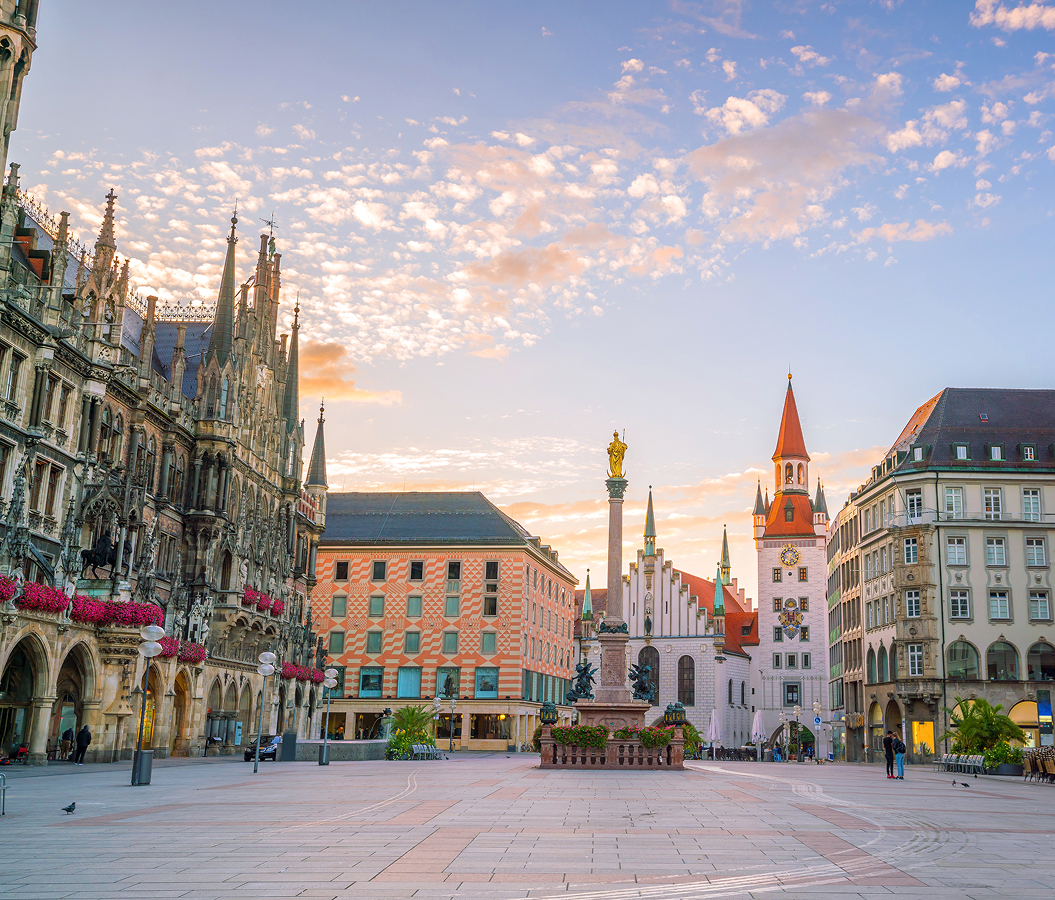
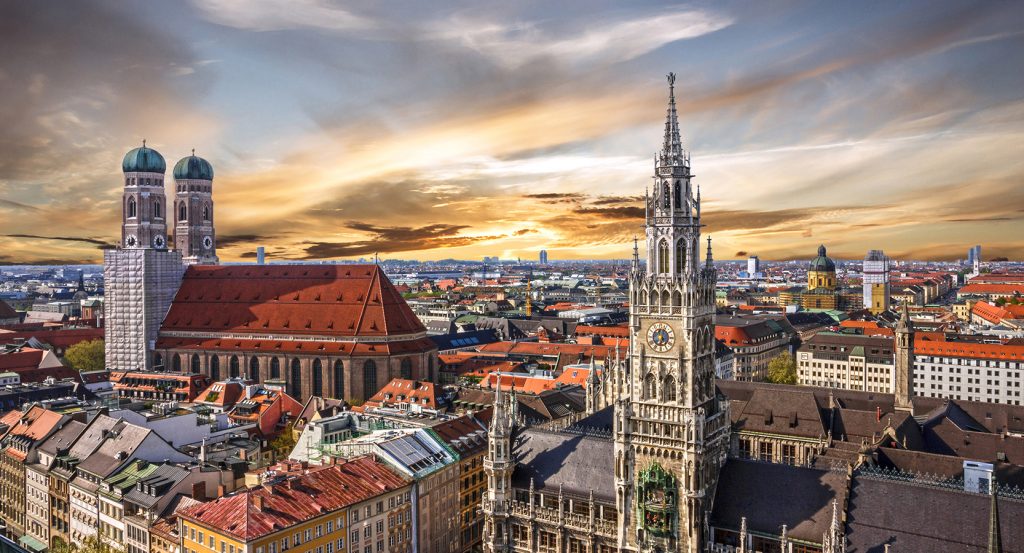
Set along Neuturmstraße near Maximilianstraße and just steps from Munich's central pedestrian streets, the hotel occupies a quiet Old Town position between the city's royal quarter, its grand shopping boulevard and the dense streets surrounding the historic center. The Neo-Renaissance building retains the formal scale of its original ballroom architecture, with a compact footprint opening toward Munich's oldest urban district. Arrival unfolds through a sequence of restored architectural details, individually designed rooms and views toward the city's rooftops and church towers. A rooftop terrace adds a second perspective over Munich, connecting the hotel's polished interiors with the Bavarian capital's urban silhouette. The result is a hotel where a former society ballroom, a global culinary program and Munich's royal geography converge within one highly concentrated address.
What defines Mandarin Oriental.
Mandarin Oriental is best known for transforming an 1880 Neo-Renaissance ballroom building into a luxury hotel that connects Munich's nineteenth-century cultural life with the international hospitality of Mandarin Oriental. The original structure was created as a grand public hall for Munich society during the reign of King Ludwig II. Opera and ballroom functions gave the building a role within the city's performance culture before its later conversion into hotel use in 1990. Rafael Hotel Group operated the property during its first hotel chapter, preserving the building's position within the Old Town as its function changed. Mandarin Oriental Hotel Group acquired the property in 2000, marking the company's first venture in Germany. A later renovation invested 7.5 million euros in guestrooms and the exterior façade, reinforcing the relationship between the building's nineteenth-century shell and its contemporary hospitality role. The 2020 renovation redesigned all rooms and suites, introducing new interiors that combined historical references with a more contemporary visual language. The property contains 73 rooms and suites, including 48 rooms and 25 suites, within a compact building whose original public scale survives in its formal architecture. Mandarin Oriental carries several distinct institutional chapters within one structure, moving from ballroom culture through hotel conversion to a German flagship for an Asian luxury group.
Matsuhisa Munich gives Mandarin Oriental its most consequential culinary connection to the international career of Nobu Matsuhisa. Chef Nobu Matsuhisa's Japanese-Peruvian cuisine places seafood, sushi and sashimi beside dishes shaped by Peruvian ingredients and techniques. Black cod, yellowtail sashimi with jalapeños and Peruvian rib-eye anticucho form the restaurant's central culinary vocabulary. The black cod links a buttery fish preparation with the restaurant's global signature, making one dish a concise expression of Matsuhisa's approach. Yellowtail sashimi introduces citrus, heat and raw fish through a composition built around jalapeño. The eight-seat live cooking counter brings chefs into direct view as they prepare Matsuhisa's dishes in front of the dining room. A semi-private section accommodates omakase menus for up to 12 guests, giving the chef's selection a separate format within the restaurant. MICHELIN Guide inspectors classify Matsuhisa Munich as Japanese contemporary and Peruvian cuisine, placing the restaurant within a recognized international culinary category. Mandarin Oriental links a former Bavarian ballroom with one of the world's most recognizable Japanese-Peruvian restaurant brands, giving the hotel a culinary character that extends beyond its local setting.
How Mandarin Oriental fits.
Mandarin Oriental works as the architectural anchor for an outing tracing Munich's transformation from ducal brewing center to modern civic capital and Wittelsbach seat of government.
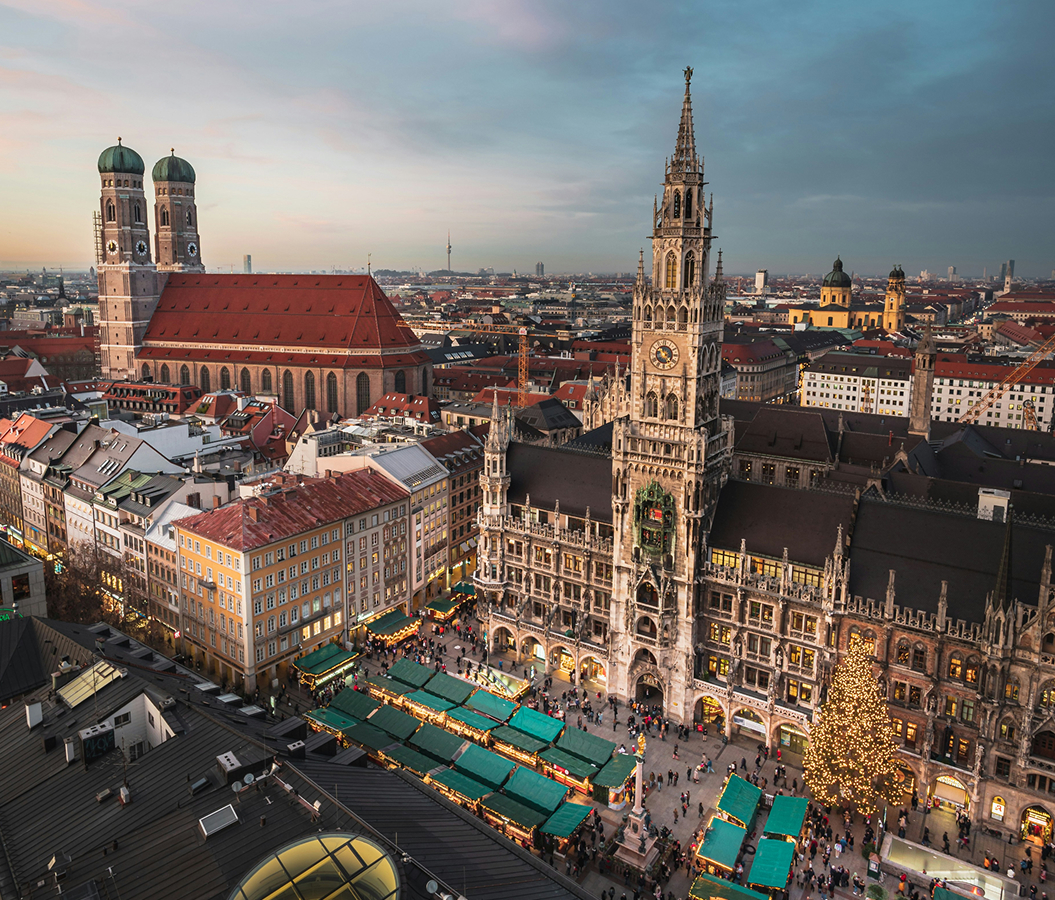
Begin at Hofbräuhaus München, founded on September 27, 1589, by Duke Wilhelm V of Bavaria to supply beer to his court of 600 people. The first brewhouse stood at the Alten Hof before white-beer production moved to the Platzl in 1607, and Hofbräu's first Maibock followed in 1614. During the Thirty Years' War, 23,168 liters of Hofbräu beer formed part of the tribute that spared Munich from Swedish destruction. King Ludwig I opened the establishment to Munich's citizens in 1828, shifting the institution from court provision toward public tavern culture. The brewery moved to Haidhausen in 1896, allowing Max Littmann to create the Neo-Renaissance beer palace opened at the Platzl in 1897. Air raids destroyed much of that building in 1945, and reconstruction reached completion during Munich's 1958 anniversary year. Continue to Neues Rathaus, whose three construction phases from 1867 to 1905 expressed the administrative growth of Munich beyond its older medieval center. Architect Georg von Hauberrisser shaped the Neo-Gothic complex across an entire city block, creating a façade 100 meters long and a tower crowned by a 43-bell carillon. The moving figures stage the 1568 wedding of Wilhelm V and Renate of Lorraine, carrying a dynastic event into the public civic building. Conclude at Munich Residence, which began as the Neuveste fortress in 1385 and became the Wittelsbach seat of government in 1508. The Antiquarium, built between 1568 and 1571, gave the dynasty one of the largest Renaissance halls north of the Alps, and later interiors extended through Baroque, Rococo, Neoclassical and Historicist styles. War damage destroyed much of the palace, yet reconstruction returned the Residence Museum, Treasury and Cuvilliés Theatre to public cultural use. The progression moves from Hofbräuhaus München's transformation of court provision into public tradition through Neues Rathaus's expression of municipal growth and culminates at Munich Residence, connecting Munich's popular culture, civic authority and dynastic power within one coherent Old Town itinerary.
Where your story begins.
Foresyte Travel reveals places that feel extraordinary long before you arrive.
Enjoy editorial crafted for luxury travelers.
Foresyte may earn a commission when you book.