Why Mariahilf matters.
Mariahilf is a cosmopolitan district where cultural innovation, urban sophistication, and entrepreneurial spirit converge within one of the capital's most dynamic neighborhoods.
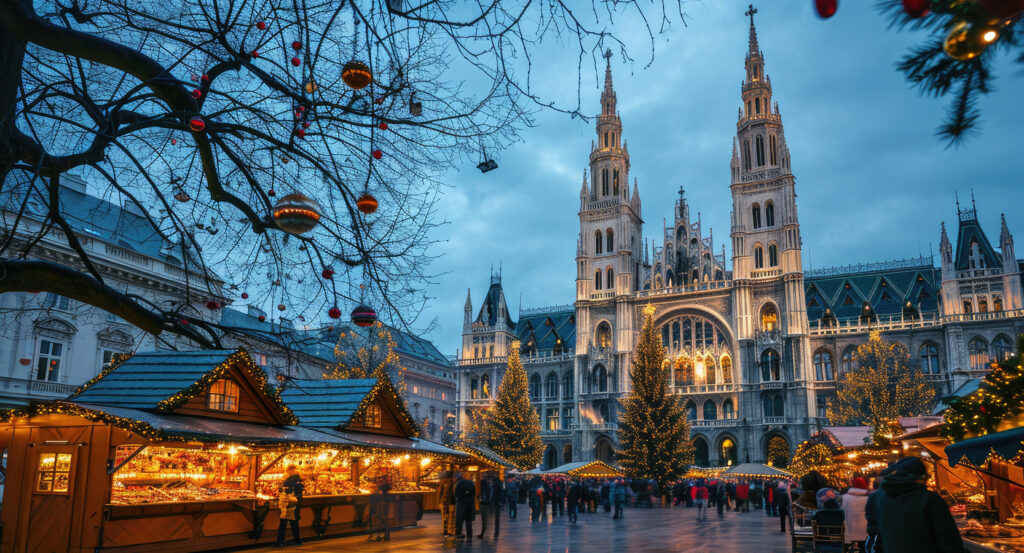
Historic apartment buildings, energetic shopping streets, contemporary galleries, neighborhood cafés, cultural venues, public plazas, and creative businesses create a district that balances Vienna's imperial legacy with modern urban energy. Originally developed beyond the old city walls, Mariahilf expanded rapidly during the nineteenth century as Vienna transformed into a major European metropolis. Merchants, artisans, intellectuals, and entrepreneurs helped shape a neighborhood that became known for commerce, creativity, and social mobility. Its central location and strong commercial foundations encouraged continuous reinvention while preserving much of its architectural character. Today, visitors encounter a neighborhood that feels lively, diverse, and distinctly contemporary. The result is a district defined by creativity, accessibility, and cultural vitality. To the north, Neubau extends naturally from Mariahilf through a network of cultural institutions, shopping streets, and historic neighborhoods, reinforcing the district's position within Central Vienna.
What defines Mariahilf.
Mariahilf is best known for being home to Haus des Meeres, a former World War II flak tower that was transformed into one of Europe's most unusual aquariums.
Constructed during the Second World War as part of Vienna's air defense network, the massive concrete structure survived the conflict and remained one of the city's most imposing wartime relics. Rather than demolishing the tower, Vienna repurposed it into a public attraction dedicated to marine life, conservation, and environmental education. The transformation turned a symbol of conflict into a center of learning and recreation, giving the building a completely new civic purpose. Over the decades, the facility expanded to include tropical habitats, observation decks, and exhibits featuring species from around the world. Its adaptive reuse is frequently cited as one of the most distinctive examples of architectural repurposing in Austria. Few districts in Europe possess a landmark that so dramatically transformed from military infrastructure into a cultural attraction.
How Mariahilf fits.
Mariahilf works as an exploration of the cultural landmarks, commercial corridors, and urban destinations that define one of Vienna's most energetic districts.
Begin at Haus des Meeres, where the neighborhood's defining connection to innovation, adaptive reuse, and public culture immediately comes into focus. Continue toward Naschmarkt, whose thriving vendors and international flavors reveal the entrepreneurial energy and diversity that have shaped the district for generations. From there, make your way to Mariahilfer Strasse, where historic storefronts, contemporary retailers, and energetic pedestrian spaces provide a broader perspective on the commercial vitality that continues to define Mariahilf today. Along the route, you'll encounter neighborhood cafés, cultural institutions, public plazas, architectural landmarks, creative businesses, historic streets, and community gathering spaces that showcase the district's remarkable depth. The progression moves naturally from transformed wartime landmark to historic marketplace to iconic shopping corridor, revealing the forces that transformed Mariahilf into one of the capital's most influential neighborhoods. Mariahilf remains one of Vienna's most rewarding districts, preserving a remarkable balance between historical adaptation, cultural richness, and metropolitan energy.
Where your story begins.
Foresyte Travel reveals places that feel extraordinary long before you arrive.
Enjoy editorial crafted for luxury travelers.
Foresyte may earn a commission when you book.