Why you should experience Bung Karno Library in Indonesia.
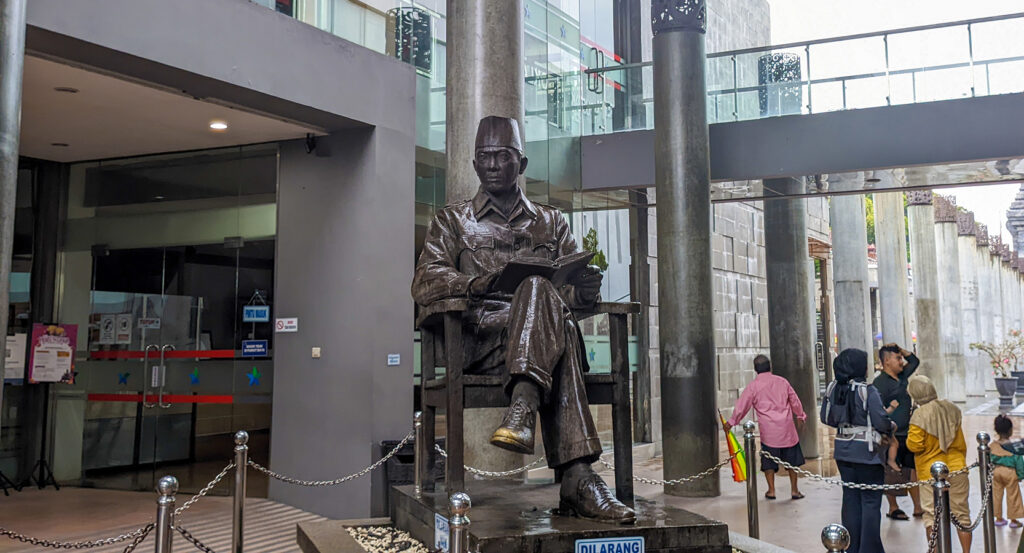
The Museum Bung Karno in Denpasar is not just a monument to Indonesia's founding father, it's a temple of memory where the pulse of a nation still echoes.
Set within the dignified complex of Renon, the museum radiates the same conviction and fire that defined Sukarno's life. Step inside, and the air itself feels charged, thick with history, hope, and defiance. Photographs of independence rallies, handwritten letters, and personal artifacts create a timeline that feels alive. In glass cases, his reading glasses rest beside revolutionary manifestos, while portraits capture his iconic gaze, steady, unflinching, visionary. The walls speak in a quiet thunder, retelling how one man's dream for unity, sovereignty, and dignity shaped the course of Southeast Asia. This is not a sterile institution; it's a space of reverence, where the ideals of freedom and courage are preserved like relics. To stand here is to feel Indonesia's heartbeat through the view of its most charismatic leader, a reminder that revolution is not an event but an enduring state of mind.
What you should know about Bung Karno Library.
The museum stands as both a memorial and a lesson in legacy, established to honor Sukarno's philosophical and artistic depth as much as his political brilliance.
Though Sukarno was born in Java, his connection to Bali was profound, he found in the island's spirituality a reflection of Indonesia's broader soul. The museum's design mirrors this synthesis: Javanese geometry blending with Balinese ornamentation, nationalist iconography softened by local craftsmanship. Inside, visitors find not only photographs and speeches but paintings and sculptures created by Sukarno himself, revealing his lesser-known side as an artist and thinker. Many exhibits are drawn from his personal collection, landscapes, mythological scenes, and political caricatures that once adorned his private study. The museum also houses rare editions of his writings, including Di Bawah Bendera Revolusi (“Under the Banner of Revolution”), annotated in his own hand. Few realize that Sukarno considered art a weapon of liberation, believing that beauty and freedom were inseparable forces. In every artifact, you feel the humanity behind the legend, a man who loved poetry as fiercely as he loved his people.
How to fold Bung Karno Library into your trip.
A visit to the Museum Bung Karno pairs beautifully with an exploration of Denpasar's civic heart.
Begin your journey at the nearby Bajra Sandhi Monument, whose towering structure symbolizes the island's struggles for independence, then walk toward the museum grounds, a short stroll shaded by banyan trees. Enter quietly; the space invites reflection more than noise. Take time to read the placards slowly, to listen to the subtle gamelan music that often plays in the background, grounding history in local sound. The upper galleries provide panoramic views of Renon, a poignant vantage point from which to contemplate how far Indonesia has come since Sukarno's call for unity in 1945. Before you leave, stop at the small bookshop where replicas of his speeches and revolutionary posters are sold, tangible fragments of a national awakening. The Museum Bung Karno in Denpasar is more than a tribute to a man; it's a mirror held up to a nation still striving to embody his ideals of independence, integrity, and unbreakable pride.
Where your story begins.
Foresyte Travel reveals places that feel extraordinary long before you arrive.
Experience premium editorial crafted for luxury travelers.