Why Perdana Botanical Garden matters.
Perdana Botanical Gardens is a nineteenth-century tropical garden where Lake Gardens' colonial parkland heritage meets Kuala Lumpur's botanical diversity, the landscape planning of British Malaya and the preservation of an extensive public green space within Malaysia's capital.
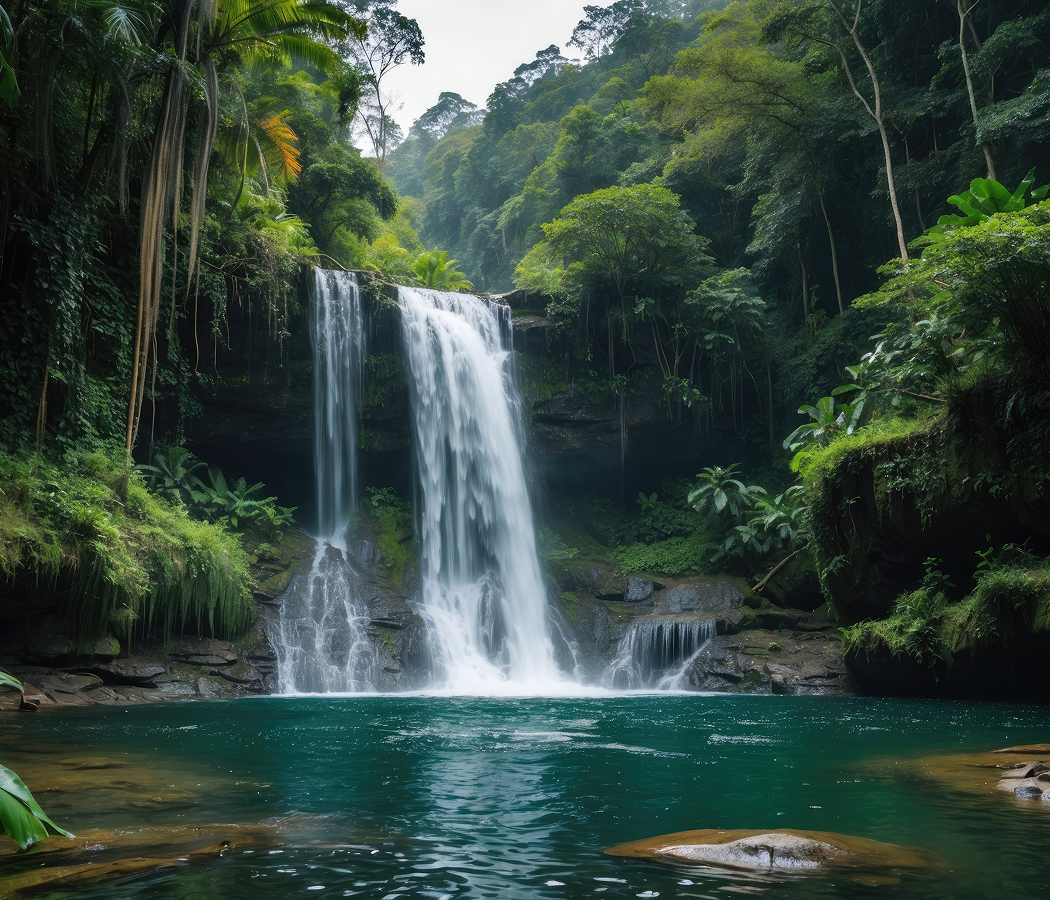
Extending along Jalan Kebun Bunga near Jalan Cenderawasih and a short drive from Kuala Lumpur Sentral, the gardens occupy a landscaped valley in Lake Gardens between Bukit Aman and the hills surrounding the former colonial administrative district, with wooded slopes enclosing ornamental lakes and cultivated terraces. Winding pedestrian paths connect botanical collections with open lawns, water features and shaded garden areas. Mature tropical trees rise above the lower planting beds, creating distinct layers of vegetation. The terrain descends toward the central lake, with footbridges and pathways following the contours of the surrounding slopes. The result is a botanical landscape whose historical development connects colonial recreational planning with the cultivation and conservation of tropical plants in metropolitan Kuala Lumpur.
What defines Perdana Botanical Garden.
Perdana Botanical Gardens is best known for its tropical plant collections, ornamental lakes and origins as Kuala Lumpur's principal colonial-era public park. The gardens were established in 1888 under the direction of Alfred Venning, the British colonial official responsible for developing the recreational landscape. Venning selected a former tin-mining area in the hills west of Kuala Lumpur's early commercial center, recognizing its potential for conversion into a public garden. The project formed part of the expansion of civic amenities during the period when Kuala Lumpur developed as the administrative center of Selangor. The original park was named Lake Gardens, reflecting the construction of an ornamental lake within the landscaped grounds. Its development incorporated winding paths, lawns and cultivated planting areas associated with British colonial landscape traditions. The park became an important recreational destination for colonial administrators and residents during the late nineteenth century. Subsequent planting programs introduced ornamental trees, flowering shrubs and tropical species suited to Kuala Lumpur's humid equatorial climate. The gardens expanded during the twentieth century as the city developed into the capital of independent Malaya and subsequently Malaysia. Their landscape incorporated specialized horticultural areas, including collections devoted to orchids, hibiscus and other flowering plants. The designation Taman Tasik Perdana became associated with the park, connecting its public landscape with the national history of independent Malaysia. The gardens underwent substantial redevelopment during the early twenty-first century, incorporating new botanical collections, improved pedestrian infrastructure and expanded horticultural facilities. The name Perdana Botanical Gardens was adopted in 2011, emphasizing the site's botanical functions alongside its recreational importance. Its development established a major public landscape within Kuala Lumpur's central urban area, preserving extensive tropical vegetation amid the capital's commercial and residential expansion.
Alfred Venning's original landscape scheme established the garden's principal relationship between the central lake, surrounding slopes and cultivated planting areas. The lake occupies a low-lying section of the park, bordered by lawns and pedestrian paths following its irregular shoreline. Mature rain trees provide broad canopies above substantial portions of the landscape, creating shaded areas beneath their spreading branches. The Sunken Garden incorporates formal planting beds arranged around a central water feature, with geometric pathways organizing the surrounding vegetation. Its design introduces a structured horticultural composition within the larger informal park landscape. The Orchid Garden contains collections of tropical orchids, including species associated with Malaysia's humid forest environments. Specialized growing areas support the cultivation of plants requiring particular light, moisture and temperature conditions. The Hibiscus Garden contains flowering varieties associated with Malaysia's national flower, Hibiscus rosa-sinensis. Its planting arrangements demonstrate the diversity of flower forms and colors developed through horticultural cultivation. The Bamboo Playhouse, designed by Malaysian architect Eleena Jamil, incorporates a series of elevated bamboo structures arranged within the garden landscape. Its construction demonstrates the architectural possibilities of bamboo through lightweight structural assemblies and interconnected platforms. The park's walking paths extend across varied terrain, linking ornamental collections with open lawns and wooded slopes. Water features and planted terraces create distinct horticultural settings across the grounds. Tropical vegetation includes palms, flowering trees and species associated with Southeast Asian forest environments. The gardens' botanical program combines cultivated collections with public recreation, supporting environmental education and the preservation of tropical plant diversity.
How Perdana Botanical Garden fits.
Perdana Botanical Gardens works as the botanical centerpiece for a Central Kuala Lumpur itinerary connecting the city's natural history institutions, Islamic architectural heritage and the development of public cultural facilities within its historic park district.
Begin at Kuala Lumpur Bird Park, the zoological attraction situated within the surrounding Lake Gardens district. Opened in 1991, the park incorporates extensive aviaries designed to accommodate tropical bird species within landscaped habitats. Its large netted enclosures allow many birds to move through planted areas containing trees, ponds and pedestrian pathways. The collection includes species associated with Malaysia's tropical forests alongside birds from other regions. Educational programs address avian biology, habitat conservation and the ecological importance of birds within forest environments. The park's design connects zoological exhibition with the tropical landscape of Kuala Lumpur's principal public garden district. Continue to National Mosque of Malaysia, the religious complex situated east of the gardens near the city's historic administrative center. Completed in 1965, the mosque was designed by a team including architects Howard Ashley, Hisham Albakri and Baharuddin Kassim. Its architectural composition incorporates a folded concrete roof associated with the form of an open umbrella, supported by a modernist structural arrangement. A slender minaret rises above the principal prayer hall and surrounding courtyards. The mosque was constructed during the early years of Malaysian independence, establishing a major national religious institution through contemporary architectural design. Conclude at National Museum of Malaysia, the cultural institution situated near the southern edge of the park district. Opened in 1963, the museum occupies a building designed with architectural elements associated with traditional Malay houses, including a substantial pitched roof and decorative façade treatments. Its exhibitions examine the history of the Malay Peninsula through archaeological objects, historical artifacts and displays associated with successive political and cultural periods. The museum's collections address prehistoric settlement, regional trade, colonial administration and the development of independent Malaysia. Its establishment formed part of the expansion of national cultural institutions following independence. The progression moves from tropical wildlife conservation through post-independence religious architecture and culminates in the preservation of Malaysian historical collections, connecting Perdana Botanical Gardens with the scientific and cultural institutions developed around Kuala Lumpur's central parkland.
Where your story begins.
Foresyte Travel reveals places that feel extraordinary long before you arrive.
Enjoy editorial crafted for luxury travelers.
Foresyte may earn a commission when you book.