Why Petaling Street Market matters.
Petaling Street Market is a covered commercial corridor where Chinatown's Chinese mercantile heritage meets Kuala Lumpur's tin-mining origins, the entrepreneurial legacy of nineteenth-century Chinese migrants and the preservation of traditional street commerce within Malaysia's capital.
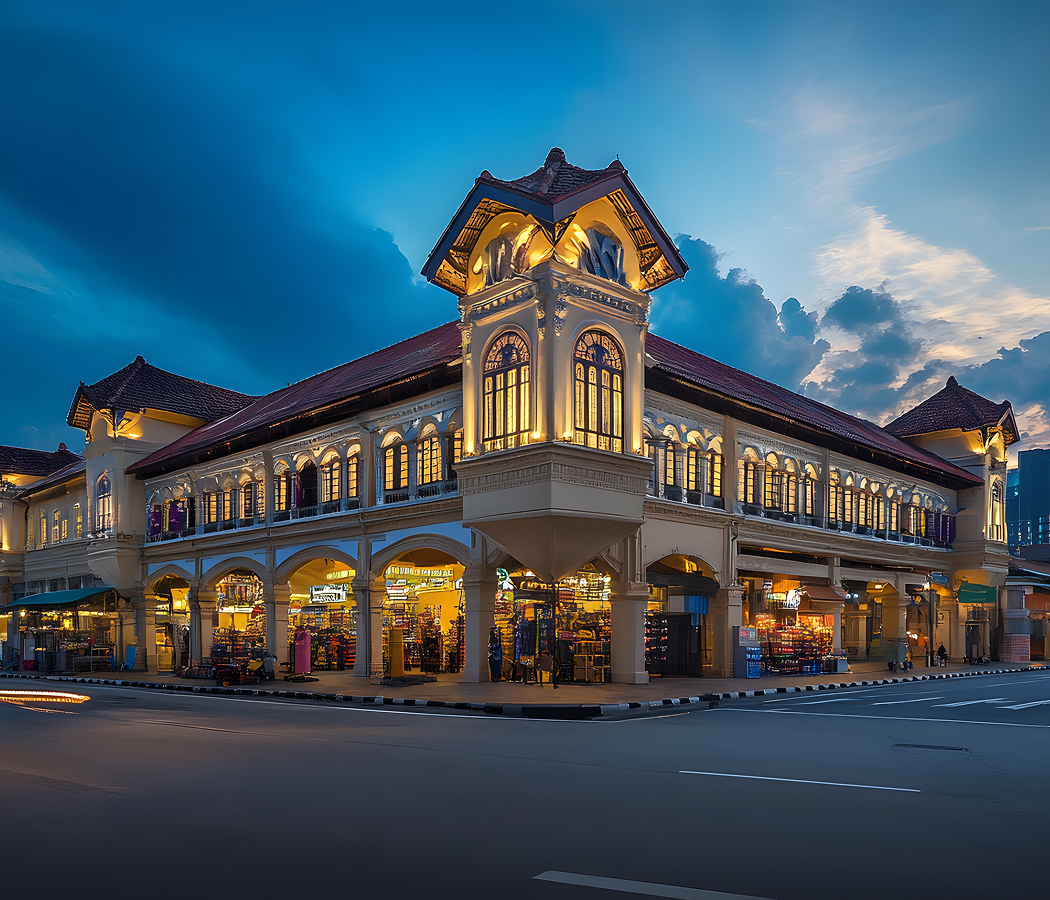
Running along Jalan Petaling between Jalan Tun Tan Cheng Lock and Jalan Sultan, the market occupies the commercial heart of Chinatown, a short walk from Pasar Seni MRT station and the Klang River, with adjoining shophouse streets extending toward Kuala Lumpur's historic trading district. A translucent canopy shelters the central pedestrian thoroughfare, connecting rows of market stalls beneath the upper floors of historic commercial buildings. Narrow side streets contain restaurants, traditional shops and businesses associated with successive generations of Chinese merchants. The surrounding shophouses preserve five-foot ways, decorative façades and architectural features developed during the colonial period. The result is a commercial district where traditional Chinese trading practices, Malaysian street food and historic urban architecture continue to shape Central Kuala Lumpur.
What defines Petaling Street Market.
Petaling Street Market is best known for its concentration of market stalls, Chinese shophouses, traditional food businesses and association with Kuala Lumpur's nineteenth-century Chinese trading community. The street developed during the expansion of Kuala Lumpur as a tin-mining settlement, when Chinese migrants established businesses serving miners, merchants and residents along the Klang and Gombak rivers. Chinese community leader Yap Ah Loy played a central role in the town's reconstruction and commercial development following the Selangor Civil War, which disrupted mining and settlement during the 1860s and 1870s. Appointed Kapitan Cina of Kuala Lumpur in 1868, Yap organized commercial activities, supported infrastructure development and encouraged the recovery of the local mining economy. His administration contributed to the establishment of a more permanent urban settlement with shops, markets and residential quarters. The Chinese commercial district expanded around Petaling Street as merchants developed businesses associated with food distribution, textiles, household goods and other commodities. Early commercial buildings employed timber construction, but destructive fires encouraged the adoption of more durable building techniques. British colonial regulations introduced during the late nineteenth century promoted brick and tile construction, contributing to the development of the shophouse architecture that characterizes the district. The opening of railway connections strengthened Kuala Lumpur's commercial position, linking the settlement with tin-mining areas and the port at Klang. Petaling Street became an important center of retail trade as Chinese merchants established family businesses within the expanding colonial town. During the twentieth century, the district accommodated traditional medicine shops, restaurants, textile merchants and other businesses serving Kuala Lumpur's Chinese population. The market's commercial character evolved as street vendors occupied the roadway and pedestrian spaces, creating a concentrated shopping district. Municipal improvements introduced a substantial canopy over the principal market corridor, providing shelter from tropical rain and sunlight. The covered market became a recognizable feature of Kuala Lumpur's Chinatown, preserving street commerce within a district increasingly surrounded by modern commercial development. Its continuing importance rests upon the relationship between Chinese migration, urban trade and the survival of historic commercial streets in Malaysia's capital.
Yap Ah Loy's commercial development of Kuala Lumpur contributed to the formation of a shophouse district organized around narrow streets and closely spaced retail premises. Petaling Street's principal market corridor contains rows of temporary and permanent stalls selling clothing, accessories, souvenirs and other consumer goods. The pedestrian route extends beneath a translucent canopy supported by a metal structure, creating a sheltered passage through the commercial district. Historic shophouses line both sides of the street, incorporating narrow frontages and upper floors originally associated with residential and commercial uses. Their façades display architectural elements developed through Chinese building traditions and British colonial influences. Five-foot ways provide covered pedestrian passages beneath projecting upper floors, a characteristic feature of Southeast Asian shophouse architecture. Traditional food businesses occupy adjoining streets and shopfronts, maintaining culinary practices associated with Kuala Lumpur's Chinese communities. Kim Lian Kee, established in 1927, became associated with the preparation of Hokkien mee, a noodle dish cooked with dark soy sauce, pork and other ingredients over substantial heat. Its cooking tradition connects the market district with the development of Kuala Lumpur's distinctive Chinese-Malaysian food culture. Sze Ngan Chye operates as a traditional roast duck business associated with the neighborhood's longstanding food commerce. Street vendors prepare noodles, roasted meats, pastries and beverages in compact stalls distributed through the surrounding commercial streets. Traditional medicine shops contain dried herbs, roots and other products associated with Chinese medicinal practices. Textile and household goods merchants preserve elements of the district's earlier retail economy. The market's pedestrian layout encourages movement between the central corridor and adjoining side streets, connecting commercial stalls with established restaurants and historic buildings. Its physical arrangement combines nineteenth-century urban planning, twentieth-century retail development and contemporary street commerce within the commercial center of Kuala Lumpur's Chinatown.
How Petaling Street Market fits.
Petaling Street Market works as the commercial centerpiece for a Chinatown itinerary connecting Kuala Lumpur's Chinese religious institutions, historic shophouse architecture and the multicultural traditions that developed around the city's early trading district.
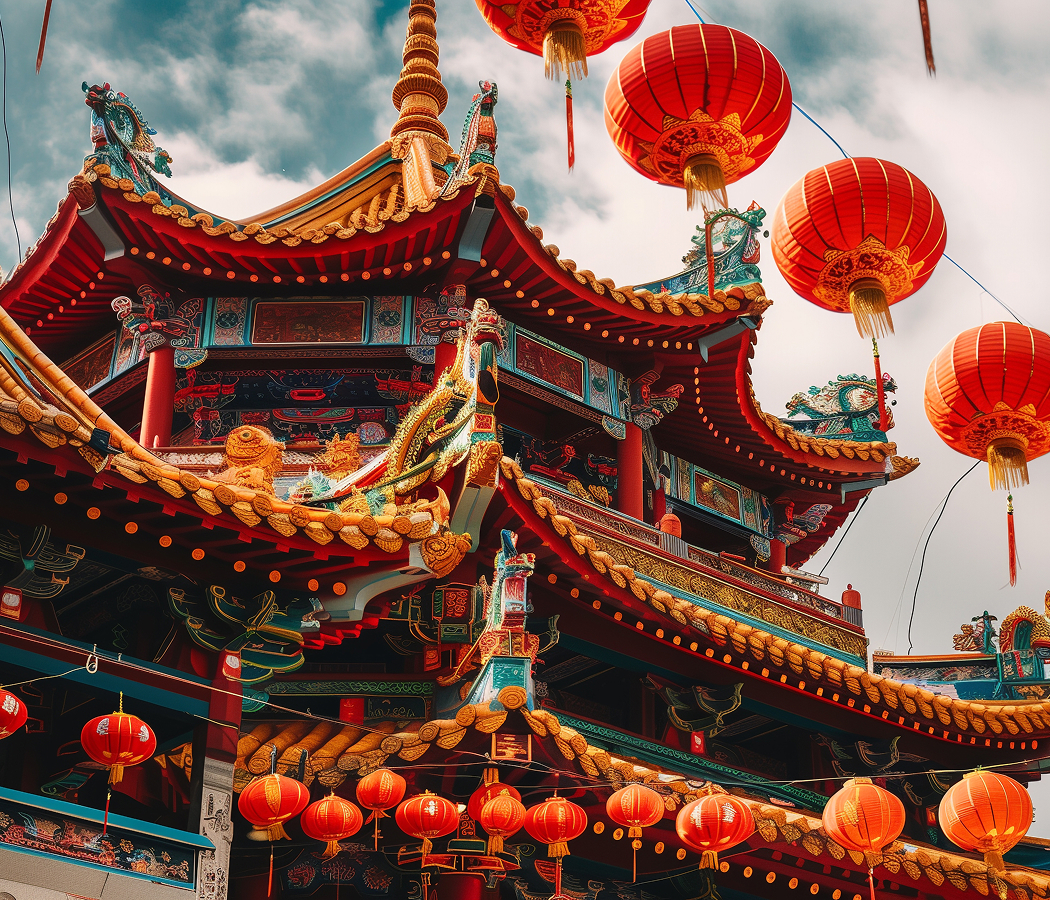
Begin at Sri Maha Mariamman Temple, the Hindu temple situated along Jalan Tun H. S. Lee near the southern entrance to Petaling Street. Established in 1873, the institution became an important religious center for Kuala Lumpur's Tamil Hindu community during the expansion of the colonial settlement. Its principal entrance incorporates a richly decorated gopuram, or temple tower, containing sculptural representations of Hindu deities. The temple's architectural development reflects successive periods of renovation and enlargement. Its ceremonial functions include religious observances associated with the Hindu calendar, connecting the commercial district with the devotional traditions of Kuala Lumpur's Indian community. Continue to Guan Di Temple, the Chinese religious institution situated along Jalan Tun H. S. Lee. The temple is dedicated to Guan Yu, the historical Chinese general revered as a deity associated with loyalty, righteousness and martial virtue. Established during the late nineteenth century, the institution developed as part of Kuala Lumpur's expanding Chinese community. Its architectural composition incorporates traditional Chinese roof forms, ornamental carvings and ceremonial spaces organized around principal altars. Worshippers present incense and offerings associated with Chinese religious practices. The temple preserves the relationship between Chinese community organization, religious devotion and the commercial development of the surrounding district. Conclude at Chan See Shu Yuen Clan Ancestral Hall, the Chinese ancestral institution situated near the southern edge of Chinatown. Completed in 1906, the building was established by members of the Chan, Chen and Tan surname communities as a center for ancestral worship and community activities. Its architecture incorporates elaborate ceramic roof ornamentation, carved timber details and decorative elements associated with southern Chinese building traditions. The complex contains ceremonial spaces devoted to ancestral remembrance and community gatherings. Its development demonstrates the importance of clan associations in supporting Chinese migrants through social organization, religious practice and cultural continuity. The progression moves from Tamil Hindu religious heritage through Chinese devotional architecture and culminates in ancestral community organization, connecting Petaling Street Market with the immigrant institutions that shaped Kuala Lumpur's historic commercial district.
Where your story begins.
Foresyte Travel reveals places that feel extraordinary long before you arrive.
Enjoy editorial crafted for luxury travelers.
Foresyte may earn a commission when you book.