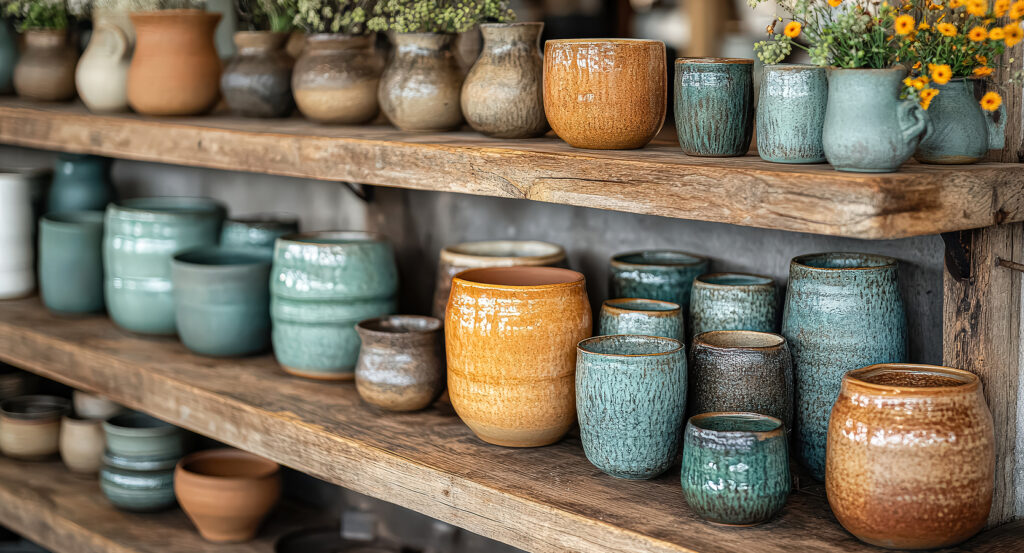
Why you should experience Pewabic Pottery in Detroit, Michigan.
Pewabic Pottery in Detroit is a living expression of art, craftsmanship, and the soul of the city itself.
Founded in 1903 by visionary artist Mary Chase Perry Stratton and her partner Horace Caulkins, Pewabic has become a symbol of Detroit's creative endurance, a space where clay, fire, and imagination meet to produce works that shimmer with history and heart. The moment you step into its Tudor Revival building on East Jefferson Avenue, the scent of earth and glaze fills the air, mingling with the soft hum of artisans at work. Every tile, vase, and mosaic feels touched by the hand of time. The pottery's signature iridescent glazes, luminous blues, greens, and bronzes that seem to shift with the light, have adorned some of the most iconic buildings in America, from the Detroit Institute of Arts to the Basilica of the National Shrine in Washington, D.C. Yet Pewabic remains deeply rooted in community. It's one of the few surviving Arts and Crafts movement studios still operating from its original location, and it continues to uphold its founding philosophy: that beauty belongs in everyday life, not just in museums. Visiting Pewabic isn't just about admiring ceramics; it's about witnessing a century-old discussion between art and city, one that Detroit has never stopped answering.
What you should know about Pewabic Pottery.
Behind every shimmering glaze at Pewabic Pottery lies a story of innovation, perseverance, and quiet revolution.
When Mary Chase Perry Stratton began experimenting with metallic luster glazes at the turn of the 20th century, she was defying both artistic convention and societal expectation. At a time when women rarely led businesses, Stratton turned her fascination with chemistry and form into an enduring legacy. Her breakthrough, a secret glaze formula that created Pewabic's trademark iridescence, transformed the studio into a national landmark. The word “Pewabic” itself comes from a Native American term for “clay with copper,” drawn from Michigan's Upper Peninsula mines that inspired the studio's palette. Stratton's mastery caught the attention of architects, and soon Pewabic tiles began gracing grand spaces, from the floor of Detroit's Guardian Building to the walls of the Shedd Aquarium in Chicago and the Basilica of the National Shrine of the Immaculate Conception in Washington, D.C. Each installation reflected the harmony between architecture and handcraft that defined the Arts and Crafts era. What few realize is that Pewabic also served as a creative refuge during Detroit's most turbulent times, through wars, economic collapse, and urban decline. Even when factories shuttered and neighborhoods faltered, Pewabic kept its kilns burning, training new generations of artists and artisans. In 1991, the pottery was designated a National Historic Landmark, ensuring its preservation as a cornerstone of Detroit's cultural identity. Today, its staff of resident artists continues to blend innovation with heritage, experimenting with modern forms while honoring the techniques Stratton perfected more than a century ago.
How to fold Pewabic Pottery into your trip.
A visit to Pewabic Pottery is a journey into Detroit's artistic heartbeat, one that connects craftsmanship, history, and human creativity in a single space.
Begin your visit in the historic showroom, where handmade tiles and ceramics gleam like small jewels under warm light. Every piece is distinct, no two glazes ever settle quite the same, and many carry the subtle imperfections that make them unmistakably human. The adjacent gallery showcases both contemporary ceramic artists and historical collections, offering a sense of how Pewabic's influence continues to ripple through modern design. Don't miss the chance to take a studio tour, where you can watch artisans at work, shaping clay, mixing glazes, and feeding the roaring kilns that give each piece its life. If time allows, sign up for a hands-on workshop; whether you're throwing a pot on the wheel or pressing a tile, you'll gain a deeper appreciation for the precision and patience that defines the craft. Outside, the courtyard garden offers a quiet moment of reflection surrounded by tile mosaics that shimmer in the sunlight. Before leaving, stop by the gift shop, not just for souvenirs, but for a tangible piece of Detroit's legacy. From architectural tiles to handcrafted mugs, each item carries the spirit of the city's resilience. Pair your visit with a stop at the nearby Detroit Institute of Arts or the Guardian Building to see Pewabic's tilework in its grandest form. Standing in the studio where Mary Chase Perry Stratton once mixed her glazes by hand, you'll feel what countless Detroiters have felt for over a century, that beauty, when crafted with care, can outlast every storm.
Where your story begins.
Foresyte Travel reveals places that feel extraordinary long before you arrive.
Experience premium editorial crafted for luxury travelers.