
Why you should experience Shilla Stay Gwanghwamun in Seoul, South Korea.
Shilla Stay Gwanghwamun is where contemporary Korean refinement meets the quiet dignity of Seoul's historic core, where clean-lined modern design blends seamlessly with the cultural richness of palaces, museums, and centuries-old temples, and where stepping inside feels like entering a calm, minimalist sanctuary surrounded by some of the most meaningful landmarks in the entire country.
Set just behind Gwanghwamun Square and steps from the gates of Gyeongbokgung Palace, the hotel rises with understated confidence, a sleek façade of glass and stone that signals the polished simplicity Shilla is known for. Inside, the lobby captures warm minimalism: pale woods, sculptural lighting, smooth stone textures, contemporary Korean art accents, and a quiet, spacious layout that instantly resets your mind from the pace of the city. The air feels clean, calm, and purposeful, setting the tone for a stay built around comfort, efficiency, and gentle sophistication. Guest rooms follow Shilla's signature philosophy of restful simplicity. Expect muted color palettes, crisp bedding, elegant lines, comfortable workspaces, large windows framing Jongno's rooftops, Namsan's silhouette, or the palace district's sweeping geometry. Every detail is designed to soothe, soft lighting, uncluttered design, light woods, and textiles that feel gentle and refined. Bathrooms are modern and bright, with walk-in rain showers, clean tiling, quality amenities, and the kind of functional beauty that makes getting ready feel effortless. Suites introduce larger living spaces, elevated views, and expanded seating areas ideal for longer stays or evenings spent unwinding with the city glowing below. The fitness center is spacious, bright, and well equipped, a rarity in this part of town, making morning workouts feel energizing. The guest lounge echoes the hotel's calming aesthetic, offering cozy corners for reading, working, or simply taking a breather between palace visits and urban adventures. Dining at Shilla Stay Gwanghwamun is fresh, clean, and modern. Breakfast blends Korean and international selections: warm rice porridge, eggs, pastries, fruits, grilled vegetables, fresh juices, and familiar classics served in a bright, minimalist dining room filled with morning light. The bar and café areas offer comfortable spaces for afternoon breaks or early-evening gatherings, with a relaxed atmosphere that matches the residential feel of the property. But one of the greatest luxuries is the location, truly one of the most extraordinary in Seoul. Step outside, and within minutes you're in front of Gyeongbokgung Palace, watching guards in traditional attire perform the changing ceremony. Jogyesa Temple, with its lanterns and centuries-old Bodhi trees, sits right nearby. Bukchon Hanok Village is a short walk uphill, offering artisan workshops, traditional homes, cafés, and panoramic views of the city. Cheonggyecheon Stream flows just behind the neighborhood, offering a peaceful place for nighttime walks. Insadong's craft boutiques, calligraphy shops, and tea houses lie minutes away. Gwanghwamun Station and Anguk Station provide immediate access to the rest of the city, making the hotel as practical as it is atmospheric. Service is warm, polished, genuine, and efficient, delivered with the quiet professionalism that defines the Shilla brand. Staff members are attentive without being intrusive, ready to assist with directions, recommendations, or logistics, but always with the subtlety that keeps the atmosphere calm and unhurried.
What you should know about Shilla Stay Gwanghwamun.
Shilla Stay Gwanghwamun stands on land that once formed part of a major Joseon-era administrative district, a center of scholarship, governance, and palace life that helped shape the intellectual and political character of the Korean capital.
During the Joseon Dynasty, the area surrounding Gwanghwamun served as the primary administrative zone supporting Gyeongbokgung Palace. The exact land beneath today's hotel lay within a network of narrow lanes filled with residences for mid-rank officials, palace scribes, Confucian scholars, and artisans whose work sustained daily court operations. Historical maps indicate that small clusters of hanok once occupied this block, modest but well-crafted homes with tiled roofs, central courtyards, and work rooms used for writing, copying documents, and preparing materials used in royal bureaucracy. These were not aristocratic mansions but practical, scholarly households where the kingdom's administrative backbone lived and worked. As the dynasty evolved, the district remained a hub of intellectual life. Scholars preparing for the royal civil service exams often lodged in this area due to its proximity to Gyeongbokgung and to Sungkyunkwan, the primary Confucian academy. Tea houses and quiet meeting rooms once dotted the neighborhood, serving as gathering spaces for discussions on philosophy, literature, and political affairs. In the early 20th century under Japanese occupation, the entire Gwanghwamun area underwent drastic transformation. Roads were widened, administrative structures replaced traditional hanok, and large governmental buildings were constructed nearby as part of the colonial restructuring of the city. The land beneath the modern hotel was incorporated into this new grid, which forever changed the neighborhood's urban form. After Korea's liberation and the Korean War, Jongno and Gwanghwamun became symbols of recovery and modernization. The area gradually transitioned from an intellectual and administrative quarter into a mixed district of embassies, ministries, cultural institutions, and businesses. Although the original hanok compounds no longer remain, archaeological surveys throughout the Gwanghwamun-Jongno corridor have uncovered remnants of early stone foundations, ceramic roof tiles, ink-stone fragments, and household pottery, material traces linking the land to its scholarly past. Today, Shilla Stay Gwanghwamun quietly honors the district's heritage through subtle design choices: clean geometry reminiscent of Confucian architectural balance, natural materials that echo traditional Korean interiors, and a location that still places guests within steps of the palaces, temples, and cultural landmarks that once defined the heart of Joseon Seoul.
How to fold Shilla Stay Gwanghwamun into your trip.
Shilla Stay Gwanghwamun becomes your peaceful, beautifully centered base in Seoul, where mornings begin with palace-side calm, afternoons unfold into cultural discovery, and evenings settle into the soft lights and quiet rhythms of Jongno.
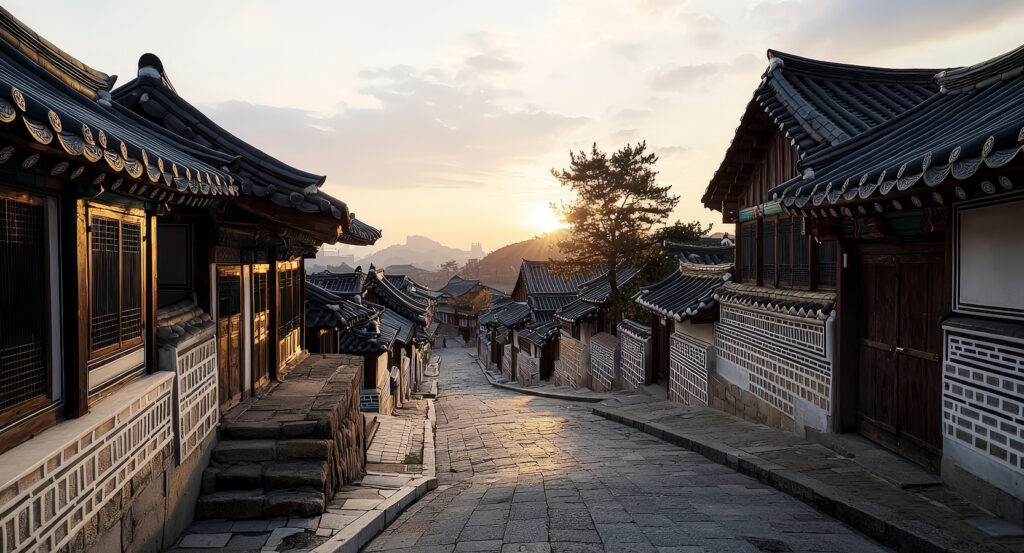
Start the morning with a slow walk toward Gyeongbokgung Palace as the city wakes up, catching early sun across the palace walls and mountains. Continue into Bukchon Hanok Village for traditional homes, artisan studios, and panoramic views that capture Seoul's timeless past. Return to the hotel for a midday rest, a quiet cup of coffee in the lounge or a reset in your minimalist room, before heading back out. In the afternoon, wander into Insadong for ceramics, tea houses, calligraphy shops, and galleries, or walk down to Cheonggyecheon Stream for a peaceful riverside stroll. If you prefer modern energy, take a few stops on the subway to explore Myeongdong's shopping corridors or Samcheong-dong's cafés and boutiques. For dinner, explore Jongno's maze of restaurants: Korean BBQ, dumpling houses, temple cuisine, soju bars, or refined modern Korean dining. End the evening with a lantern-lit walk through Jogyesa Temple or a quiet nighttime stroll around Gwanghwamun Square. Over several days, alternate between heritage landmarks, modern neighborhoods, peaceful mornings, and restful evenings.
Where your story begins.
Foresyte Travel reveals places that feel extraordinary long before you arrive.
Experience premium editorial crafted for luxury travelers.

















































































































