Why Spanish Riding School matters.
Spanish Riding School is a revered equestrian institution where Innere Stadt's imperial heritage, classical horsemanship, centuries of tradition, and Austrian cultural character preserve the world's oldest continuously operating academy devoted to classical dressage.
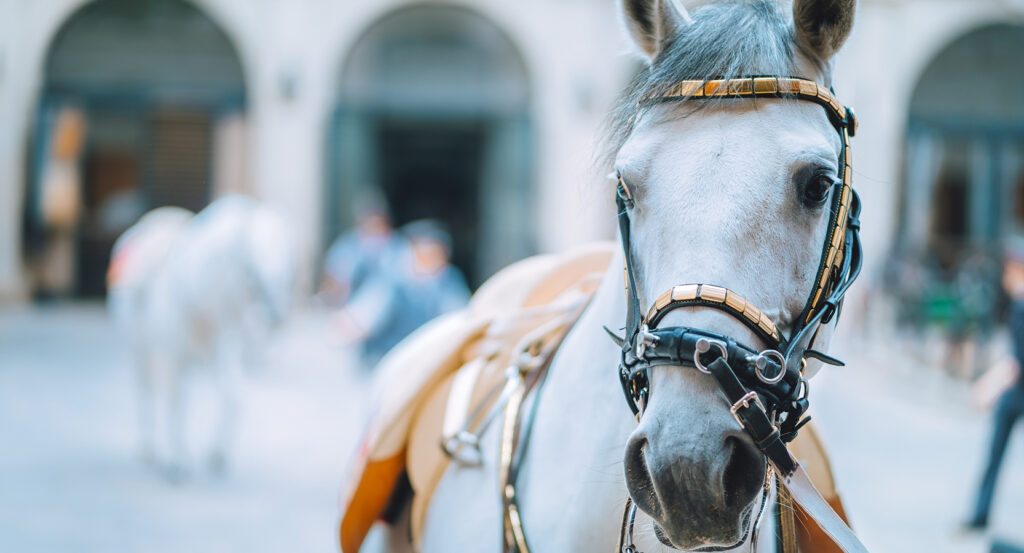
Set along Michaelerplatz near Reitschulgasse and just steps from Hofburg Palace, this historic institution unfolds through the elegant Winter Riding School, Baroque galleries, royal stables, training arenas, and carefully maintained equestrian facilities where generations of riders and Lipizzan stallions have refined one of Europe's most disciplined riding traditions. White stallions, vaulted interiors, polished timber, and ceremonial architecture create an atmosphere where athletic precision and artistic expression have flourished for centuries. Heritage, discipline, and horsemanship define every performance and training session.
What defines Spanish Riding School.
Spanish Riding School is best known for preserving the uninterrupted tradition of classical dressage since 1565 while training the world-famous Lipizzan stallions through centuries-old methods rooted in Renaissance horsemanship, occupying the Baroque Winter Riding School completed in 1735 by architect Joseph Emanuel Fischer von Erlach under Emperor Charles VI and continuing one of the world's longest unbroken equestrian traditions. The institution traces its origins to the importation of Spanish horses by the Habsburg monarchy during the sixteenth century, whose bloodlines formed the foundation of the Lipizzan breed established at the imperial stud farm in Lipica in 1580. Riders undergo a decade of intensive instruction before earning the title of Bereiter, mastering progressive techniques that develop balance, collection, precision, and communication between horse and rider according to principles codified by Renaissance masters including Federico Grisone, Antoine de Pluvinel, and François Robichon de La Guérinière. The elegant Winter Riding School, crowned by an imperial gallery reserved for the Habsburg court, measures 55 meters in length and 18 meters in width, providing an ideal setting for the highly controlled movements of classical dressage. Signature performances feature advanced movements known as the airs above the ground, including the Levade, Courbette, and Capriole, exercises originally developed to improve the agility, strength, and responsiveness of cavalry horses. During the Second World War, the Lipizzan breeding stock and riding horses were safeguarded through Operation Cowboy in 1945, preserving bloodlines that remain central to the school today. Recognized by UNESCO in 2015 through the inscription of Classical Horsemanship and the High School of the Spanish Riding School on the Representative List of the Intangible Cultural Heritage of Humanity, the institution continues supporting veterinary science, equine research, breeding programs, historical scholarship, and international educational initiatives dedicated to preserving classical riding traditions for future generations.
Centuries of disciplined training, refined breeding practices, and careful preservation demonstrate how horsemanship can evolve into a highly developed cultural tradition uniting athletic performance, animal welfare, history, and artistic expression. Historic stables, carefully maintained training facilities, experienced riders, veterinary expertise, and generations of accumulated knowledge demonstrate the exceptional partnership between horse and rider while preserving techniques refined over more than four centuries. Continuing breeding programs, conservation of historic facilities, equine health research, educational outreach, and archival documentation ensure the institution remains the international standard for classical dressage. Equestrian excellence, cultural continuity, and imperial tradition combine to create one of Vienna's most distinctive cultural experiences.
How Spanish Riding School fits.
Spanish Riding School works as part of an exploration through Innere Stadt's imperial core.
Begin at Hofburg Palace, where centuries of Habsburg history establish the setting before attending the Spanish Riding School. Continue to Imperial Treasury Vienna, whose regalia and ceremonial objects deepen appreciation for the imperial court that supported the institution for centuries. Conclude at Michaelerplatz, where Baroque architecture and archaeological remains provide a memorable finale celebrating the historic surroundings of the former Habsburg residence. The progression moves naturally from imperial governance to classical horsemanship before concluding through one of Vienna's most historically significant public squares, revealing why Innere Stadt remains the cultural heart of the Austrian capital.
Where your story begins.
Foresyte Travel reveals places that feel extraordinary long before you arrive.
Enjoy editorial crafted for luxury travelers.
Foresyte may earn a commission when you book.